-
Address
Guangdong, China -
WhatsApp
+86 135 2795 8363
Derui – Furniture Testing Equipment Manufacturer
16
2026 - 11
Before accepting a mattress rollator, check the supplied roller and accessories, representative mattress fit, programmed movement, retained records and any purchased height or firmness measurements. Agree the demonstration and evidence before shipment. A short running video alone does not verify the full purchase scope. The checklist should be agreed with the supplier in advance. It is not a universal Derui service promise, a certification or a substitute for testing the mattress itself. Use it to decide what the acceptance demonstration will show, who will witness it and which open items must be resolved. 1. Freeze the Configuration Being Accepted Attach the quotation revision, equipment identity and accessory list to the acceptance plan. Identify the actual roller assembly, supports, loading accessories and any additional measurement equipment. A claim that the machine references two standards does not establish that both required roller arrangements are supplied. If a second assembly is optional, record that explicitly. Do not add masses, dimensions or method settings from another supplier to the purchase record. The relevant controlled method and approved equipment drawings must provide the acceptance basis. 2. Use a Representative Mattress and Define What It Proves Agree mattress dimensions, thickness, construction and support arrangement. Check loading…
16
2026 - 11
Bring frequent, decision-critical tests in-house first, provided your team can control the method and use the result. Prioritise incoming-material checks when batch acceptance is the bottleneck; prioritise finished-mattress evaluation when construction changes need investigation. Keep customer-required independent reporting separate. Map each priority to a specimen, required result and existing instrument. The worksheet below separates material checks, development comparisons and finished-product evaluation, then makes any work retained by an external laboratory explicit. 1. List the Decisions That Currently Wait for a Test Review recent material approvals, development trials and customer requests. Record what was being decided, which result was missing, how often it was needed and whether an internal record would have been accepted. Keep actual turnaround records rather than assuming every outsourced test delays production. An incoming foam batch may need a specified indentation reading, while a revised mattress may need an agreed finished-product durability programme. They are different specimens and different decisions. Put the required output beside each task before attaching a machine model. 2. Separate Frequent QC from Periodic Qualification A stable incoming-material check may suit a small internal workflow if sampling, preparation, conditioning and measurement can be controlled. A rare test or a buyer requirement for an…
19
2026 - 10
Buying sofa cushion foam testing equipment starts with a production decision: what must your laboratory accept, compare or investigate? An incoming-material check, a new foam qualification and a customer durability requirement may need different equipment and different records. Start with the test requirement, not a three-machine shopping list. Indentation hardness, compression set and repeated-load fatigue answer different questions. Select the required measurements first, then identify the loading equipment, fixtures and instruments needed to obtain them. Add other tests only when your specification or investigation calls for them. Build a QC Plan Around the Decision You Need to Make Production decision Evaluation to consider Important boundary Does an incoming foam batch meet the agreed firmness specification? Indentation force or hardness under the specified preparation and loading procedure. A density value is not a substitute for an indentation result. Keep both where the purchase specification requires both. How much thickness remains unrecovered after sustained compression? Compression set with the required fixture, exposure, recovery and thickness measurement. The result depends on the reported conditions and calculation. Do not assign a universal quality grade. How does the foam change after repeated loading? Dynamic fatigue, followed by the thickness and hardness measurements required by the…
19
2026 - 10
A useful foam IFD (indentation force deflection) result depends on the selected method, specimen and loading arrangement—not on the largest number displayed in a tester brochure. Buyers comparing laboratory equipment should first define the foam being tested, the standard edition required by the customer and the measurements the laboratory must retain. ASTM D3574 covers slab, bonded and molded flexible polyurethane foams. ISO 2439 covers indentation hardness of specified open-cell latex, urethane and PVC foams. The two documents have related concepts, but ASTM does not call ISO 2439 a complete equivalent. Select the controlled procedure before requesting a machine configuration. 1. Confirm the Test Method and Specimen ASTM D3574 Identify the particular indentation procedure and document edition required by the buyer or laboratory. “ASTM D3574” alone is not a complete operating programme because the standard contains multiple foam tests. ISO 2439 Specify the relevant method. ISO lists methods A–D for indentation hardness and method E for compressive deflection coefficient and hysteresis loss rate; these are not interchangeable single readings. Production QC or formal report For incoming inspection, decide which reading, tolerance and sampling plan the product specification uses. For a formal laboratory report, document conditioning, specimen geometry, method and results as…
13
2026 - 10
When two furniture testing machines look similar, their quotations can still describe very different purchases. One may include the required loading fixtures, measuring instruments and installation work; another may quote only the base frame. Comparing the headline prices can leave a laboratory paying later for functions it expected to receive. Quick answer: The cost of furniture testing equipment depends on the test actions, specimen envelope, loading system, fixtures, measurement functions, records and delivery scope. Build one requirement sheet, obtain itemized quotations against it, and compare the cost of getting each proposed system ready for your intended work. 1. What Does “Furniture Testing Equipment Cost” Include? A single tester, a multi-action frame and a complete laboratory are different purchasing scopes. Start by stating which one you need. An internet price without the offered configuration cannot establish the budget for your actual programme. Machine purchase The frame, actuator or motion system, controller and the accessories explicitly included in the base package. Ready-to-test project The machine plus required fixtures, measuring functions, utility preparation, delivery, installation and agreed acceptance checks. Ongoing operation Consumables, maintenance, calibration or verification, software support where applicable, operator time and any outsourced tests. Keep the equipment budget separate from fees…
13
2026 - 10
A table can carry a heavy load without breaking and still tip when force is applied near an edge. It can also remain upright while its top, legs or joints deform. These are different performance questions, so choosing a table tester starts with deciding which response your laboratory needs to evaluate. Quick answer: Use static load testing to evaluate structural response under specified loads. Use stability testing to evaluate resistance to tipping under a defined setup. Review DR-J701 for the structural loading direction and DR-J702 for a focused stability setup. If your programme requires both, ask whether a verified combined configuration or separate stations best fits your specimens and workflow. 1. Stability and Static Load Testing at a Glance Static load: structural response Apply a defined vertical or horizontal load to the selected part of the table. Inspect the structure and record the required deformation, damage or functional observations. Stability: tipping response Apply the prescribed load or force with the specified support, stops and table configuration. Observe whether the table resists overturning under those conditions. Durability: repeated loading Repeated loading evaluates response over a specified sequence. It is an additional action; a static-load result does not demonstrate cyclic durability. The…
11
2026 - 08
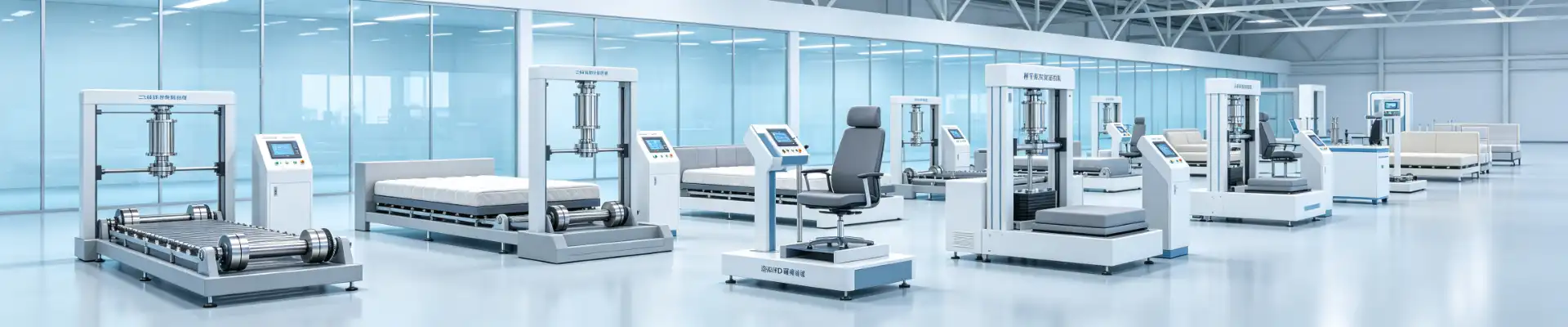
Furniture laboratory planning and equipment selection Build the Test Scope Before You Buy the Machines A useful furniture testing laboratory is not defined by how many machines it owns. It is defined by whether its test scope, methods, fixtures, utilities, measurement controls and records work together. This guide gives manufacturers and laboratory teams a practical path from the first product list to a procurement-ready equipment configuration. Quick answer: Set up a furniture testing laboratory in seven steps: define the products and decisions the lab must support; identify target markets and current standards; build a test-method matrix; select equipment and fixtures; plan space, utilities and safety; establish calibration and record controls; then purchase in phases against a written user requirement specification. Do not choose a machine from a standard number alone—the edition, test item, sample envelope and reporting needs all affect the final configuration. Conceptual multi-category laboratory illustration. Final equipment selection, guarding, clearances and utilities must be confirmed for the actual facility and test methods. 1. Decide What the Laboratory Must Accomplish Start with business decisions, not a catalogue. An in-house quality-control lab may screen incoming materials, compare prototypes and monitor production consistency. A development laboratory may investigate failure modes and…
07
2026 - 08
Pneumatic and electric-servo systems can both be candidates for repeated sofa loading. The better choice depends on the required motion or force control, specimen range, utility availability, maintenance capacity and the supplier’s installed configuration. Neither drive type is automatically “EN compliant” or “BIFMA compliant” by itself. Start with the test programme. EN 1728 describes structural seating strength and durability methods but does not itself supply end-use requirements; a domestic or public-seating requirement is selected separately. For a broader method overview, use the sofa fatigue testing guide. This page focuses on drive selection and purchase acceptance. 1. What Actually Changes with the Drive? Pneumatic actuation Compressed air moves the loading head through a regulated valve and cylinder arrangement. Review supply pressure and quality, force-control approach, stroke, load profile and how the system handles interruptions. Electric-servo actuation A motor-driven axis can be configured for programmed position or force actions with feedback. Review the motor, transmission, sensor, controller and the dynamic profile achievable with the intended specimen and load. Neither label is a performance guarantee The achievable accuracy, speed and test coverage belong to a specific system design. Compare approved machine data and an agreed demonstration instead of treating actuator names as verified…
07
2026 - 08
Building an office chair testing laboratory starts with the tests your chairs need—not a fixed shopping list of five machines. Chair features, the required standard edition and the tests performed in-house determine the equipment, fixtures and measurement system to specify. This guide explains five equipment-planning directions for an ANSI/BIFMA X5.1 laboratory, how they differ, and the information needed for a technical quotation. They are a starting framework, not complete standard coverage or a recipe for laboratory accreditation. 1. Define the Chair Range and Required Evidence List the chairs you intend to evaluate: task or executive chairs, side chairs, stools, stacking chairs or other relevant configurations. Record adjustable features, armrests, casters, bases and mechanisms. A feature that is absent or constructed differently can change the applicable test and fixture arrangement. ANSI/BIFMA X5.1-2017(R2022) is the general-purpose office chair standard designation used here. R2022 indicates reaffirmation; it is not a separate “X5.1-2022” load table. Confirm the edition required by the customer or testing programme and use the controlled standard to determine the selected procedures. Public and lounge seating, large-occupant chairs and other specialised uses can have different scopes. Do not select an office-chair test programme solely from the country of sale. The BIFMA…
15
2026 - 05
Mattress laboratory planning and equipment selection A mattress can retain its height while becoming softer, or develop a local depression while other areas remain firm. A useful durability test records these changes under a defined loading and measurement procedure. This guide helps manufacturers and laboratories plan ASTM F1566 testing, distinguish Cornell-type and rollator equipment, and prepare the information needed for a suitable test system. Quick answer: Start with the requested standard edition, test item and mattress construction. Confirm the loading mechanism, specimen support, measurements and buyer acceptance criteria before choosing equipment. Compare before-and-after results using the same measurement conditions. A test-method reference alone does not establish a universal pass/fail limit or guarantee a mattress service life. 1. What Does ASTM F1566 Mattress Testing Cover? ASTM F1566 is a set of test methods for evaluating innersprings, boxsprings, mattresses and mattress sets. Depending on the selected method and specimen, the evaluation can address firmness, firmness retention, durability, impact response and height change. It should not be reduced to one machine, one cycle count or one mandatory test for every mattress. “Cornell test” is commonly used in equipment enquiries to describe a mattress setup applying repeated localized loading through a formed loading head….
A useful equipment quotation starts with the tests your laboratory needs to perform. Explore these resources to define the specimen envelope, fixtures, measurement functions and installation needs before comparing machines or planning a laboratory purchase.
Build the test-method matrix before assembling the equipment list. Plan working space, utilities, measurement controls and purchasing phases around the intended laboratory scope.
Compare the loading arrangement, mattress capacity, measurements and delivery scope for a Cornell-type setup. Separate included functions from requested accessories and options.
Review equipment for seat and back loading, swivel, impact and stability applications. Match each machine and fixture to the chair design and the applicable test list.
Identify whether the project needs indentation, compression set, fatigue or another material evaluation. Check specimen fit and measurement requirements before selecting the configuration.
Machine selection should follow the actual test scope, not a standard number or a catalogue headline alone. Confirm rated capacities, included functions, service responsibilities and acceptance arrangements in the approved technical specification and quotation.
 Derui chamber