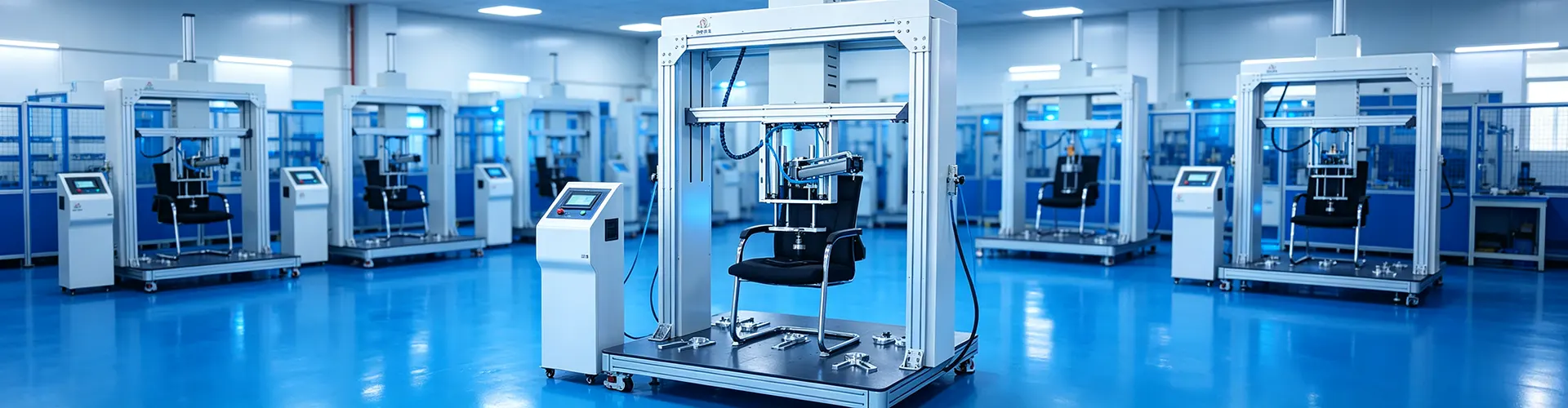
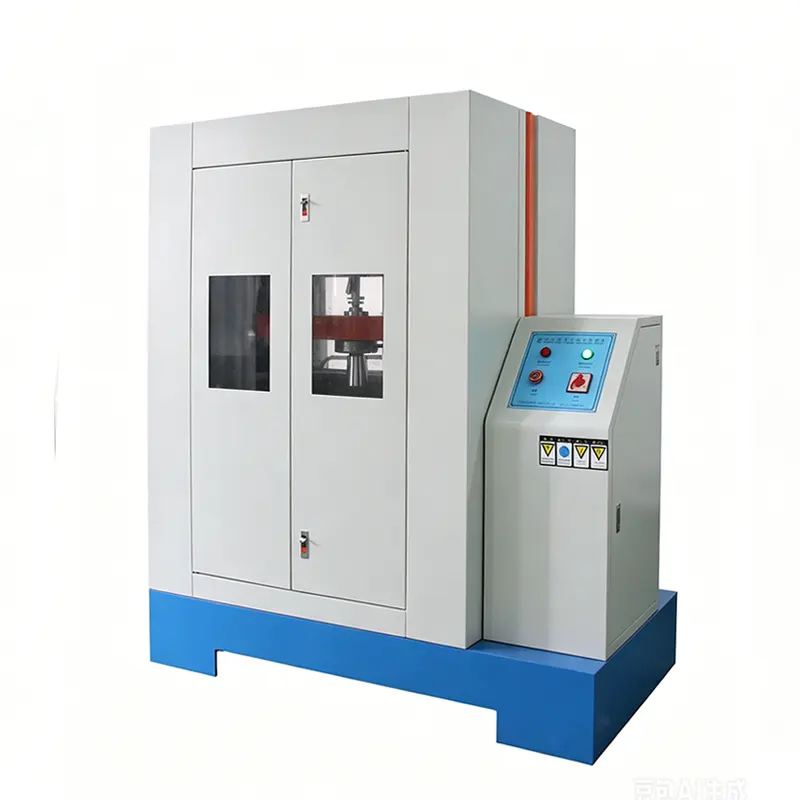
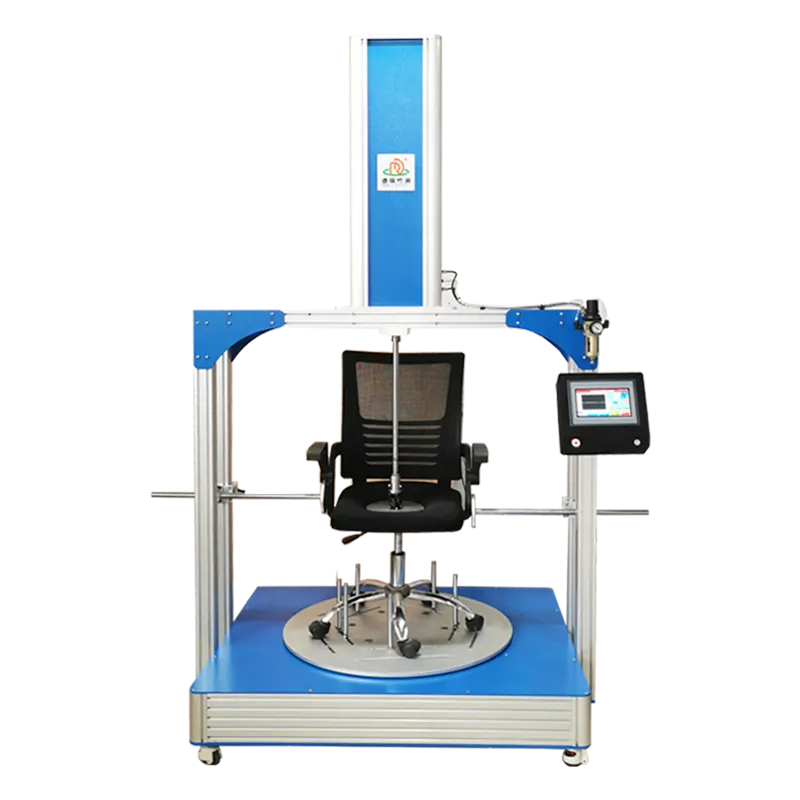
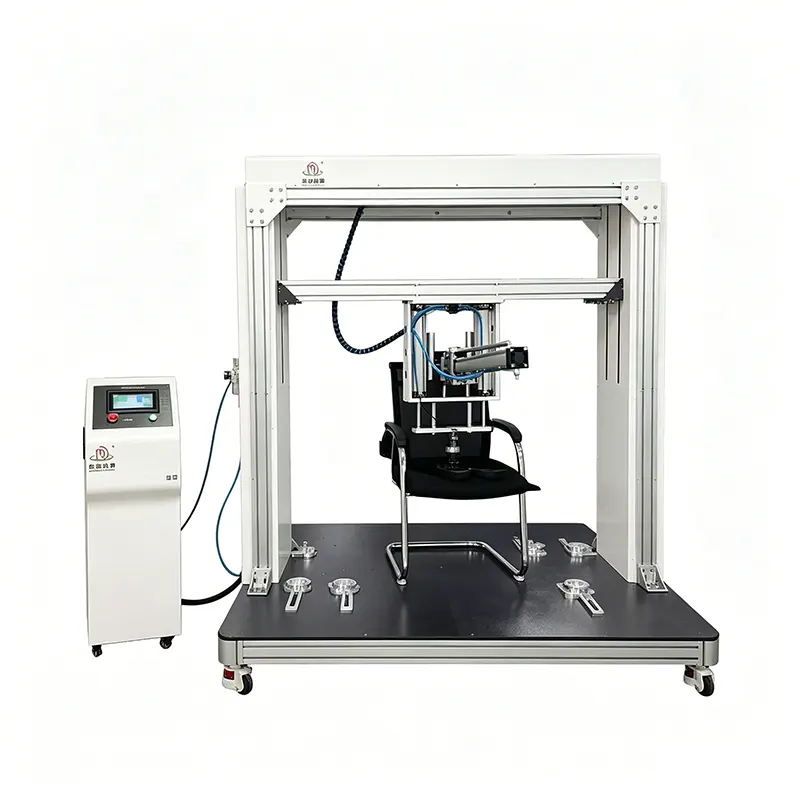
Test chair seats, backrests, bases, swivel mechanisms and structural durability with configurable systems for applicable BIFMA and EN laboratory methods.
Derui chair testing equipment helps office chair manufacturers and laboratories evaluate seat and backrest durability, base fatigue, vertical load resistance, and swivel life. Choose dedicated test systems for applicable BIFMA X5.1, EN 1335, and ISO 7173 chair testing requirements.
ISO 7173 — Chair and stool strength and durability tests
Application Areas
Office chair manufacturers and exporters
Chair base, caster, and mechanism suppliers
Furniture factory quality control laboratories
Third-party testing and certification laboratories
Product development and furniture engineering teams
Choose Chair Testing Equipment by the Test Task
Select chair testing equipment according to the part being evaluated and the action required by your procedure. Derui’s current range includes seat and back durability, swivel cycling, drop impact, vertical loading, base fatigue and stability equipment. One machine name or standard reference does not establish coverage of every chair test.
Seat, Back and Swivel Durability
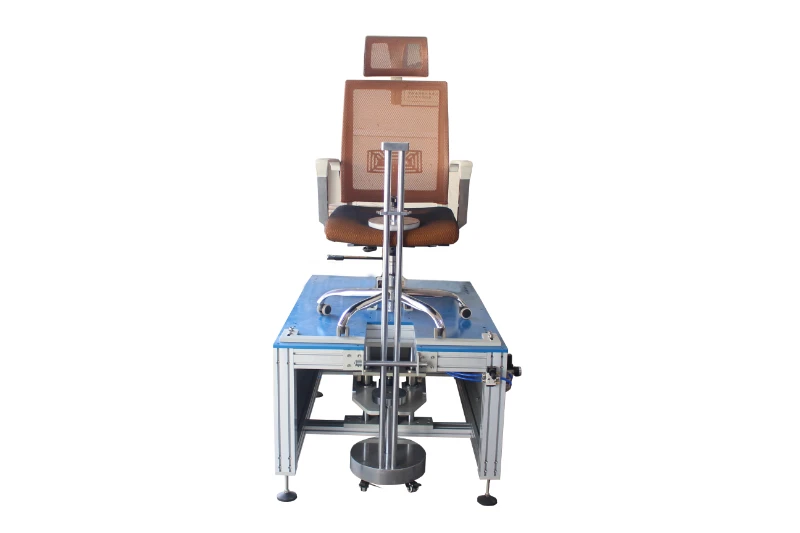
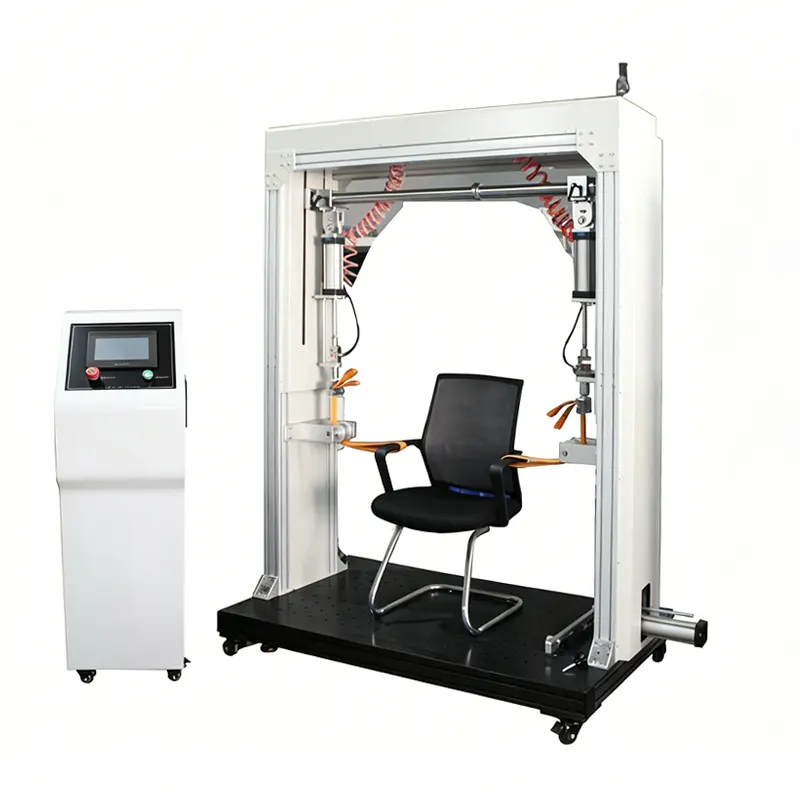
Select repeated loading for the seat or back, or rotation cycling for a swivel mechanism. These are different actions; define the required loading directions, restraint and adjustments before selecting the equipment.
Representative equipment: DR-J609 seat and back durability tester.
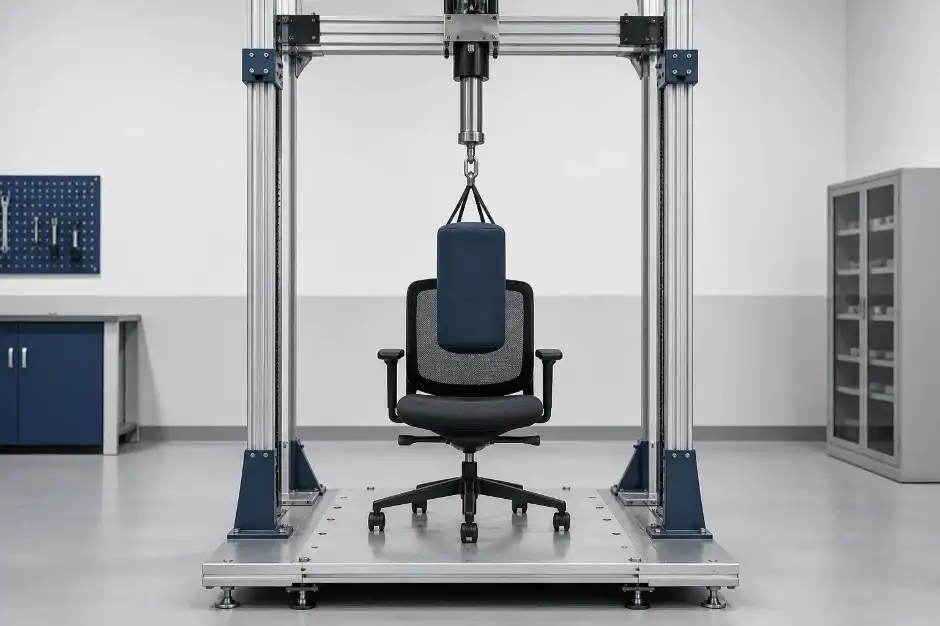
Choose the equipment direction for drop impact, vertical loading or base fatigue according to the selected test. Impact, static loading and repeated component loading are not interchangeable; confirm the required fixture and specimen preparation for each task.
Evaluate whether the chair resists tipping under the selected method’s loading conditions. Define the chair configuration, base orientation and loading points. Stability is a separate evaluation—not a result inferred from a seat, back or base durability test.
For an office-chair project referencing ANSI/BIFMA X5.1, identify the applicable tests from the chair’s design and the requested edition. Use the BIFMA X5.1 chair testing guide to organise the test scope before preparing an equipment request.
For EN or ISO work, specify the exact standard, edition and test items rather than requesting a generic “European chair test”. Strength, durability and stability requirements must be checked against the selected procedure; not every standard reference addresses all three.
A listed method is not a claim of equipment certification, complete product compliance or laboratory accreditation. Component results do not replace the full-chair assessment required by your specification, and a completed cycle programme is not a direct prediction of years in service.
Compare Configurations, Not Only Model Names
Chair Configuration
Identify the chair type, seat and back geometry, base construction, casters, armrests and relevant adjustments. The tested configuration affects the loading and restraint arrangement.
Method and Loading
Provide the exact method and edition, loading points, directions and required sequence. Do not transfer forces or cycle counts between different procedures without checking applicability.
Fixtures and Measurements
Confirm specimen supports, restraints, loading pads and instruments. Identify which measurements, data records and control functions are included in the quotation.
A project may need more than one equipment type, but the required test programme—not the number of machines—should determine the purchase. For measurement planning, use the equipment calibration checklist and agree the verification records needed by your laboratory.

 Derui chamber