Derui chamber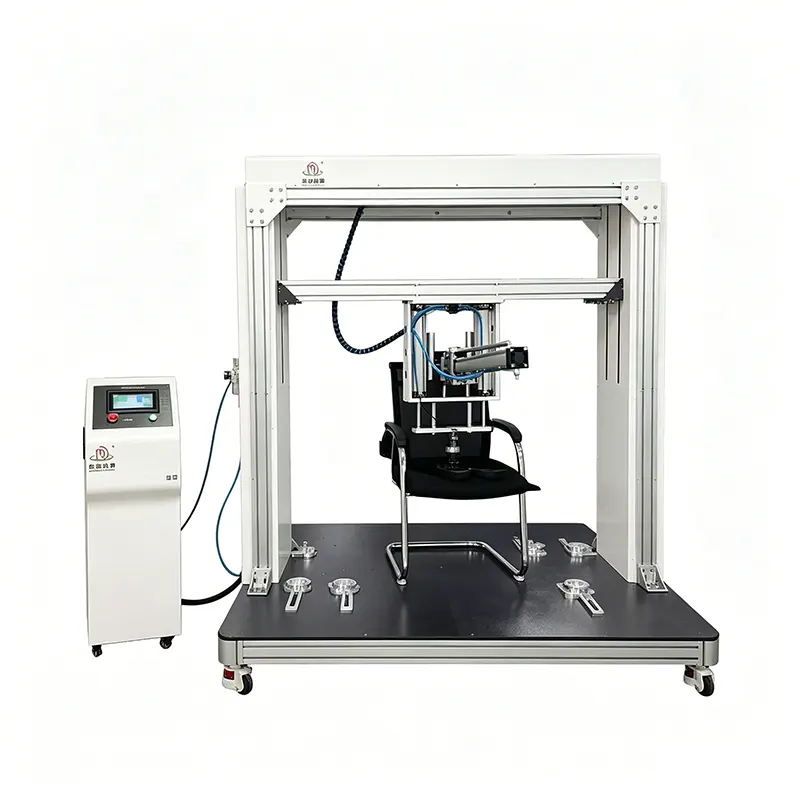

 Message
DR-J609 Chair Seat & Back Durability Tester
Product Summary
Model: DR-J609 | Test Type: Seat & Back Durability Test | Standards: BIFMA X5.1-2022 / EN 1335 / ISO 7173
Test Stations: 2 Independent (Seat + Backrest) | Cycles: 12,000–120,000 Programmable | Controller: PLC + 7-inch Touch Screen
Warranty: 2 Years | Lead Time: 25–30 Business Days | Price Range: $6,000 – $10,000
DR-J609 Chair Seat & Back Durability Tester (BIFMA X5.1-2022)
When QC manager Zhang Wei at a Guangdong office furniture plant received a batch return of 340 chairs with cracked seat pans and deformed backrests, he traced the root cause to one thing: his lab had been testing seat and back durability separately on two different machines. After switching to the Derui DR-J609 chair seat back durability tester — which applies coordinated loading to seat and backrest in a single test cycle — his lab caught 3 structural failure modes in the first week that had previously gone undetected for months.
| Name | DR-J609 Chair Seat & Back Durability Tester |
| Description | Dual-station BIFMA X5.1 chair tester combining seat impact, backrest durability, and seating durability in one machine. PLC controlled with data export. |
| Price Range | $6,000 – $10,000 |
| Brand | Derui |
| SKU | DR-J609 |
| Availability | InStock |
Key Takeaways
- Three-in-one testing: Combined seat impact (BIFMA Section 7), backrest durability (Section 8), and seating durability (Section 10) in a single machine.
- 12,000–120,000 programmable cycles with independent force control for seat and backrest actuators.
- PLC touch-screen control with real-time force/displacement curves and CSV data export.
- BIFMA X5.1-2022, EN 1335, and ISO 7173 compatible — switchable test protocols via software.
- Two independent test stations allow simultaneous testing of different chair models.
Why Three-in-One Testing Matters for Chair QC
Office chair failure rarely happens in isolation. A seat pan crack is often triggered by the combined stress of a user leaning back while seated — the seat takes vertical load at the same moment the backrest experiences rearward force. Testing them separately creates a blind spot.
The Problem with Single-Function Testers
Most labs use dedicated machines for each test. This approach has three fundamental flaws: missed interaction failures (a seat that passes 100,000 cycles may fail under simultaneous backrest torque), inconsistent loading profiles across different machines, and doubled labor and floor space requirements.
How DR-J609 Solves It
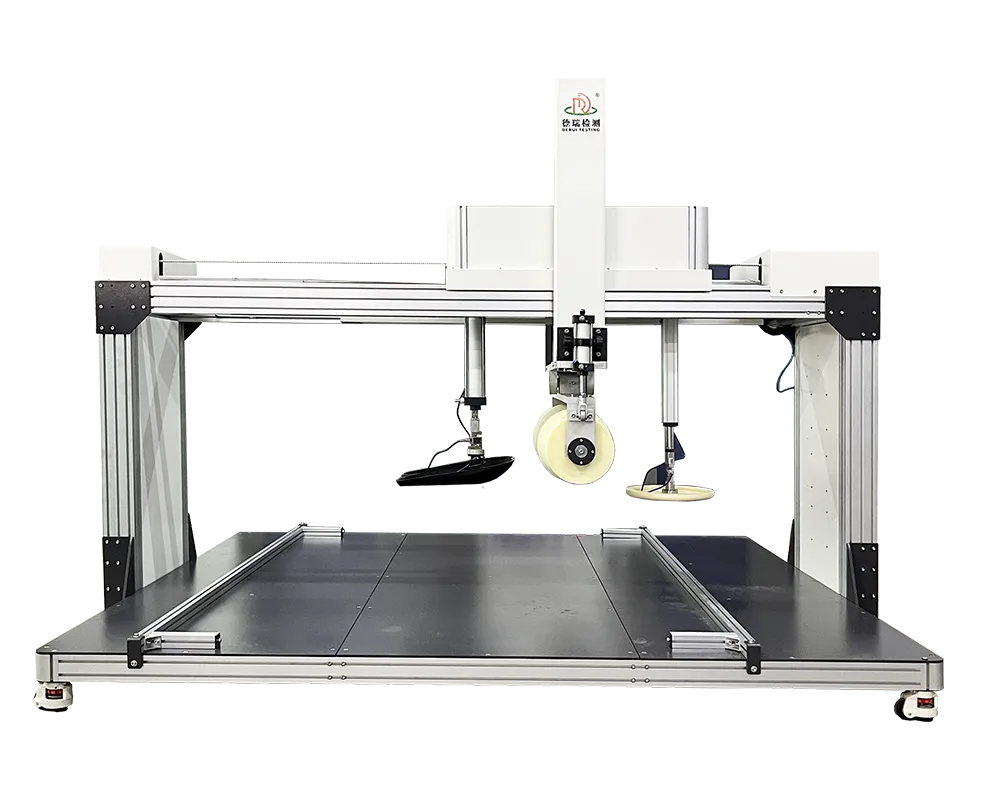
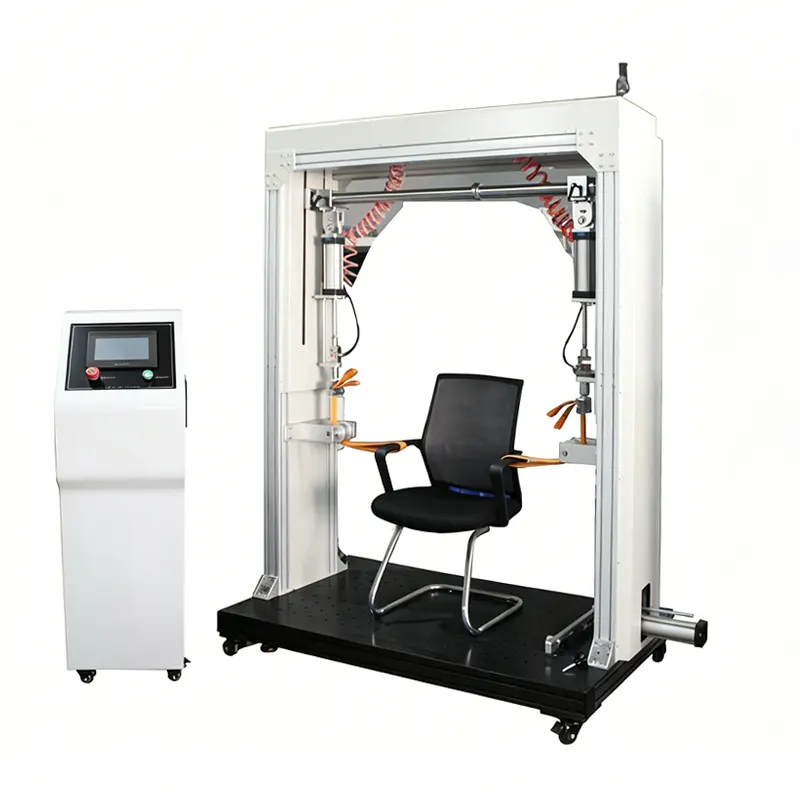
The DR-J609 features two independently controlled pneumatic actuators — one for the seat loading block and one for the backrest loading pad — operating from a single PLC platform. You can program coordinated loading (simultaneous) or sequential (standard BIFMA protocol).
Key Features
Dual-Station Independent Actuators
Two pneumatic actuators with ±1% force accuracy — one for seat loading (up to 1,334 N) and one for backrest loading (up to 445 N). Each operates independently on its own channel with separate force setpoints, cycle counts, and displacement thresholds.
Programmable BIFMA Test Sequences
Pre-loaded test programs for BIFMA X5.1 Section 7 (drop/impact test), Section 8 (backrest durability, 120,000 cycles at 445 N), and Section 10 (seating durability, 100,000 cycles at 1,334 N). EN 1335 and ISO 7173 protocols also pre-loaded.
Real-Time Data Logging & Export
The 7-inch PLC touch screen displays real-time force, displacement, and cycle count for both stations. Results export via USB in CSV format with operator ID, test date, and standard reference.
Real Case: “We were testing 12 chair models across two shifts just to keep up with production,” said Chen Li, QC manager at a mid-sized Zhejiang chair factory. “After installing a single DR-J609, we consolidated seat impact and backrest durability into one workflow. Our testing throughput increased by 37% and we caught a seat-to-base weld failure on the fourth day that had been slipping past our separate-testing protocol for three quarters.”
Technical Specifications
| Parameter | Specification |
|---|---|
| Model | DR-J609 |
| Test Types | Seat impact (Section 7), Backrest durability (Section 8), Seating durability (Section 10) |
| Test Stations | 2 independent (seat + backrest) |
| Seat Force Range | 100 – 1,334 N (±1%) |
| Backrest Force Range | 50 – 445 N (±1%) |
| Cycle Count | 1 – 999,999 programmable |
| Cycle Frequency | 10 – 30 cycles/min |
| Force Accuracy | ±1% of indicated value |
| Controller | PLC + 7-inch color touch screen |
| Data Export | USB (CSV format) |
| Machine Dimensions | 1,200 × 800 × 1,800 mm |
| Net Weight | 350 kg |
| Power Supply | AC 220V, 50/60 Hz |
| Safety Features | Emergency stop, overload protection, limit switches |
| Warranty | 2 years |
Applicable Testing Standards
| Standard | Scope | Key Tests |
|---|---|---|
| BIFMA X5.1-2022 | General-purpose office chairs | Sec.7 seat impact, Sec.8 backrest durability (120K cycles), Sec.10 seating durability (100K cycles) |
| EN 1335-2:2018 | Office work chairs | Seat durability cyclic, backrest strength test |
| ISO 7173:2023 | Chairs & stools — strength & durability | Static load on seat and back, cyclic fatigue |
Frequently Asked Questions
What BIFMA X5.1 sections does the DR-J609 cover?
Section 7 (Drop/Impact Test), Section 8 (Backrest Durability — Cyclic), and Section 10 (Seating Durability — Cyclic). Three critical tests in one machine.
Can the two stations run independently?
Yes. Each actuator operates on its own channel with independent force setpoints, cycle counts, and displacement monitoring. You can run coordinated loading or separate tests.
What cycle counts does BIFMA X5.1 require?
Section 8 requires 120,000 backrest cycles at 445 N. Section 10 requires 100,000 seat cycles at 1,334 N. Section 7 specifies a drop/impact test with a 102 kg load.
What is the difference between DR-J609 and DR-J603?
DR-J603 focuses on vertical static loads (seat and base pressure). DR-J609 focuses on cyclic durability testing of seat and backrest with independent dual-station control. They are complementary machines.
Is training provided?
Yes. On-site installation and operator training are included. The touch-screen interface is intuitive — most operators become proficient within 2–3 hours.
What is the lead time?
Standard lead time is 25–30 business days from order confirmation.