Derui chamber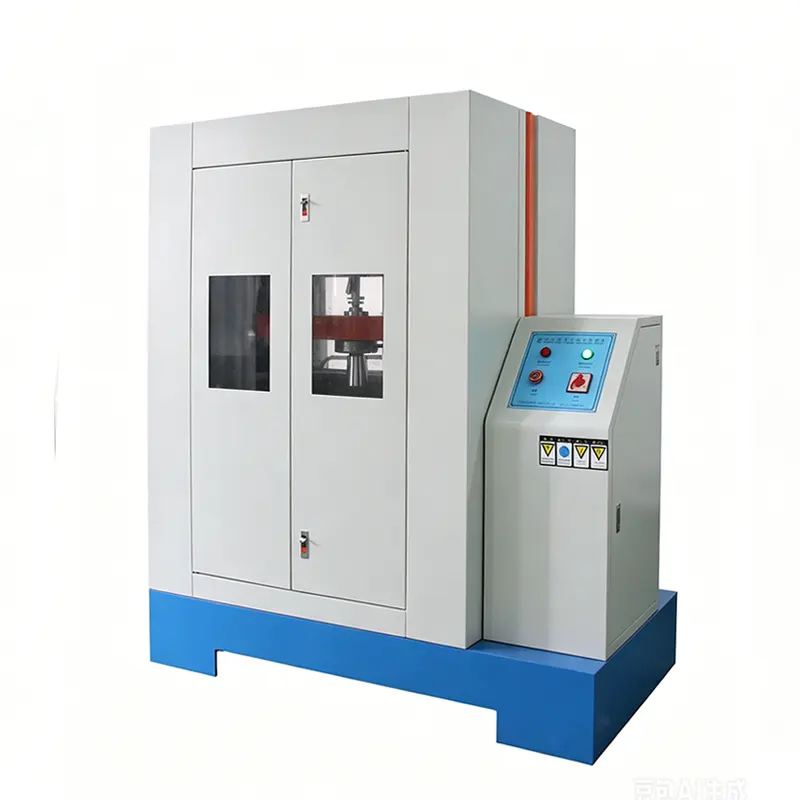

 Message
DR-J603 Chair Vertical Pressure Tester
By Derui Engineering Team | Certified B2B Testing Rig | Model: DR-J603 | Capacity: 3,000 N (675 lbf)
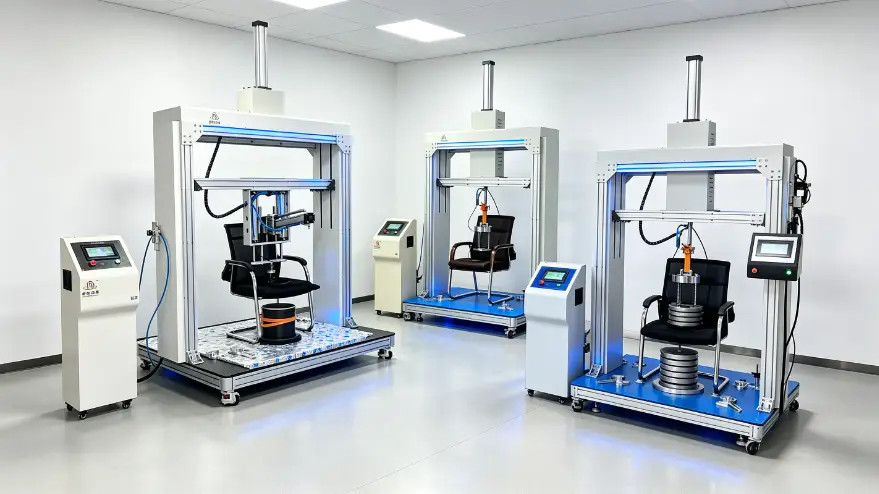
High-precision closed-loop vertical load testing machine engineered to evaluate office chair seat cushions, star bases, armrests, and footrests under BIFMA X5.1-2022, EN 1335, and ISO 7173 standards.
Product Overview & Value Highlights
- Certified BIFMA X5.1 Vertical Scope: Purpose-built to perform Section 10 (Seating Durability), Section 12 (Arm Vertical Static – 890 N), Section 16/17 (Leg & Base Static Load), and Section 18 (Footrest Load).
- Closed-Loop Force Control (50 N to 3,000 N): High-precision servo system guarantees exact force retention during 60-second static hold tests without force decay inherent in pneumatic rigs.
- Real-Time Creep Deformation Capture: Linear optical displacement encoder with 0.01 mm resolution captures gradual plastic yield in star bases and seat pan shells.
- Raw Material to Finished Product QC: Pairs seamlessly with seat cushion screening rigs like the DR-J801 Foam IFD Tester and DR-J802 Foam Fatigue Tester.
- Cross-Standard Compliance: Fully compliant with BIFMA X5.1-2022, EN 1335-2, and ISO 7173. Read our technical guides on BIFMA X5.1 Chair Testing Standards and Sofa Frame Testing Standards.
⚠️ Engineering & Compliance Note: A common failure mode in BIFMA Section 10 & 17 testing is “creep deformation” — a plastic chair base or armrest appears to hold the required 1,334 N or 890 N load initially, but slowly yields over 30 to 60 seconds. Pneumatic pressure gauges miss this gradual drop. The DR-J603’s 0.01 mm displacement transducer records the full force-deflection curve to flag micro-yielding before fracture.
1. What Is a Chair Vertical Pressure Tester?
A chair vertical pressure tester is a specialized laboratory testing machine designed to apply precise vertical static and cyclic compressive loads to office chair components. The machine evaluates the structural load-bearing capacity of seat cushions, five-star bases, armrest assemblies, and footrests under North American (BIFMA X5.1) and European (EN 1335) standards.
By simulating heavy occupant sit-down impacts, sustained body weight hold times, and repeated standing support from armrests, the DR-J603 ensures that commercial office seating prevents catastrophic structural collapse in field service.
Key BIFMA X5.1-2022 Vertical Load Sections Covered
| BIFMA Section | Test Description | Standard Force Setpoint Requirement |
|---|---|---|
| Section 10 | Seating Durability Test (Cyclic) | 1,334 N (300 lbf) repeated vertical loading |
| Section 12 | Arm Strength Test — Vertical — Static | 890 N (200 lbf) static vertical proof force |
| Section 16 | Caster / Chair Base Durability Test | Vertical force applied to central star base hub socket |
| Section 17 | Leg Strength Test — Front and Side | Static load applied to chair leg structures |
| Section 18 | Footrest Static Load Test | Static downward proof force on footrest rings |
2. Key Technical Features of the DR-J603
At the core of the DR-J603 is a high-torque closed-loop servo actuator capable of delivering up to 3,000 N (675 lbf) force. Unlike pneumatic-only systems that struggle to maintain steady force during extended dwell times, the closed-loop servo maintains target force within ±1% across 60-second BIFMA hold tests.
Integrates an S-type precision strain gauge load cell with a linear displacement encoder. The 0.01 mm resolution allows quality engineers to detect plastic yielding, frame flex, and weld line deformation in real time.
The 7-inch color PLC stores up to 50 pre-configured standard test profiles. Operators select static proof load, cyclic durability (up to 999,999 cycles), or destructive step-ramp tests directly from the touch interface, exporting CSV data via USB.
Built on a rigid welded steel frame engineered for continuous 24/7 laboratory operation. Features transparent polycarbonate safety shields and dual emergency stop buttons to protect operators during ultimate destructive failure tests.
Real-World Case Study: Eliminating Third-Party Audit Failures
“An office chair exporter in Zhejiang lost a $240,000 contract when their chair bases cracked at 12,000 cycles under BIFMA Section 10 testing due to uncalibrated manual weight-stack testing,” reported a Derui Technical Application Manager. “After installing the DR-J603 and utilizing its 0.01 mm displacement curve data to optimize their base wall thickness, they passed BIFMA certification on the first attempt and placed a follow-up order for three more units.”
3. Technical Specifications
| Specification Parameter | DR-J603 Engineering Value / Range |
|---|---|
| Machine Model Designation | DR-J603 Chair Vertical Pressure Tester |
| Applicable Test Standards | BIFMA X5.1-2022 Sec. 10, 12, 16, 17, 18, EN 1335-2, ISO 7173 |
| Vertical Force Capacity & Precision | 50 N – 3,000 N (11 – 675 lbf) | Precision: ±1% of indicated value |
| Force Measurement Resolution | 0.1 N micro-resolution |
| Displacement Range & Resolution | 0 – 100 mm stroke | Resolution: 0.01 mm transducer |
| Loading Crosshead Speed | 5 – 500 mm/min (Programmable closed-loop control) |
| Max Programmable Cycles | 1 – 999,999 cycles (Automated auto-stop on completion) |
| Controller & Interface Unit | 7-inch Color PLC Touch Screen with Real-Time Force-Deflection Curve |
| Stored Standard Programs | 50 pre-loaded BIFMA / EN / ISO test profiles |
| Test Area Clearance (L×W×H) | 600 × 600 × 900 mm (Accommodates full chair bases & shells) |
| Machine Dimensions & Net Weight | 900 × 700 × 1,800 mm | Net Weight: 320 kg (705 lbs) |
| Power Supply & Safety | AC 220V 50/60Hz, 1.5 kW | Dual E-stops, limit switches, shield guard |
| Factory Warranty | 2 Years (Parts, PLC software updates, calibration support) |
4. Vertical Load Component Failure Analysis & Engineering Remedies
When office chair components fail BIFMA X5.1 vertical pressure testing, structural deflection or stress concentration is responsible. The troubleshooting matrix below outlines root causes and solutions:
| Observed Failure Mode | High-Risk Component | Engineering Root Cause | Manufacturing Corrective Action |
|---|---|---|---|
| Star Base Socket Cracking at 2,200 N | Die-Cast Aluminum Hub | Shrinkage porosity or hub wall thickness <3.5 mm under central pressure. | Increase central hub wall to 4.5 mm; verify die-cast injection pressure. |
| Armrest Arm Fracture at 890 N | Armrest Support Bracket | Bending moment shear at cantilever junction under vertical downward force. | Add internal ribbing gussets along vertical support column arm. |
| Slow Force Decay During 60s Hold | Plastic Seat Pan Shell | Polymer creep yielding under sustained 1,334 N vertical static load. | Switch from unreinforced PP to 15% glass-fiber reinforced polypropylene shell. |
| Footrest Ring Slippage / Drop | Drafting Chair Footrest Clamping | Inadequate locking collar torque on gas lift outer cylinder tube. | Incorporate a knurled steel wedge ring insert inside the footrest collar. |
5. ISO/IEC 17025 Load & Displacement Calibration Protocols
To guarantee laboratory data validity during ISO/IEC 17025 accreditation audits, the DR-J603 incorporates standardized calibration routines:
- NIST-Traceable Force Load Cell Check: Force sensors are calibrated annually across 50 N to 3,000 N using certified secondary proving rings traceable to national standards.
- Linear Encoder Displacement Calibration: Gauge blocks verify optical encoder displacement accuracy within ±0.05 mm tolerances.
- Closed-Loop Servo Zero-Tare: The PLC interface features a one-touch automatic zero-tare function to eliminate platen weight bias before initiating test runs.
6. Applicable International Testing Standards
| Standard Designation | Scope & Application | Key Testing Protocol |
|---|---|---|
| BIFMA X5.1-2022 | General-Purpose Office Chairs | Sec. 10 (Seating cyclic), Sec. 12 (Arm vertical 890 N), Sec. 16/17 (Leg static), Sec. 18 (Footrest) |
| EN 1335-2:2018 | Office Work Chairs — Safety & Test Methods | Vertical static load on seat; vertical load on base/leg assembly |
| ISO 7173:2023 | Chairs & Stools — Determination of Strength & Durability | Static load on seat and back; cyclic fatigue; leg vertical strength |
| QB/T 2280 | Chinese National Office Chair Standard | Seat static load, base vertical compression, armrest vertical static proof force |
7. Frequently Asked Questions (FAQ)
What is the difference between a chair vertical pressure tester and a UTM?
A chair vertical pressure tester is specifically optimized for office chair components, with pre-programmed BIFMA X5.1, EN 1335, and ISO 7173 test profiles, quick-change base platens, and cyclic speed controls that general UTMs lack.
Can the DR-J603 test both star bases and seat cushions?
Yes. The DR-J603 includes interchangeable loading platens and fixtures for testing star bases, seat cushions, armrests, and footrests. Changing configurations takes under 5 minutes.
How does the DR-J603 pair with other BIFMA testing equipment?
For complete laboratory compliance, the DR-J603 evaluates vertical pressure alongside the DR-J605 Chair Base Fatigue Tester, DR-J609 Seat & Back Tester, and DR-J601 Swivel Tester.
What maintenance does the DR-J603 require?
Routine maintenance includes wiping linear guide rails weekly, lubricating ball screws monthly, and calibrating the load sensor every 6 to 12 months per ISO 17025 protocols.
Is operator training and installation included with purchase?
Yes. Factory-direct purchase from Derui includes global on-site installation, PLC calibration instruction, and a 2-year factory warranty.
Related Testing Equipment & Compliance Guides
- DR-J605 Chair Base Fatigue Tester — BIFMA Sec. 16 base fatigue and 11,125 N static proof load tester.
- DR-J609 Chair Seat & Back Durability Tester — BIFMA Sec. 8 & 10 dual-station seat and backrest cyclic tester.
- DR-J601 Chair Swivel Life Tester — 120,000-cycle office chair swivel cylinder rotation tester.
- BIFMA X5.1 Chair Durability Guide — Complete testing guide for office chair standards and cycle setpoints.
- BIFMA X5.1-2022 Standards Explained — Technical breakdown of 2022 revisions and 125 kg occupant baselines.
- Sofa Fatigue Test Complete Guide — Durability standards for upholstered lounge seating and frames.
- Chair Testing Equipment Catalog — Full equipment lineup for chair durability, drop impact, and stability.
Equip Your Certified Chair Testing Laboratory
Contact Derui’s engineering application team for custom DR-J603 technical specifications, factory-direct pricing, and ISO 17025 compliance support.