Derui chamber
 Message
DR-J609 · CHAIR TESTING EQUIPMENT
Define the Seat and Back Loading Your Chair Requires
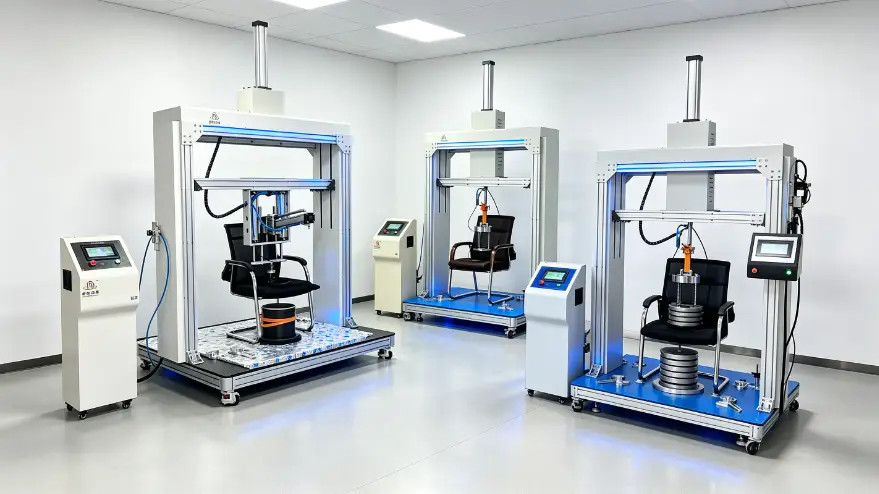
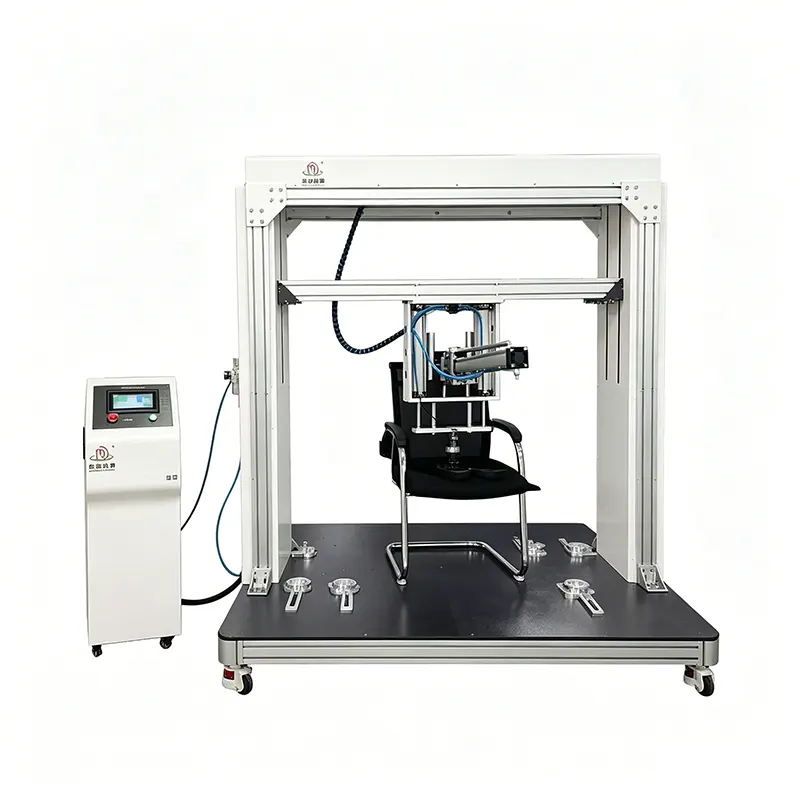
Evaluate repeated loading of a chair’s seat and back using a configuration matched to the prescribed test. The DR-J609 Chair Seat & Back Durability Tester is an equipment direction for chair manufacturers and laboratories planning structural durability evaluation.
Identify the chair type, loading actions and required fixtures before comparing quotations. Separate seat and back actions may require different contact points, load directions and supports. Coordinated loading should be specified only where the procedure calls for it.
Select the Loading Tasks for Your Project
Seat Durability
Define the required seat contact position, loading direction and repeated sequence for the chair configuration under evaluation.
Back Durability
Provide the backrest geometry, adjustment settings, force direction and method-specific fixture or restraint arrangement.
Configuration Comparison
Use the same controlled procedure when comparing chair designs or production changes; record chair adjustments and relevant setup differences.
Match the Chair Type to the Applicable Standard
ANSI/BIFMA X5.1-2017(R2022) covers general-purpose office seating. The R2022 designation is a reaffirmation, not a separate “X5.1-2022” set of universal seat and back loads. Select the required tests from the controlled edition and match the quoted equipment to those actions.
ISO 7173:2023 describes seating structural strength and durability methods. EN 1728 is also a seating structural-method reference, while the relevant EN product requirements depend on chair use. Specify the applicable edition and intended-use scope rather than combining all standards into one preset programme.
Review the BIFMA X5.1 office chair testing guide before defining the test scope. For international structural-method planning, the ISO 7173 methods and fixtures guide helps organise the equipment requirement.
Scope sources: BIFMA: standard scopes · ISO: ISO 7173:2023 scope. These sources describe standard scope, not DR-J609 hardware specifications.
Define the Configuration Before Ordering
Use this checklist to compare quotations. Required settings and supplied equipment ratings are different information: request the approved measuring ranges, specimen envelope and fixture details. The items below are configuration questions, not a list of default accessories.
Chair and Adjustments
Provide chair type, seat and back dimensions, base and caster layout, armrests and relevant adjustment settings.
Loading and Restraints
Define seat and back loading points, directions, pads, supports and stops. Confirm their compatibility with the specified sequence.
Control and Records
Agree load ranges, cycles, frequency, sequence timing and result records. Confirm channel count, independent or coordinated operation, and measurement options in the quotation.
Identify the controller functions and instruments needed for the task. Agree any automatic sequences, alarm behaviour, data outputs and report formats in writing. Calibration documents, installation assistance and commercial terms should be stated in the quotation rather than inferred from an online description.
Control the Setup, Sequence and Inspection
- Identify the tested chair configuration and record adjustment positions.
- Locate the loading points and verify the pad alignment, base position and restraints.
- Apply the required sequence with the agreed control settings and records.
- Document interruptions and inspect the prescribed components at the required stages.
- Assess the structural observations and measurements against the applicable criteria.
A displacement signal or an automatic stop is not proof that the controller identifies every fracture, joint failure or mechanism defect. Specify alarm behaviour and inspection responsibilities separately. Use the calibration and intermediate-check checklist to plan the relevant force, displacement and cycle-control checks.
Do Not Confuse Cyclic Loading with Drop Impact or Swivel Testing
Seat/back repeated loading, free-drop impact, swivel cycling and base/component testing are different actions. The DR-J609 model name is not evidence that all of them are built in. If you need additional tests, identify each action and obtain a separate review of the required fixture, loading mechanism and control capability.
Questions Before You Purchase
Is seat drop impact included in this equipment?
Do not assume this from a repeated-loading description. A drop procedure needs an appropriate release and impact arrangement; confirm any separately offered impact capability in writing.
Can seat and back actions run together?
Confirm the supplied controller and actuator arrangement against the selected procedure. Independent control and simultaneous loading are different capabilities, and not every method requires them.
Does a data export make the test report ISO/IEC 17025 compliant?
No. Data export is one record-handling function, not laboratory accreditation. The laboratory’s method control, calibration, competence and reporting practices remain separate requirements.
Can I quote for chairs with different back heights or adjustments?
Provide the range of chair geometries and required settings. Review contact-point access, travel, supports and fixture clearance for all intended specimens.
Related Equipment and Test Planning
Swivel Durability
DR-J601 Chair Swivel Durability Tester — Review rotation cycling as a separate chair-mechanism task.
Drop Impact
DR-J607 Chair Drop Impact Tester — Review impact evaluation separately from repeated seat and back loading.
Chair Equipment
Chair Testing Equipment — Compare durability, impact, component loading and stability equipment directions.