Derui chamber
 Message
MATTRESS TESTING EQUIPMENT · DR-J503-1
Evaluate Mattress Durability Under Repeated Rolling
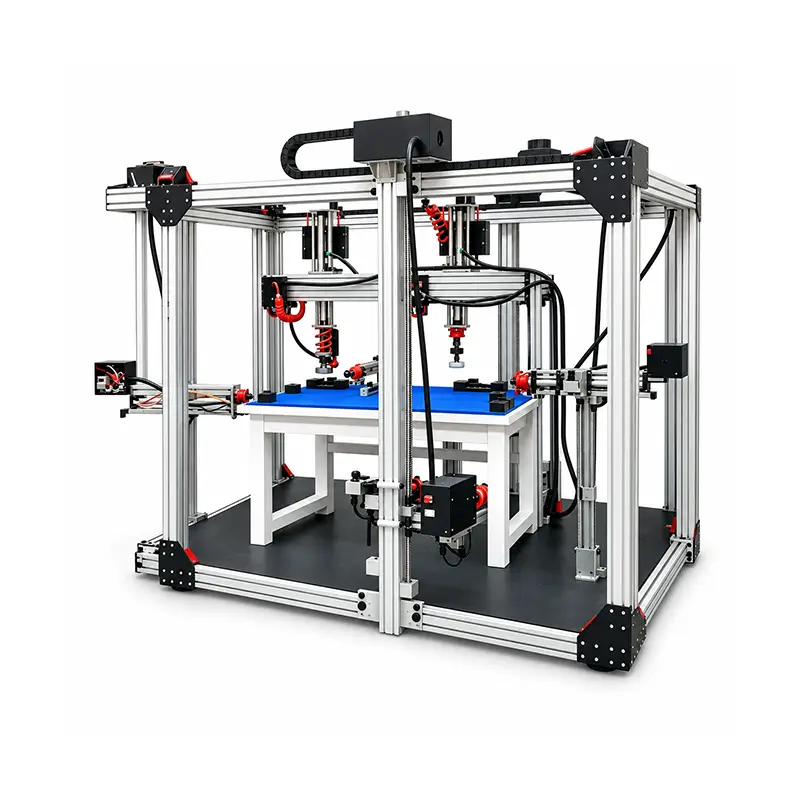
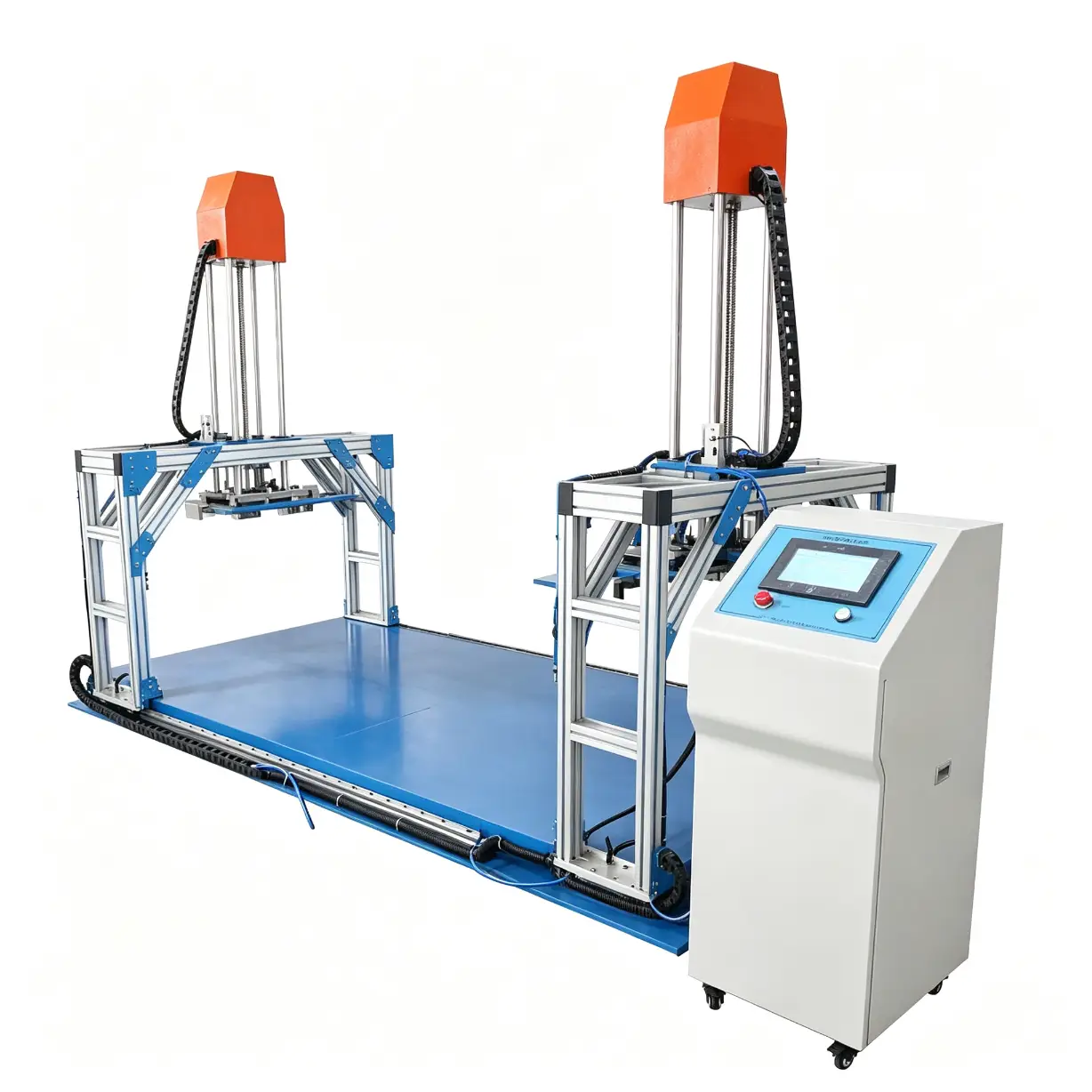
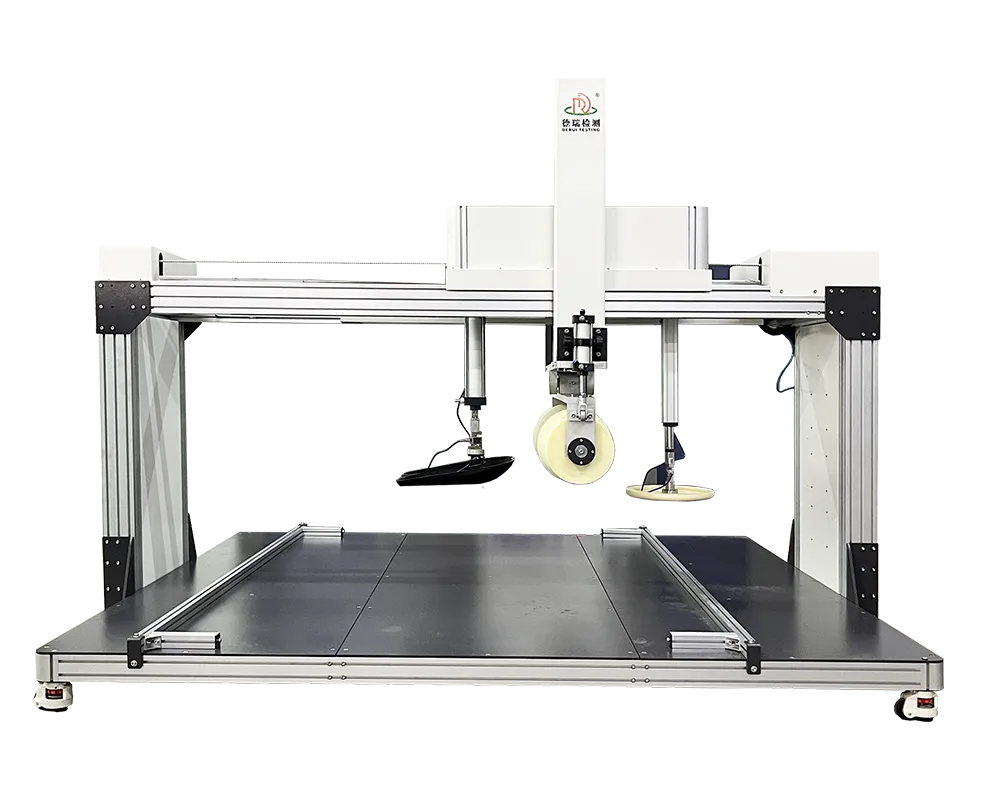
The DR-J503-1 Mattress Rollator Durability Tester is a mattress testing system for repeated rolling over a defined test area. It helps mattress manufacturers and laboratories investigate changes in the mattress construction after a controlled loading sequence.
Whether your project names ASTM F1566, EN 1957 or a customer-specific procedure, start with the required roller, loading arrangement, travel and measurements. Derui can review these requirements against your mattress dimensions and prepare a configuration-specific quotation.
What Rolling Durability Testing Helps You Investigate
Construction Changes
Inspect the loaded area for changes after a defined sequence. Record the specimen construction and test conditions so that later observations can be traced to the correct mattress.
Design Comparisons
Compare mattress designs under consistent roller, support and measurement conditions. A different roller or loading programme can change the basis of the comparison.
Customer Requirements
Translate the buyer’s test specification into a written equipment scope. Identify the required method and measurements rather than relying on a list of standard numbers.
Laboratory Planning
Define the rolling sequence, before-and-after measurements and specimen handling together. Confirm whether the quotation includes the necessary measurement equipment or only the durability function.
ASTM F1566 and EN 1957 Require Method-Specific Configurations
ASTM F1566 includes different methods for mattress components and finished mattresses or mattress sets. Its Section 7 addresses durability, but that does not mean a rollator performs the standard’s separate impact, firmness or other evaluations.
The ASTM F1566 mattress testing guide helps you identify the selected test scope and distinguish rolling from localized loading. Confirm the applicable edition and procedure before setting the machine’s parameters.
EN 1957 addresses durability and hardness of mattresses and beds within its defined scope. The roller arrangement, loading conditions and required measurements must be reviewed for that method. A roller suitable for one procedure is not automatically interchangeable with a roller for another.
Use the EN 1957 mattress testing guide when planning a European-method project. Where both references are requested, ask for a configuration showing how each required function is provided, which assemblies are included and how changeover will be performed.
A standard designation is not an equipment certification. ASTM F1566 presents comparative methods without a universal pass/fail criterion. EN 1957’s firmness rating is not proof of mattress comfort or overall quality. Apply the assessment criteria relevant to the actual test and buyer specification.
Rollator Testing and Cornell-Type Loading Serve Different Purposes
| Selection question | Rollator setup | Cornell-type setup |
|---|---|---|
| How is the specimen exercised? | A loaded roller travels over a prescribed portion of the mattress. | A formed loading head applies repeated localized loading. |
| What must be specified? | Roller geometry and loading, travel, rate, support and count definition. | Loading-head geometry, loading and movement, position, rate and measurement functions. |
| Are the results interchangeable? | No. Different loading arrangements provide different test conditions. Compare results only on an agreed basis. | |
| Does purchasing both establish complete compliance? | No. The responsible laboratory must identify all applicable methods, measurements and acceptance requirements. | |
Rolling takes place along the defined test path; it is not proof that every location or every possible failure mode has been evaluated. The required programme may include separate impact, firmness, component or other tests.
DR-J503-1 Configuration and Quotation Scope
Use actual mattress dimensions and a controlled procedure to compare quotations. Numerical ratings and supplied functions should be documented in the approved DR-J503-1 technical datasheet, not inferred from a standard roller description or a competitor’s model.
| Configuration item | What to confirm |
|---|---|
| Model and purpose | DR-J503-1 Mattress Rollator Durability Tester; repeated rolling evaluation. |
| Roller assembly | Shape, dimensions, mass or applied force, mounting and the method it is intended to implement. Itemise each requested assembly. |
| Mattress envelope | Length, width, thickness, mass and foundation/support arrangement. Include clearance for loading and positioning. |
| Travel and alignment | Required travel, starting position, loaded path and adjustment method; confirm available movement and mechanical limits. |
| Rate and counter | Required test rate, programme capacity and the event recorded as a cycle or pass; agree completion and interruption handling. |
| Measurements | Required height, hardness or force–displacement measurements and whether they use included instruments or separate equipment. |
| Controls and records | Displayed quantities, stored data, export format and any report function offered. Request an example where available. |
| Safety and power interruption | Included guarding, emergency stop and any interlocks; verify actual roller/drive behaviour on power loss and the documented restart procedure. |
| Installation and delivery | Approved dimensions and mass, utilities, access clearance, service scope, included accessories and delivery schedule. |
Common mattress-size names are not a substitute for dimensions. Provide the largest complete specimen and support arrangement your laboratory intends to test.
Agree What the Machine Counts Before Running the Test
“Cycle”, “pass” and “stroke” are not safe substitutes for one another unless their definitions are agreed. A controller may count a movement in one direction or a complete return sequence. Check how the selected method defines the required operation and how the supplied machine records it.
- State the motion event represented by each counter increment.
- Match the programmed count and rate to the approved procedure.
- Record interruptions and decide how a restarted sequence will be documented.
- Keep the machine’s maximum programmable count separate from the method’s required test duration.
Do not convert a laboratory count directly into ten years of service or a guaranteed mattress lifetime. Such a relationship needs its own supporting evidence and defined conditions of use.
Include the Measurements Needed to Interpret the Result
A rolling durability function does not automatically include mattress firmness or hardness measurement. If your procedure requires before-and-after readings, agree the instruments, loading device, measurement locations, conditioning and reporting format before ordering.
Foam IFD/ILD testing and finished-mattress measurement must also be distinguished. A compression attachment should be evaluated against the exact specimen and method; it should not be described as covering both simply because the frame has a loading head.
The furniture testing equipment calibration checklist helps organise checks for the force, displacement, time, travel or other quantities actually used. A saved counter value or USB export does not, by itself, demonstrate a valid test result.
Send These Inputs for a Useful Technical Proposal
- Mattress construction and maximum length, width, thickness and mass.
- Support or foundation arrangement used for the test.
- Applicable standard edition, selected methods and customer additions.
- Required roller, loading, travel, rate and count definition.
- Height, hardness, firmness or other measurement requirements.
- Laboratory utilities, available space and delivery destination.
Ask for an itemised proposal covering the machine, each roller assembly, fixtures, measurement functions, documentation and service responsibilities. If the specification is still being developed, send the buyer’s requirement first so the test scope can be reviewed.
Frequently Asked Questions
Can one configuration support ASTM F1566 and EN 1957?
Only where the roller assemblies, loading, movement and measurement functions needed by the selected methods are provided and confirmed. Request a method-by-method configuration rather than assuming one roller covers both.
Are different rollers included as standard?
The included assemblies must be listed in the quotation. Confirm each roller’s specification and changeover arrangement; a standards list alone does not establish what is supplied.
Does it measure mattress firmness automatically?
Do not assume an automatic measurement function. Specify the measurement method and ask which instruments, loading devices and software functions are included or need to be supplied separately.
What happens if power is interrupted?
Check the approved machine documentation for drive and roller behaviour, stored count information and restart steps. Do not assume automatic roller lifting or an undamaged specimen after an interruption.
Is a rollator test equivalent to ten years of mattress use?
No direct equivalence follows from the cycle count. The result describes the specimen’s response to the defined laboratory conditions, not a guaranteed real-world lifespan.
How much does DR-J503-1 cost?
The price depends on the specimen envelope, roller arrangement, measurement functions and service scope. Send the requested test programme for an itemised configuration and quotation.
Related Mattress and Foam Testing Equipment
- DR-J504 Cornell Mattress Durability Tester — discuss localized loading where it is required by your test scope.
- Mattress Testing Equipment — review equipment types for the wider mattress programme.
- Foam Testing Equipment — consider separate material-level evaluation where applicable.
Standard References
The official ASTM F1566 catalogue describes the scope and comparative use of its methods. The BSI EN 1957 catalogue describes durability and hardness testing and the limits of firmness-rating interpretation. Consult the complete applicable standards for controlled test procedures.