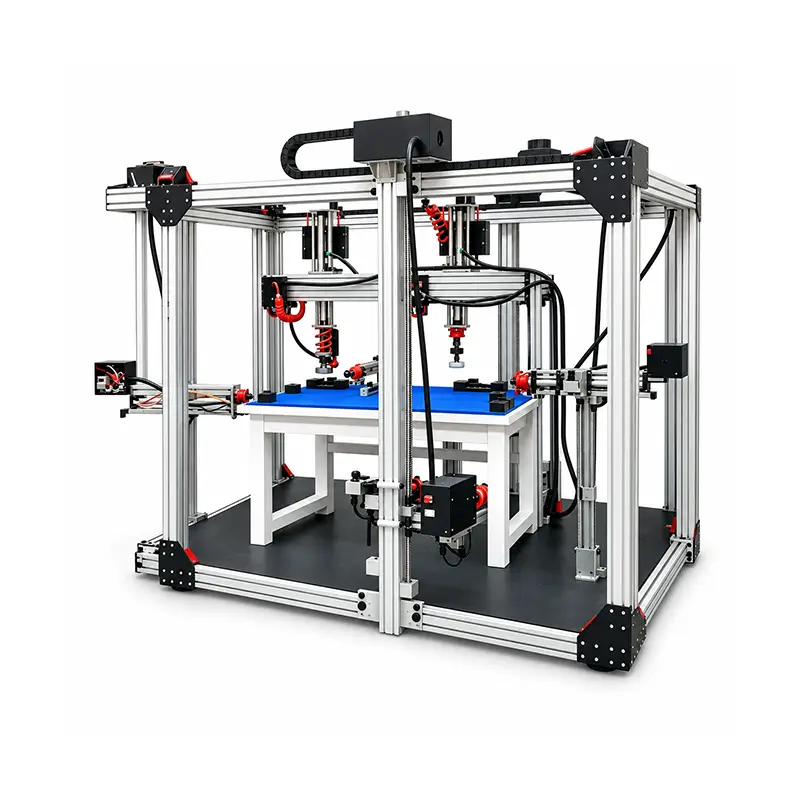
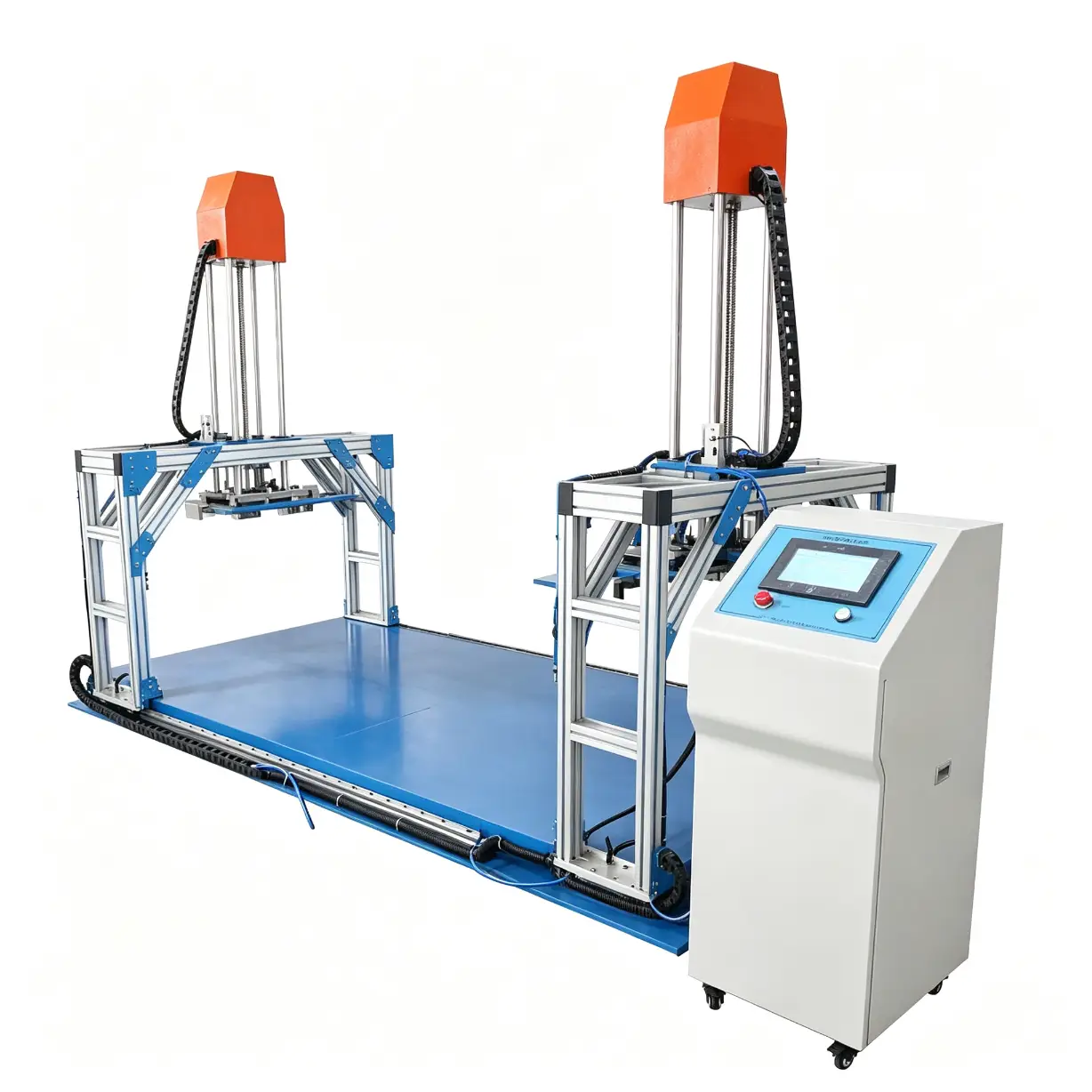
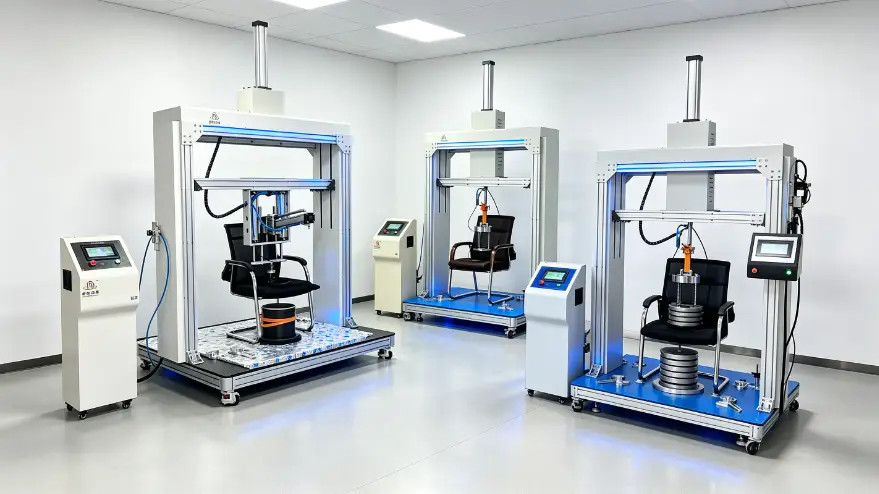
DR-J504 Cornell Mattress Durability Tester — Certified ASTM F1566 Testing Equipment
Model: DR-J504 | Test Type: Cornell Mattress Durability Test | Standards: ASTM F1566 / ISO 20957-7 / EN 1957
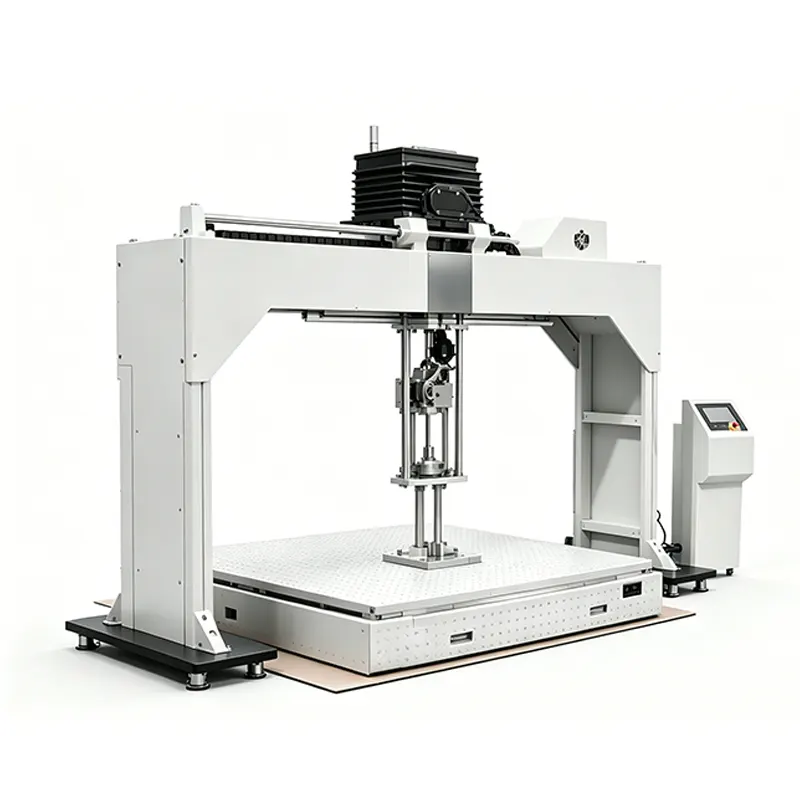
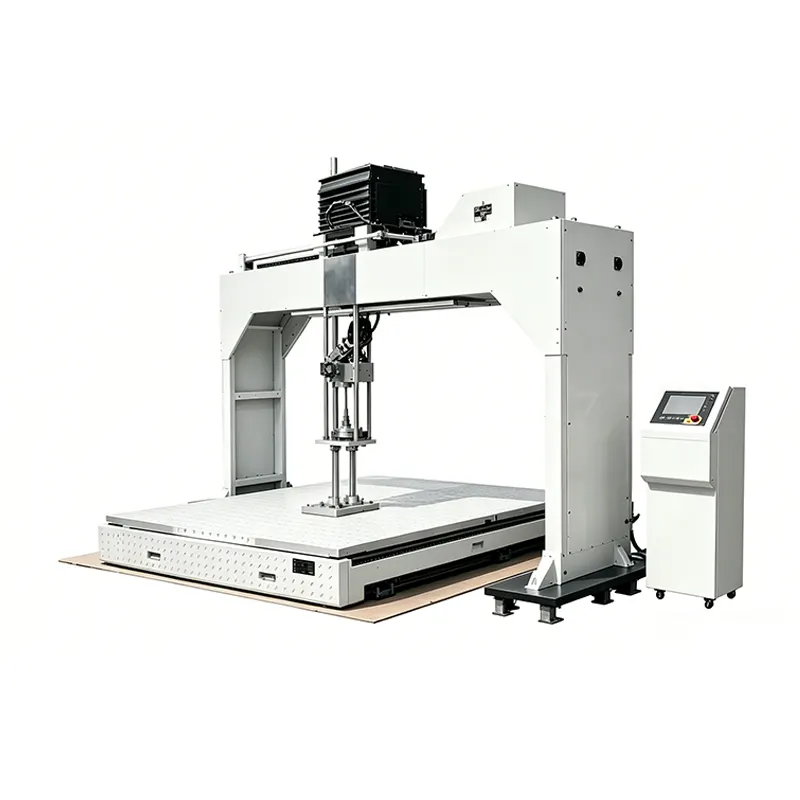
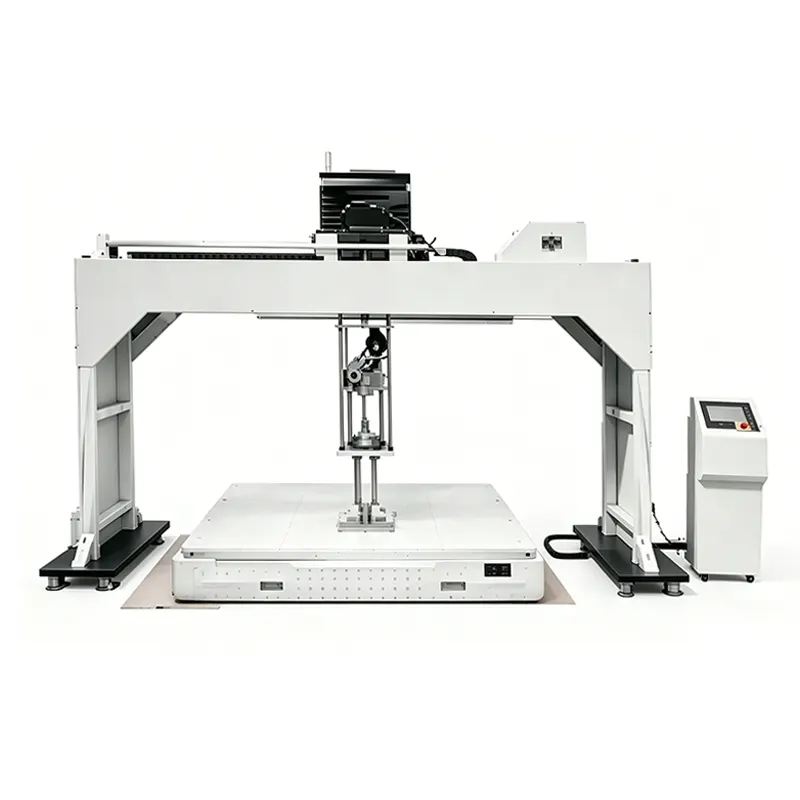
The DR-J504 Cornell mattress durability tester is a professional-grade testing machine built to evaluate how mattresses maintain their support and comfort performance over extended use. By applying 100,000 standardized loading cycles with a 203mm hemispherical plunger, this equipment measures two critical indicators — firmness loss (%) and height loss (%) — that define whether a mattress will pass quality inspections, satisfy end-users, and meet buyer specifications in the North American, European, and international markets.
The DR-J504 is also compatible with foam IFD hardness testing, allowing you to evaluate comfort layer materials before running the full durability cycle — giving you a complete picture of mattress quality from raw materials to finished product.
Whether you are a mattress manufacturer running in-house QC, a third-party testing laboratory issuing certification reports, or a procurement team evaluating supplier products, the DR-J504 delivers the accuracy, repeatability, and multi-standard compliance you need to make confident decisions. Learn more about the ASTM F1566 test procedure and how it compares to EN 1957 rollator testing.
Key Takeaways
- The DR-J504 performs ASTM F1566 Cornell testing with ±1% measurement accuracy — the gold standard for mattress durability evaluation in North America.
- Multi-standard support (ASTM F1566, ISO 20957-7, EN 1957) means one machine covers testing requirements for all major global markets.
- King-size capacity (up to 2,300 × 2,500mm) accommodates the full range of consumer mattress sizes without fixture changes.
- PLC-controlled with 7-inch touch screen, automatic data logging, and USB export — eliminating manual recording errors and speeding up compliance reporting.
- Factory-direct pricing 40–60% below US and European brands, with 2-year warranty and global on-site installation support.
1What Is a Cornell Mattress Durability Tester?
The Cornell mattress test, formally defined in ASTM F1566 (“Standard Test Methods for Evaluating Properties of Mattress and Foundation Systems”) — a standard covered in our complete ASTM F1566 testing guide — was developed by researchers at Cornell University in the 1970s to solve a fundamental problem in the sleep products industry: how to objectively measure long-term durability in a controlled laboratory setting.
Unlike subjective field testing or brand claims, the Cornell test applies 100,000 cycles of repeated vertical loading using a 203mm hemispherical plunger — precisely simulating the localized compression a mattress experiences when a person sits or sleeps on a specific area. This is fundamentally different from the EN 1957 rollator test, which uses a weighted roller traversing the entire surface. After the test completes, two quantitative metrics are calculated:
- Height Loss (%): The permanent reduction in mattress thickness, indicating structural compression of support layers (springs, high-density foam, or latex core).
- Firmness Loss (%): The reduction in the force required to compress the mattress to a specified depth, indicating breakdown of comfort layers (pillow top, memory foam, quilt padding).
These two metrics together provide a complete, objective picture of mattress durability. Major retailers (Wayfair, Amazon, Walmart), certification bodies, and OEM buyers worldwide accept Cornell test results as the standard for mattress quality verification.
Real Case: A mid-sized memory foam mattress manufacturer in California was experiencing a 12% return rate due to early sagging complaints. Internal Cornell testing revealed firmness loss of 22% after 100,000 cycles — far above the 15% threshold their largest retailer required. By switching to a 5 lb/ft³ density support core and adding a high-density transition layer, they reduced firmness loss to 9% and cut returns by 70% within two quarters. The DR-J504 is the same type of equipment used in that analysis.
2How the Cornell Test Works
The Cornell mattress durability test follows a precise, repeatable procedure defined in ASTM F1566. Here is the complete test sequence:
Phase 1: Specimen Preparation
- Condition the mattress at 23 ± 2°C and 50 ± 5% RH for a minimum of 24 hours. This eliminates moisture-related variability and ensures consistent results across laboratories.
- Measure the initial height at the designated test point (typically the mattress center) using a calibrated thickness gauge. Record to the nearest 0.1mm.
- Measure the initial firmness — the force required to compress the surface to 25% of original thickness. For foam-based mattresses, complement this with foam IFD hardness testing to evaluate comfort layer materials before the durability cycle begins.
Phase 2: Cyclic Loading
- Position the 203mm hemispherical plunger at the test point. Program the DR-J504 with the required load force, cycle count (standard: 100,000 cycles), and test speed.
- Start the test. The machine applies cyclic vertical loading automatically. At a typical rate of 100–150 cycles per minute, a full 100,000-cycle test takes approximately 10 to 14 hours.
Phase 3: Post-Test Evaluation
- Allow the mattress to recover for 30 minutes after test completion. This recovery period is critical — premature measurement would underestimate permanent deformation.
- Measure final height and firmness at the same test point. Calculate:
Firmness Loss (%) = [(Initial Force − Final Force) ÷ Initial Force] × 100
- Perform a visual inspection for fabric wear, seam separation, foam cracking, spring protrusion, and structural deformation. Document all observations with photographs.
3Key Features of the DR-J504
ASTM F1566 Compliant Testing
The DR-J504 is engineered specifically for the Cornell test method. The 203mm hemispherical plunger precisely conforms to ASTM F1566 dimensional tolerances, and the loading system delivers the exact force profile specified by the standard. Every test result is directly comparable to industry benchmarks and buyer requirements. See our ASTM F1566 testing guide for a complete explanation of the test method and result interpretation.
Multi-Standard Capability
While the DR-J504 is optimized for ASTM F1566, it can also perform tests to ISO 20957-7 and EN 1957 mattress durability standards. This means a single machine serves laboratories that need to test mattresses for multiple export markets — saving capital expenditure and floor space. Compare ASTM F1566 Cornell testing with EN 1957 rollator testing in our standards comparison guide.
King-Size Mattress Capacity
The DR-J504 accommodates mattresses up to 2,300 × 2,500mm — covering Twin, Full, Queen, King, and California King sizes without any fixture modifications. This flexibility is essential for manufacturers producing multiple mattress formats on a single production line. Whether you’re testing memory foam mattresses, innerspring units, or hybrid designs, the DR-J504 handles them all.
PLC Touch-Screen Control with Automatic Data Logging
The integrated PLC with a 7-inch color touch screen provides Automated PLC-Controlled Testing capabilities:
- Real-time display of cycle count, applied load, test speed, and elapsed time
- One-touch start, pause, and resume operations
- Automatic test data logging with timestamp
- USB data export for compliance reporting and audit trails
- Programmable test sequences for different standards
±1% Measurement Accuracy
Built-in displacement sensors and a precision load cell deliver force and height measurements with ±1% accuracy — the minimum requirement for certified testing. Manual measurement introduces operator variability that can invalidate certification results.
Programmable Cycle Count (0–999,999)
The standard Cornell test requires 100,000 cycles. However, some manufacturers need extended testing at higher cycle counts (200,000+) for premium product lines or accelerated life simulation. The DR-J504 supports any cycle count up to 999,999 with automatic stop.
Overload Protection and Emergency Stop
Safety features include overload protection on the loading system, an emergency stop button accessible from the operator position, and automatic power-failure recovery that returns the plunger to its home position.
4Technical Specifications
| Parameter | Specification |
|---|---|
| Model | DR-J504 |
| Test Standard | ASTM F1566 / ISO 20957-7 / EN 1957 |
| Plunger Diameter | 203mm (8 in) hemisphere |
| Max Load Capacity | 1,000N (adjustable) |
| Test Speed | Adjustable per standard requirements |
| Cycle Count Range | 0–999,999 (programmable) |
| Control System | PLC + 7-inch Color Touch Screen |
| Measurement Accuracy | ±1% (force and displacement) |
| Mattress Capacity | Up to 2,300 × 2,500mm (King Size) |
| Power Supply | AC 220V, 50/60Hz, 0.75kW |
| Machine Dimensions | Approx. 2,800 × 2,000 × 1,800mm (L×W×H) |
| Net Weight | Approx. 350kg |
| Data Export | USB flash drive |
| Safety Features | Overload protection, emergency stop |
| Warranty | 2 years |
5Applicable Testing Standards
| Standard | Scope | Key Requirements |
|---|---|---|
| ASTM F1566 | Standard test methods for evaluating properties of mattress and foundation systems | Cornell test: 203mm plunger, 100,000 cycles, height loss & firmness loss |
| ISO 20957-7 Cornell Testing | Furniture — mattresses and upholstered bed bases — test methods | Cornell and rollator test methods available |
| EN 1957 | Domestic furniture — mattresses and upholstered bed bases — durability assessment | Rollator test: 30,000 cycles, edge support evaluation |
Need to test to a different standard or custom protocol? Contact our engineering team — we customize test fixtures, loading profiles, and software configurations for any specification. Our PLC-controlled testing machines support rapid protocol switching between standards. For a complete overview of Derui’s testing equipment range, visit our product catalog.
6Mattress Type Performance Benchmarks
Different mattress constructions respond differently to Cornell testing. The DR-J504 helps you identify which construction is right for your target market:
| Mattress Type | Typical Height Loss | Typical Firmness Loss | Key Failure Mode |
|---|---|---|---|
| Innerspring | 2–5% | 10–20% | Spring fatigue, comfort layer compression |
| Memory Foam | 1–3% | 15–25% | Viscoelastic cell breakdown |
| Latex | 1–2% | 5–12% | Minimal — best overall performance |
| Hybrid (Spring + Foam) | 2–4% | 8–18% | Depends on transition layer quality |
Note: These benchmarks represent typical results from 100,000-cycle Cornell testing. Actual results vary based on material density, construction quality, and comfort layer thickness. For foam-based mattresses, pre-test material evaluation with a foam IFD hardness tester or foam dynamic fatigue tester can predict Cornell test outcomes before committing to full durability cycles. Use the DR-J504 to establish your own baselines.
7Test Procedure with DR-J504
- Place the mattress on the flat test platform and measure initial height at the designated test point.
- Position the 203mm hemispherical plunger at the test point.
- Select the test standard on the touch screen (ASTM F1566, ISO 20957, or custom). Set the load value, cycle count, and test speed.
- Press Start. The machine automatically applies cyclic loading and logs all data in real-time.
- After test completion, allow 30-minute recovery, then measure final height and firmness.
- The DR-J504 automatically calculates height loss (%) and firmness loss (%). Export the test report via USB.
- Perform visual inspection and document any damage.
8Who Should Use the DR-J504?
- Mattress Manufacturers — In-process quality control, new product development, and supplier qualification. Run Cornell tests during R&D to identify design weaknesses before mass production.
- Third-Party Testing Laboratories — Issue certified test reports for buyer compliance requirements. The DR-J504’s multi-standard capability and USB data export make it ideal for professional testing services.
- Retailers and Brand Owners — Evaluate supplier products before accepting shipments. Set firmness loss and height loss thresholds in purchase agreements and verify compliance with Cornell testing.
- Government Quality Inspection Agencies — Regulatory compliance verification and market surveillance testing.
- Universities and Research Institutions — Sleep science research, material comparison studies, and academic testing programs.
9Why Choose Derui DR-J504?
Factory-Direct Pricing
A comparable Cornell mattress tester from a US brand (e.g., Instron, MTS) runs $30,000–$50,000. European brands (e.g., ZwickRoell) exceed $40,000. The Derui DR-J504 delivers the same ASTM F1566 compliance and ±1% accuracy at 40–60% lower cost.
Multi-Standard Compliance
Ships with ASTM F1566, ISO 20957-7, and EN 1957 test protocols included — no paid upgrades required.
Rapid Delivery
Standard models ship within 15–20 working days. US and European brands typically require 8–12 weeks.
Global Installation and Training
On-site installation and operator training included in 70+ countries. Remote technical support available via video call.
2-Year Warranty
Covers manufacturing defects and component failures under normal use. Extended warranty options available.
Custom Fixture Design
Non-standard mattress types (mattress toppers, baby cribs, medical beds, custom sizes) — our engineering team designs custom fixtures to match your exact requirements.
8Related Testing Equipment
The DR-J504 is part of Derui’s comprehensive suite of furniture and mattress testing equipment. Laboratories that perform Cornell durability testing often pair it with the following instruments for complete quality assessment:
- DR-J801 Foam IFD Hardness Tester — Measures the indentation force deflection of foam comfort layers before they are assembled into the mattress. Essential for incoming material quality control.
- DR-J802 Foam Dynamic Fatigue Tester — Tests foam core resilience over repeated compression cycles, predicting long-term comfort layer performance before it enters the finished mattress.
- PLC-Controlled Testing Machines — Derui’s family of automated testing equipment featuring touch-screen control, data logging, and multi-standard support.
- EN 1957 Rollator Testers — For laboratories needing European market compliance in addition to ASTM F1566 Cornell testing.
9Why Choose Derui’s DR-J504?
Derui Testing Equipment has been manufacturing certified testing equipment for the furniture and mattress industry for over 15 years. Here is why hundreds of laboratories worldwide trust the DR-J504:
- Factory-Direct Pricing: 40–60% below US and European brands without compromising on accuracy or build quality.
- Global Installation Support: On-site commissioning and operator training available in North America, Europe, Southeast Asia, and beyond.
- 2-Year Warranty: Comprehensive coverage including spare parts and remote technical support.
- Multi-Standard Compliance: One machine, multiple test protocols — ASTM F1566, ISO 20957-7, and EN 1957.
- Proven Track Record: Installed in third-party laboratories, major mattress manufacturer QC departments, and retail buyer evaluation centers.
10Frequently Asked Questions
What is the DR-J504 used for?
The DR-J504 is a Cornell mattress durability tester designed to evaluate how mattresses maintain support and comfort after repeated use. It applies 100,000 loading cycles with a 203mm hemispherical plunger per ASTM F1566 and measures height loss (%) and firmness loss (%) — the two key indicators accepted by retailers, certification bodies, and buyers worldwide.
How many cycles does a Cornell mattress test require?
The ASTM F1566 standard requires 100,000 cycles as the baseline test. However, the DR-J504 is programmable from 0 to 999,999 cycles, allowing you to run extended tests for premium product lines or accelerated life simulation protocols.
How long does a full Cornell test take?
A 100,000-cycle test takes approximately 10–14 hours of machine operation. Including specimen conditioning (24 hours), initial measurements, post-test recovery (30 minutes), and final measurements, the complete test process spans approximately 2 working days.
What is the difference between the Cornell test and the rollator test?
The Cornell test (ASTM F1566) uses a hemispherical plunger that applies loading to a single point on the mattress surface — ideal for identifying localized soft spots and core compression. The rollator test (EN 1957) uses a weighted roller that traverses the entire mattress surface — better for evaluating overall surface durability and edge support. For a detailed comparison of these two methods, see our EN 1957 rollator test guide and ASTM F1566 testing guide. The DR-J504 can perform both test types.
Can the DR-J504 test all mattress types?
Yes. The DR-J504 is suitable for innerspring, memory foam, latex, hybrid, and air-bed mattresses. The 203mm plunger applies load to the mattress surface regardless of internal construction. King-size capacity (up to 2,300 × 2,500mm) covers all standard consumer sizes.
What accuracy does the DR-J504 provide?
The DR-J504 delivers ±1% measurement accuracy on both force and displacement — the minimum requirement for certified testing under ASTM F1566 and ISO 20957-7. Built-in sensors eliminate operator-dependent measurement errors.
How much does the DR-J504 cost?
The DR-J504 is priced in the $5,000–$15,000 USD range depending on configuration, automation level, and accessory requirements. Factory-direct pricing from Derui eliminates distributor markups. Request a custom quote for your specific requirements.
What warranty does the DR-J504 include?
Every DR-J504 ships with a 2-year warranty covering manufacturing defects and component failures under normal use. On-site installation, commissioning, and operator training are included at no additional charge. Extended warranty and annual service contracts are available.
What is the lead time for the DR-J504?
Standard models ship within 15–20 business days. Custom configurations (non-standard fixtures, special voltage, additional software protocols) may require 25–30 business days. Contact us for your specific timeline and availability.

Message