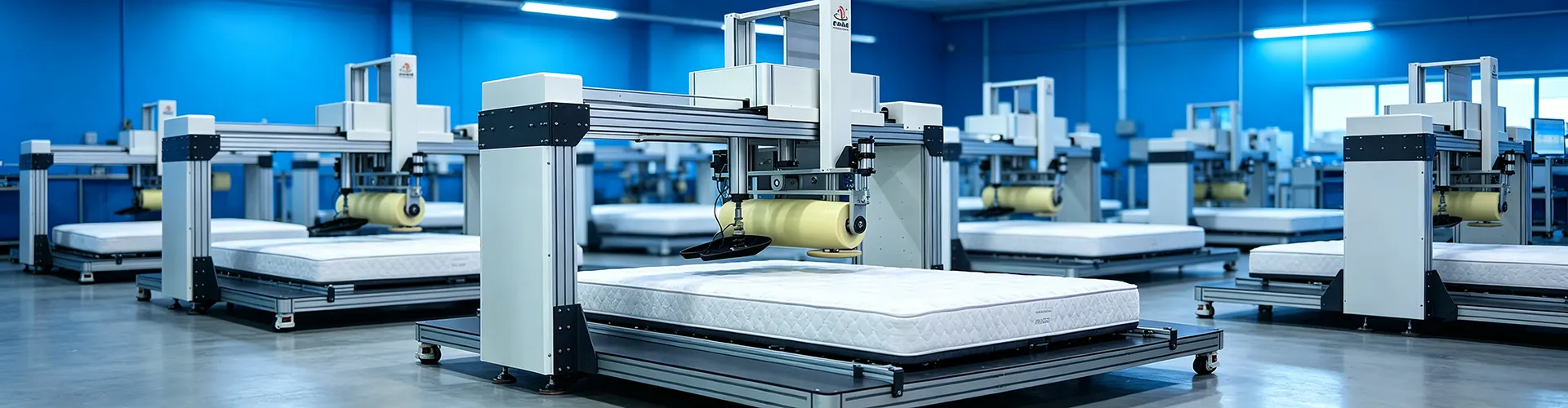
Mattress Testing Equipment for ASTM F1566 & EN 1957 Tests
Compare Cornell and rollator testing systems for evaluating mattress durability, firmness change and height loss under applicable ASTM F1566 and EN 1957 methods.
Derui mattress testing equipment helps manufacturers and laboratories evaluate mattress durability, firmness change, height loss, and structural performance. The range includes Cornell fatigue and rollator durability systems for applicable ASTM F1566 and EN 1957 test methods.
Mattress Types Tested
Innerspring mattresses
Foam and memory foam mattresses
Latex mattresses
Hybrid mattresses
Mattress toppers and foundation systems
Common Mattress Tests
Cornell cyclic durability testing
Rollator durability testing
Mattress hardness and firmness measurement
Height loss and indentation measurement
Edge support and static load testing
Typical Standards
ASTM F1566 — Mattress and foundation durability test methods
EN 1957 — Bed and mattress functional characteristic test methods
Application Areas
Mattress manufacturers and exporters
Bed and foundation system manufacturers
Bedding product quality control laboratories
Third-party testing and certification laboratories
Mattress research and product development teams
Select a Rollator or Cornell Mattress Testing System
Select mattress testing equipment by the loading method and the results your laboratory needs to report. Derui’s DR-J503-1 rollator and DR-J504 Cornell tester exercise a mattress in different ways. Start with the required procedure, then confirm the specimen support, loading assembly and measurement equipment.
DR-J503-1
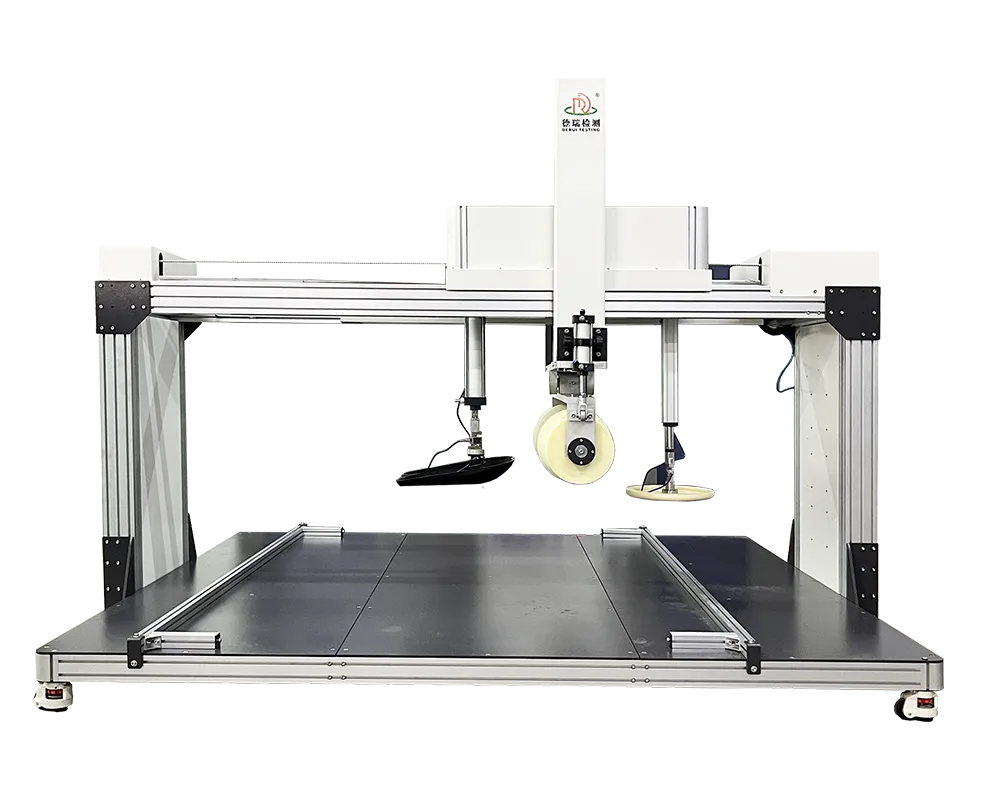
Mattress Rollator Durability Tester
Does your test require a loaded roller moving across the mattress?
Choose a rollator configuration when the selected procedure calls for rolling over a prescribed test area. Confirm the roller geometry and loading, travel, specimen support and required measurements for that method.
For a project referencing ASTM F1566 or EN 1957, review each requested procedure separately. A roller assembly suitable for one method is not automatically suitable for the other.
Does your test require repeated localized loading?
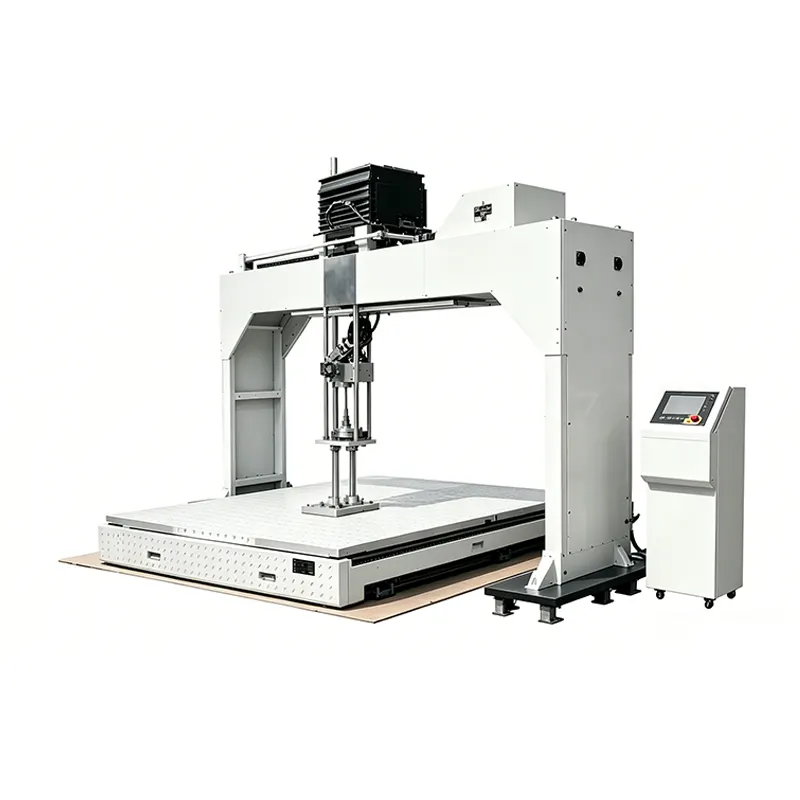
Choose a Cornell-type configuration when the agreed procedure requires repeated loading at a defined area. Specify the loading-head geometry, force, movement, position and specimen support before comparing quotations.
A Cornell tester does not replace a rollator or automatically provide a complete EN 1957 test package. Confirm any height or firmness measurement functions separately.
For ASTM F1566 projects: identify the selected test method and edition. The standard addresses different mattress components and finished constructions; one machine should not be assumed to perform every evaluation. Use the ASTM F1566 mattress testing guide to organise the scope.
For EN 1957 projects: plan the required durability and hardness functions together. Confirm the loading assembly, support and measurement arrangement with the responsible laboratory. The EN 1957 mattress testing guide explains the preparation questions.
These equipment directions are not a certification claim. Rolling and localized-loading results are not interchangeable, a hardness or firmness result is not proof of overall comfort or quality, and a cycle count should not be converted directly into years of service life.
Define What the Quotation Must Include
Loading and Specimen Fit
Define the actual mattress dimensions and support arrangement. Specify the roller or loading head and the locations exercised by the procedure, rather than relying on a mattress-size name.
Measurements and Instruments
Identify the required initial and final height, force–displacement or hardness measurements. Ask which instruments and software functions are included and which require separate equipment.
Controls and Test Records
Agree how the controller counts a pass or cycle, handles interruptions and records results. Confirm the required settings, data format and restart procedure for the supplied configuration.
Order the functions needed by your test programme, not simply both model names. If the project also evaluates raw cushioning materials, compare the separate foam hardness, compression-set and fatigue equipment; foam material testing does not replace finished-mattress evaluation.

 Derui chamber