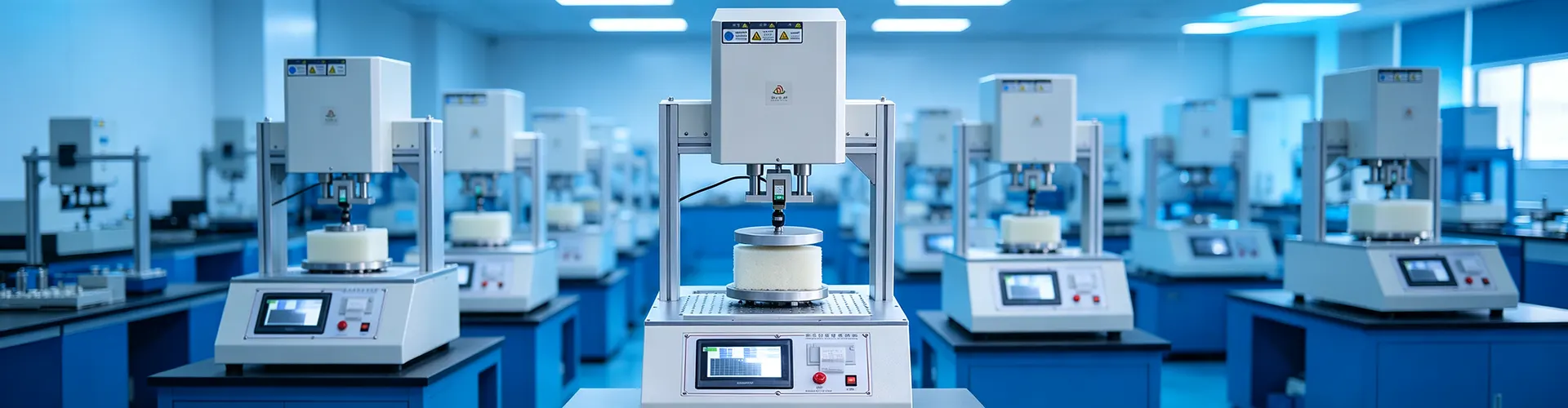
Foam Testing Equipment for Hardness, Compression Set & Fatigue
Compare dedicated systems for foam indentation hardness, compression set and repeated-load fatigue. Select the equipment and measurement configuration for your required method.
Derui provides foam testing equipment for laboratories, manufacturers, and quality control teams that need reliable evaluation of foam performance, durability, and compliance.
Foam Materials
PU foam
Memory foam
Latex foam
Other cushioning materials
Common Foam Tests
IFD / ILD
Compression set
Dynamic fatigue
Compression resistance
Thickness and recovery performance
Typical Standards
ASTM D3574 — applicable foam test methods
ISO 2439 — indentation hardness
ISO 1856 — compression set
ISO 3385 — constant-load pounding fatigue
Application Areas
Mattress production
Sofa and seating foam evaluation
Furniture material quality control
Laboratory compliance testing
Choose the Right Equipment for Your Foam Test
Select foam testing equipment by the result you need: indentation hardness, permanent thickness loss after sustained compression, or changes after repeated loading. Derui supplies dedicated systems for these different tasks, helping furniture manufacturers, foam producers and laboratories define a suitable equipment configuration.
For sofa cushions and mattress foam, initial firmness alone does not describe long-term performance. Start with your material, specimen dimensions and requested test method, then choose the machine and measurement tools for that procedure.
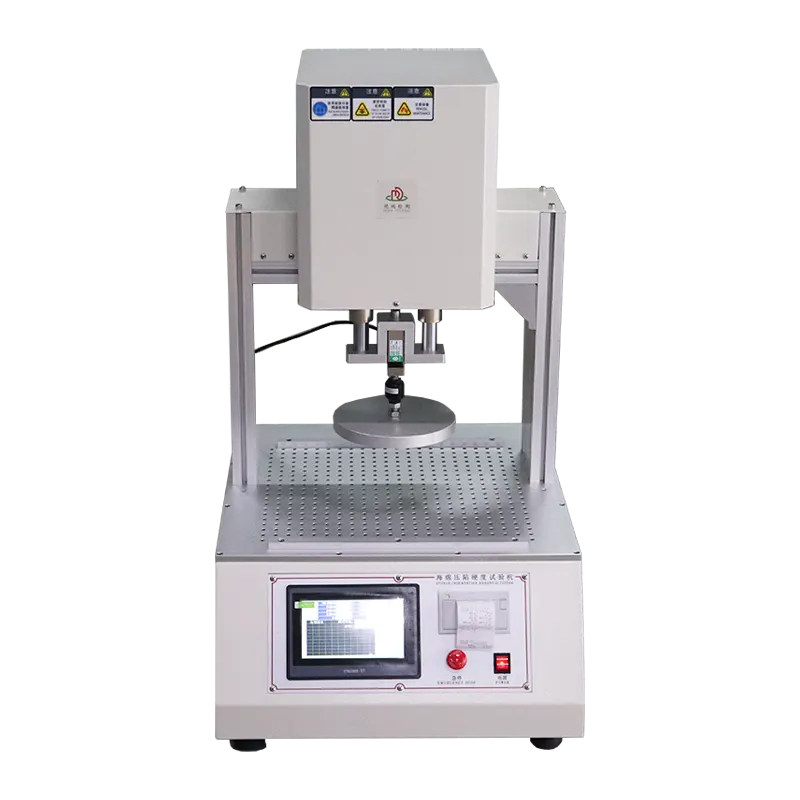
DR-J801
Foam IFD Hardness Tester
How firm and supportive is the foam?
Measure indentation force at the deflection points specified by your test method. Use this equipment direction for initial firmness evaluation and foam batch comparison—not as a substitute for compression-set or fatigue testing.
Confirm specimen dimensions, force range, indenter, support platen and required force–deflection outputs.
How much thickness remains lost after sustained compression?
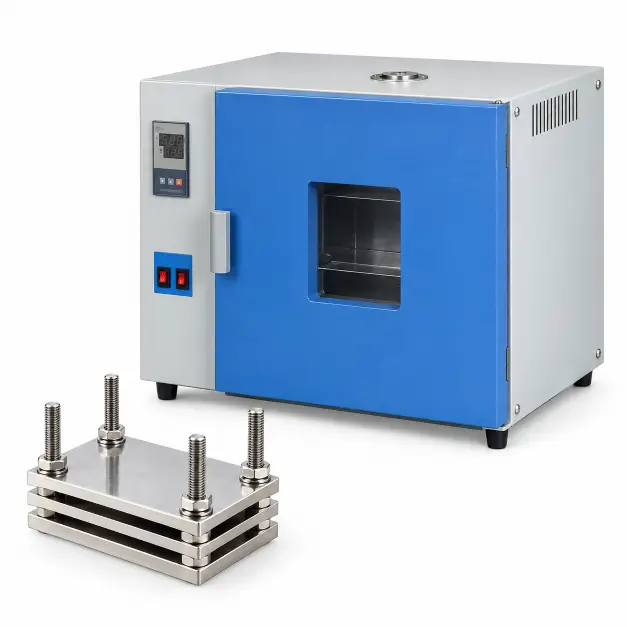
Use a laboratory oven and parallel-plate fixture to hold foam at a specified deflection during a defined exposure. Measure thickness after release and recovery to evaluate permanent deformation.
Confirm spacer gaps, specimen thickness, fixture capacity, exposure temperature and recovery procedure.
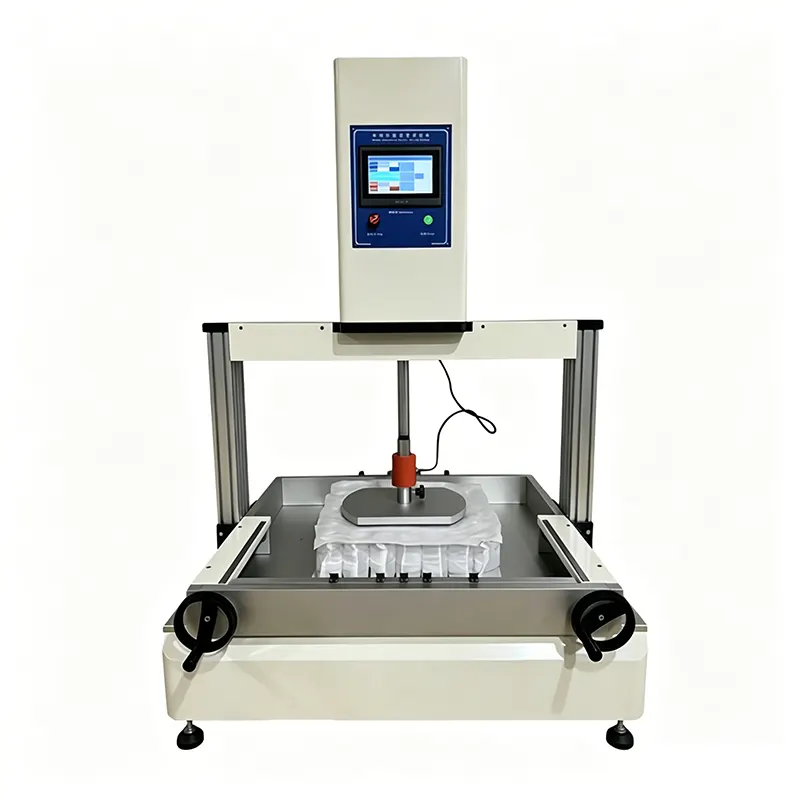
Apply repeated compression or pounding with the agreed loading arrangement. Evaluate thickness change and, where required, hardness change using a compatible before-and-after measurement setup.
Confirm load control, loading head, specimen support, cycle programme and separate hardness measurement needs.
These standards address different test tasks. A reference to ASTM D3574 does not mean one machine performs every test in that standard, and ISO 2439 indentation hardness is not the same test as ISO 1856 compression set or ISO 3385 fatigue.
Indentation hardness / IFD
Equipment direction:
DR-J801
Relevant method family:
ISO 2439; applicable ASTM D3574 indentation method
Configuration to confirm:
Material scope, conditioning, indenter, deflection points and reporting requirements.
Constant-deflection compression set
Equipment direction:
DR-J204
Relevant method family:
ISO 1856; ASTM D3574 Test D where applicable
Configuration to confirm:
Spacer gap, heat exposure, recovery and calculation basis for the selected method.
Constant-load pounding fatigue
Equipment direction:
DR-J802 configuration review
Relevant method family:
ISO 3385; applicable ASTM D3574 fatigue method
Configuration to confirm:
Load-control principle, loading head, support and before-and-after measurements.
Method applicability depends on the foam type and the requested standard edition. Confirm specimen preparation, conditioning, machine functions and accessories before ordering. Equipment selection alone is not product certification, and accelerated test results should not be converted directly into years of service life.
For incoming foam and batch checks: start with the hardness measurements required by your material specification. For sustained-compression evaluation: add the oven and fixture arrangement required by the compression-set method. For repeated-load evaluation: add fatigue equipment and confirm how thickness and hardness will be measured before and after the test.
You do not necessarily need all three systems. Choose the tests required by your customer, material specification or laboratory procedure. Foam material testing also does not replace evaluation of a finished mattress or sofa.

 Derui chamber