Derui chamber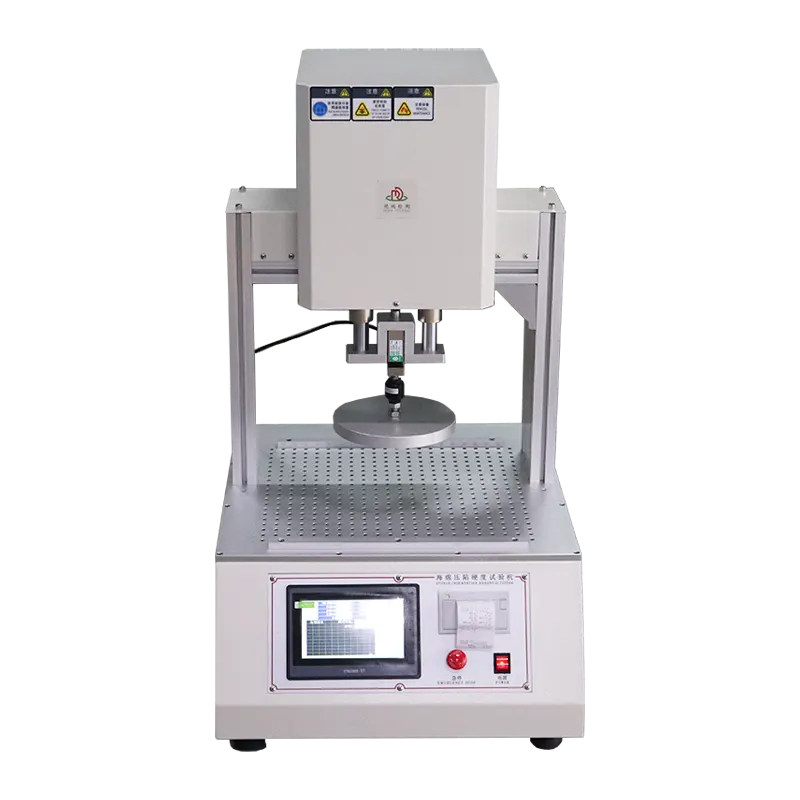

 Message
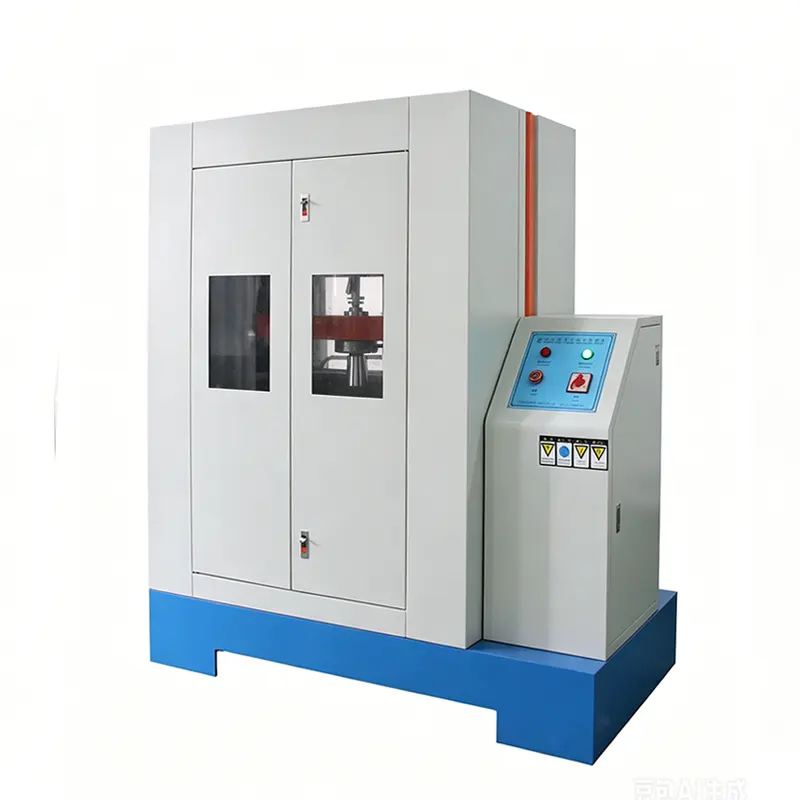
DR-J801 Foam IFD Hardness Tester
Product Summary
Model: DR-J801 | Test Type: Foam IFD/ILD Hardness Test | Standards: ASTM D3574 B1 / ISO 2439 / GB/T 10807
Load Cell: 200kg S-type (±0.5%) | Indenter: 203mm IFD Standard | Display: 7-inch Touch-Screen PLC
Warranty: 12 Months | Lead Time: 15–20 Working Days | Price Range: $2,000 – $5,000
DR-J801 Foam IFD Hardness Tester — Precision Indentation Force Deflection Testing
Your polyurethane foam’s IFD value is the single most important specification your customers check — yet if you’re still using a manual durometer or an uncalibrated compression rig, you’re likely shipping foam that doesn’t match your certified values. The Derui DR-J801 is a ±0.5%-accuracy foam IFD hardness tester built specifically for PU foam QC labs that need repeatable, standards-compliant indentation force deflection data under ASTM D3574 B1 and ISO 2439.
Key Takeaways
- The DR-J801 delivers ±0.5% reading accuracy on indentation force deflection tests — critical for verifying foam hardness at 25%, 40%, and 65% deflection per ASTM D3574 B1 and ISO 2439.
- Dual-standard compliance (ASTM D3574 B1, ISO 2439 A/B/C, GB/T 10807) means one machine replaces multiple dedicated testers for global export markets.
- A 7-inch PLC touch-screen interface with USB/RS232 data export eliminates manual recording errors and speeds up batch QC reporting.
- The interchangeable 203 mm IFD and 50 mm optional indenters allow switching between foam hardness and compression force deflection (CFD) testing on the same platform.
- Priced 40–80% below comparable US and European brands with the same load cell grade and standard coverage — typical ROI within the first 3–6 months for a mid-volume foam plant.
What Is a Foam IFD Hardness Tester?
A foam IFD hardness tester measures indentation force deflection — the force required to compress a foam specimen to a specified percentage of its original thickness using a standardized circular indenter. The result, reported in Newtons (N) or pounds-force (lbf), directly indicates the foam’s firmness or load-bearing capacity.
IFD vs ILD — Understanding the Terminology
| Term | Definition | Typical Standard |
|---|---|---|
| IFD | Force measured at a specified deflection using a 203 mm indenter | ASTM D3574 B1, ISO 2439 |
| ILD | Load measured at same deflection, traditionally in lbf | Older ASTM revisions |
Why Indentation Force Deflection Testing Matters
Imagine you’re a foam manufacturer supplying seat cushions to an automotive Tier 1 supplier. The PO specifies 180 N ± 10 N IFD at 40% deflection per ISO 2439 Method A. You run a quick check with a hand-held gauge — reads 175 N, close enough. But when the batch arrives at the customer’s lab, their calibrated IFD tester reads 195 N — outside tolerance. The entire shipment gets flagged. This scenario plays out weekly. A properly calibrated foam IFD hardness tester with ±0.5% accuracy eliminates this discrepancy.
Key Features
High-Precision Load Cell & Servo Motor Control (±0.5% Accuracy)
The DR-J801 uses an S-type load cell rated at 200 kg (500 kg optional) paired with a Panasonic servo motor for closed-loop displacement control. The system achieves ±0.5% of reading accuracy across the full measurement range. Many budget testers claim “±1% accuracy” at full scale but drift to ±3–5% error at 20% capacity. The DR-J801 maintains ±0.5% spec down to 2% of rated capacity, so your light-density foam readings are as reliable as your high-density ones.
Touch-Screen PLC Interface with USB Data Export
The 7-inch color touch-screen PLC runs dedicated foam testing software. Operators select the test standard from a drop-down menu, set deflection percentages and hold times, view real-time force-displacement curves, and automatically calculate IFD values. Results export via USB or RS232.
Interchangeable Indenters for Multiple Test Methods
Ships with the 203 mm diameter IFD indenter (per ASTM D3574 and ISO 2439). Quick-change coupling allows swapping to a 50 mm indenter for compression force deflection (CFD) testing or custom indenters for OEM specifications.
Real Case: A mattress foam supplier in Vietnam approached Derui after their existing IFD tester failed an annual calibration audit — the load cell was reading 12% high at 25% deflection. Every batch certified as “medium-firm” (150 N IFD) was actually closer to 132 N. Their largest customer had begun returns. Derui shipped a DR-J801 within 18 days. Actual deviation: ±0.3% across all three deflection points. The supplier re-qualified inventory in one weekend and recovered the customer relationship within the same month.
Robust Frame & Auto Preload Functions
Double-column steel frame with stiffness exceeding 50 kN/mm — the machine absorbs a 500 kg load without measurable frame deflection. Automatic pre-conditioning cycles (3 cycles to 75–80% deflection per ASTM/ISO), programmable hold times, and auto-return after test completion. The operator places the specimen, selects the standard, and presses “Start.”
Technical Specifications
| Parameter | Specification |
|---|---|
| Load Cell Capacity | 200 kg (500 kg optional) |
| Force Accuracy | ±0.5% of reading (down to 2% of capacity) |
| Force Resolution | 0.01 N |
| Indenter Diameter (Standard) | 203 mm (8 in) — IFD testing |
| Indenter Diameter (Optional) | 50 mm — CFD testing |
| Indenter Edge Radius | 1.0 mm ± 0.5 mm |
| Crosshead Travel | 0–100 mm |
| Crosshead Speed | 1–500 mm/min (0.1 mm/min increments) |
| Display | 7-inch color touch-screen PLC |
| Data Export | USB flash drive, RS232 |
| Pre-loaded Standards | ASTM D3574 B1, ISO 2439 A/B/C, GB/T 10807 |
| Hold Time | 0–99 seconds (programmable) |
| Machine Dimensions (W×D×H) | 600 × 500 × 850 mm |
| Net Weight | 85 kg |
| Power Supply | 220 V / 50 Hz (110 V / 60 Hz optional) |
| Warranty | 12 months (extended available) |
Applicable Testing Standards
| Standard | Scope | Key Tests |
|---|---|---|
| ASTM D3574 B1 | Flexible cellular materials — urethane foams | IFD test at 25%, 40%, 65% deflection; 203 mm indenter; 30s hold |
| ISO 2439 | Flexible cellular materials — hardness determination | Methods A (index), B (characteristic), C (quick), D (low-force), E (S-factor) |
| GB/T 10807 | Flexible cellular materials — indentation hardness | Identical to ISO 2439; China market certification |
Why Choose Derui DR-J801?
Cost Advantage. A comparable IFD tester from a US brand runs $12,000–18,000. ZwickRoell exceeds $25,000. The Derui DR-J801 delivers ±0.5% S-type load cell accuracy at a price 40% below US brands and 80% below European.
Dual-Standard Coverage. Ships with ASTM D3574 B1, ISO 2439 A/B/C/D/E, and GB/T 10807 — all included. No paid upgrades.
Rapid Delivery. 15–20 working days vs 8–12 weeks for US-manufactured or European testers.
Real Case: A mid-sized foam manufacturer in Shandong, China, was outsourcing IFD testing at ¥80/specimen with 48-hour turnaround — spending over ¥8,000/month. After purchasing a DR-J801, they brought all QC testing in-house. The machine paid for itself within 4 months. Their rejection rate dropped from 3.2% to 0.7% in the first quarter.
Frequently Asked Questions
What is the difference between IFD and ILD?
IFD and ILD refer to the same test principle. ILD is the older term (lbf), IFD is the modern term (N). The DR-J801 reports in N, kgf, or lbf — user-selectable.
What indenter size does ASTM D3574 require?
ASTM D3574 Test B1 requires a 203 mm ± 1 mm diameter circular indenter with a 1 mm ± 0.5 mm edge radius. The DR-J801 ships with this indenter as standard.
Can the DR-J801 test both IFD and tensile properties?
The DR-J801 is optimized for compression-based tests (IFD, CFD). Contact Derui for combined testing recommendations.
What is a typical test cycle time?
A full ASTM D3574 B1 test takes approximately 3–5 minutes per specimen. With auto-return, 12–15 specimens per hour.
What is the warranty period?
Standard 12-month warranty covering all manufacturing defects. Extended warranty up to 36 months available.
Contact Derui’s foam testing specialists for current pricing, lead time, and a free consultation.