
-
Address
Guangdong, China -
WhatsApp
+86 135 2795 8363
Derui – Furniture Testing Equipment Manufacturer
13
2026 - 10
A chair can arrive complete but still be unready for testing: the assembly instructions may be missing, the adjustment position may be unclear, or an earlier load test may have changed its condition. Resolve these details before loading starts so the results can be traced to the actual specimen and setup. This furniture test sample preparation checklist is for manufacturers and laboratories planning mechanical tests on chairs, tables, sofas and mattresses. It also identifies where foam specimens need a separate preparation plan. It is a planning aid, not a substitute for a controlled test procedure. Before dispatch Agree the test scope, sample allocation and assembly requirements. Identify each specimen and photograph its condition. At laboratory receipt Check identity, transit condition, components and documentation. Record discrepancies before assembly or testing. Before the first load Confirm conditioning, configuration, fixture access and baseline observations against the approved test plan. 1. Agree the Test Plan Before Selecting Samples Start with the product’s intended use, the required standard edition and the selected test items. A broad request such as “test this chair” does not define sample quantity, test sequence or acceptance criteria. Use the furniture testing requirements guide to organise the scope discussion, then obtain…
13
2026 - 10
A buyer asking for “EN 1730 testing” may be referring to how a table is tested, while your laboratory still needs to establish which product requirements apply. EN 1730, EN 12521 and EN 15372 have different roles. Identifying that role before ordering equipment helps avoid an incomplete test programme or a fixture package intended for the wrong product. Quick answer: EN 1730 provides table and desk structural test methods. EN 12521 specifies requirements for domestic tables intended for adults. EN 15372 specifies requirements for non-domestic tables within its scope. Office work tables and desks are excluded from both requirement standards and need separate scope review, including the relevant EN 527 documents. 1. Compare the Three Standards by Role EN 1730:2012 — methods Explains methods for evaluating structural stability, strength and durability of tables and desks. It does not itself set the end-use requirements for every table. EN 12521:2023 — domestic tables Addresses safety, strength and durability requirements for adult-use domestic tables, including relevant glass constructions. Check exclusions and the selected product configuration. EN 15372:2023 — non-domestic tables Addresses requirements for non-domestic tables within its scope. The term “non-domestic” does not make it applicable to every table used outside a home….
13
2026 - 10
When two furniture testing machines look similar, their quotations can still describe very different purchases. One may include the required loading fixtures, measuring instruments and installation work; another may quote only the base frame. Comparing the headline prices can leave a laboratory paying later for functions it expected to receive. Quick answer: The cost of furniture testing equipment depends on the test actions, specimen envelope, loading system, fixtures, measurement functions, records and delivery scope. Build one requirement sheet, obtain itemized quotations against it, and compare the cost of getting each proposed system ready for your intended work. 1. What Does “Furniture Testing Equipment Cost” Include? A single tester, a multi-action frame and a complete laboratory are different purchasing scopes. Start by stating which one you need. An internet price without the offered configuration cannot establish the budget for your actual programme. Machine purchase The frame, actuator or motion system, controller and the accessories explicitly included in the base package. Ready-to-test project The machine plus required fixtures, measuring functions, utility preparation, delivery, installation and agreed acceptance checks. Ongoing operation Consumables, maintenance, calibration or verification, software support where applicable, operator time and any outsourced tests. Keep the equipment budget separate from fees…
13
2026 - 10
A table can carry a heavy load without breaking and still tip when force is applied near an edge. It can also remain upright while its top, legs or joints deform. These are different performance questions, so choosing a table tester starts with deciding which response your laboratory needs to evaluate. Quick answer: Use static load testing to evaluate structural response under specified loads. Use stability testing to evaluate resistance to tipping under a defined setup. Review DR-J701 for the structural loading direction and DR-J702 for a focused stability setup. If your programme requires both, ask whether a verified combined configuration or separate stations best fits your specimens and workflow. 1. Stability and Static Load Testing at a Glance Static load: structural response Apply a defined vertical or horizontal load to the selected part of the table. Inspect the structure and record the required deformation, damage or functional observations. Stability: tipping response Apply the prescribed load or force with the specified support, stops and table configuration. Observe whether the table resists overturning under those conditions. Durability: repeated loading Repeated loading evaluates response over a specified sequence. It is an additional action; a static-load result does not demonstrate cyclic durability. The…
14
2026 - 09
Furniture laboratory quality-control guide Furniture testing equipment can repeat thousands of load, impact or movement cycles, but repetition alone does not make a result reliable. The laboratory must know which measurement channels affect the result, how their performance is checked and what evidence supports every reported value. Quick answer: A useful calibration program starts with an equipment register and a measurement-function inventory. For each machine, define the required range and accuracy, identify force, displacement, speed, time, mass and environmental channels, assign daily checks and intermediate verification, obtain traceable calibration where required, review the certificate against your acceptance limits and document any out-of-tolerance impact before returning the machine to service. Calibration planning begins with the actual measurement functions used by the furniture test—not merely the machine model name. Calibration, Verification, Daily Check and Maintenance Are Different CalibrationEstablishes the relationship between an instrument indication and reference values under stated conditions, normally with uncertainty reported. VerificationUses objective evidence to confirm that specified requirements or laboratory acceptance limits are met. Daily or pre-use checkConfirms readiness before testing—for example zero response, fixture security, travel freedom and obvious sensor damage. MaintenanceKeeps the mechanical and electrical system functional. Maintenance does not replace calibration or verification. A calibration…
13
2026 - 09
Furniture testing planning guide Furniture testing requirements depend on what the product is, where and how it will be used, the market it will enter, and the specification named by the buyer. This guide helps manufacturers and laboratory teams turn those inputs into a practical test scope and an equipment-ready request. Quick answer: Most furniture test plans combine visual and dimensional checks with stability, static strength, durability or fatigue, impact, functional and material tests. The exact combination is not universal. Start with the product and intended use, confirm the destination market and contract, obtain the current applicable standards, identify the required test methods and acceptance criteria, and only then select the machine, fixtures, force range, specimen envelope and reporting functions. A furniture test plan should connect each product, target market and decision to the correct test method and equipment configuration. ProductChair, sofa, table, desk, mattress, bed or cushioning material. Intended useDomestic, office, contract, educational, hospitality or another defined environment. MarketThe destination country, retailer, project or customer specification. DecisionDesign validation, incoming inspection, production QC, comparison or formal reporting. There Is No Single Test List for Every Piece of Furniture A dining chair, a task chair, a public-lounge sofa and a mattress…
11
2026 - 08
OFFICE CHAIR TESTING · LABORATORY WORKFLOW A chair test is only useful if another operator can understand how it was prepared, loaded and assessed. For furniture manufacturers and testing laboratories, a practical ANSI/BIFMA X5.1 protocol connects the selected method to the specimen, fixture, machine settings and final record—not just a cycle counter. Quick answer: what should your protocol contain? Identify the standard edition and applicable tests; assign specimens; document the setup and measurement checks; approve the programme; record interruptions and observations; then assess the result against the selected method. This guide is a planning aid, not a substitute for the licensed standard or a laboratory-approved SOP. 1. Confirm the standard and the chair configuration BIFMA lists ANSI/BIFMA X5.1-2017(R2022), General-Purpose Office Chairs–Tests. The R2022 designation indicates reaffirmation. Record the exact edition requested by the customer or programme rather than shortening it to “X5.1-2022.” BIFMA’s official standard description is linked in the references below. Confirm whether the chair and its intended use belong within this scope. Large-occupant office chairs and public/lounge seating have separate BIFMA standards; they should not automatically inherit an X5.1 test plan. For the scope and equipment-selection background, see our BIFMA X5.1 office chair testing guide. Identify the model,…
11
2026 - 08
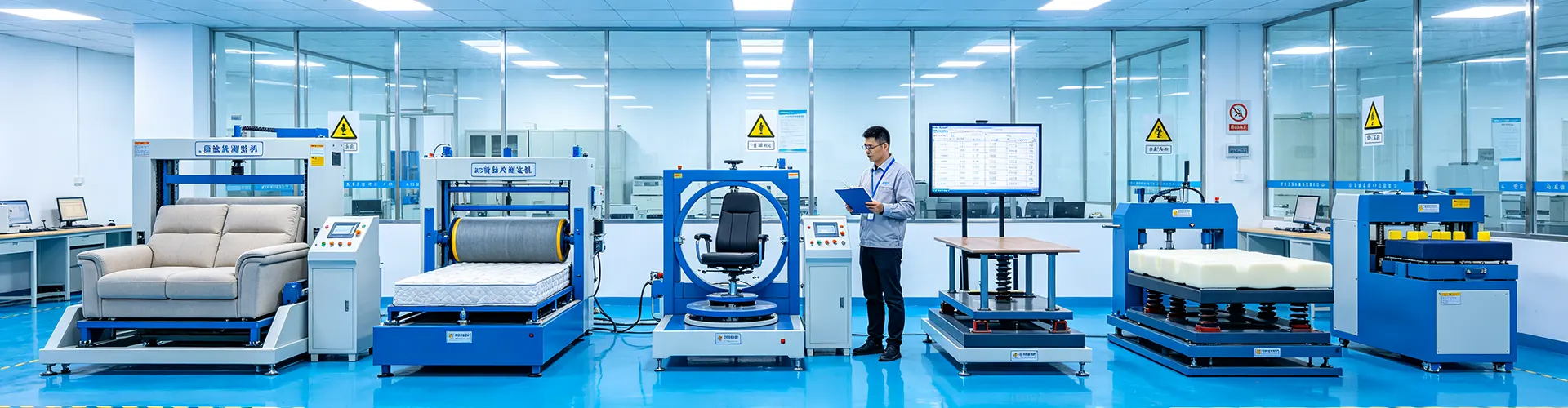
Furniture laboratory planning and equipment selection Build the Test Scope Before You Buy the Machines A useful furniture testing laboratory is not defined by how many machines it owns. It is defined by whether its test scope, methods, fixtures, utilities, measurement controls and records work together. This guide gives manufacturers and laboratory teams a practical path from the first product list to a procurement-ready equipment configuration. Quick answer: Set up a furniture testing laboratory in seven steps: define the products and decisions the lab must support; identify target markets and current standards; build a test-method matrix; select equipment and fixtures; plan space, utilities and safety; establish calibration and record controls; then purchase in phases against a written user requirement specification. Do not choose a machine from a standard number alone—the edition, test item, sample envelope and reporting needs all affect the final configuration. Conceptual multi-category laboratory illustration. Final equipment selection, guarding, clearances and utilities must be confirmed for the actual facility and test methods. 1. Decide What the Laboratory Must Accomplish Start with business decisions, not a catalogue. An in-house quality-control lab may screen incoming materials, compare prototypes and monitor production consistency. A development laboratory may investigate failure modes and…
07
2026 - 08
Foam material testing for furniture and mattress laboratories A foam sample that recovers after a short compression can still change after sustained compression or repeated loading. Compression set and dynamic fatigue evaluate different responses. This guide explains how to select the method, control the specimen and measurements, and connect the test scope with suitable laboratory equipment. Quick answer: Compression set evaluates residual deformation after a defined compression and recovery procedure. Dynamic fatigue evaluates changes after repeated loading. Choose the applicable method and edition, then confirm the fixture, loading conditions, measurements and reporting formula. Neither result should be converted into a universal furniture service life or quality grade. 1. Compression Set and Dynamic Fatigue Are Different Tests Compression set The sample is held at a specified compression for a defined period and environment, released and measured after the required recovery. The result describes remaining deformation under those conditions. Dynamic fatigue The sample undergoes repeated loading. The evaluation compares relevant properties before and after that loading, such as thickness and hardness under a defined measurement procedure. The tests complement one another when both are relevant to the material specification. A satisfactory result in one does not establish performance in the other. Results…
07
2026 - 08
SEATING STRENGTH & DURABILITY · LABORATORY PLANNING Choosing an ISO 7173 seating tester starts with the tests you need—not the number of actuators on the machine. Chair and stool manufacturers need fixtures, loading control and records that match an agreed test plan. A large frame or a high cycle counter alone does not establish method compatibility. Quick answer: how do you prepare for ISO 7173 testing? Confirm the edition and applicable methods; agree the test severity and assessment basis; map each method to its specimen, loading geometry and equipment; then document execution and results. This article is a planning guide, not a complete laboratory SOP or a substitute for the licensed standard. 1. Scope and edition: start with the right document This guide uses ISO 7173:2023, the published edition for structural strength and durability testing of chairs and stools. Its scope is broader than upright office seating. Children’s highchairs, table-mounted chairs and bath seats are excluded; upholstery durability, ageing, degradation, ergonomics and electrical functions are outside its test scope. ISO also lists an ISO/DIS 7173 revision under development, with stability included in its title. Do not treat that draft as the published 2023 edition. Check the official catalogue and the…
 Derui chamber


