
 Derui chamber
A table can carry a heavy load without breaking and still tip when force is applied near an edge. It can also remain upright while its top, legs or joints deform. These are different performance questions, so choosing a table tester starts with deciding which response your laboratory needs to evaluate.
1. Stability and Static Load Testing at a Glance
Static load: structural response
Apply a defined vertical or horizontal load to the selected part of the table. Inspect the structure and record the required deformation, damage or functional observations.
Stability: tipping response
Apply the prescribed load or force with the specified support, stops and table configuration. Observe whether the table resists overturning under those conditions.
Durability: repeated loading
Repeated loading evaluates response over a specified sequence. It is an additional action; a static-load result does not demonstrate cyclic durability.
The distinction is the question being answered and the prescribed setup. Both strength and stability work may use vertical and horizontal forces. The presence of a cylinder, a weight or a load cell therefore does not identify the test by itself.
2. What a Static Load Test Evaluates
Static loading applies the specified load at a defined location and direction for the required sequence or holding period. Depending on the selected procedure, the laboratory may examine a main tabletop, an ancillary surface, legs, joints or another structural feature. Loads, locations and acceptance criteria come from the applicable test plan.
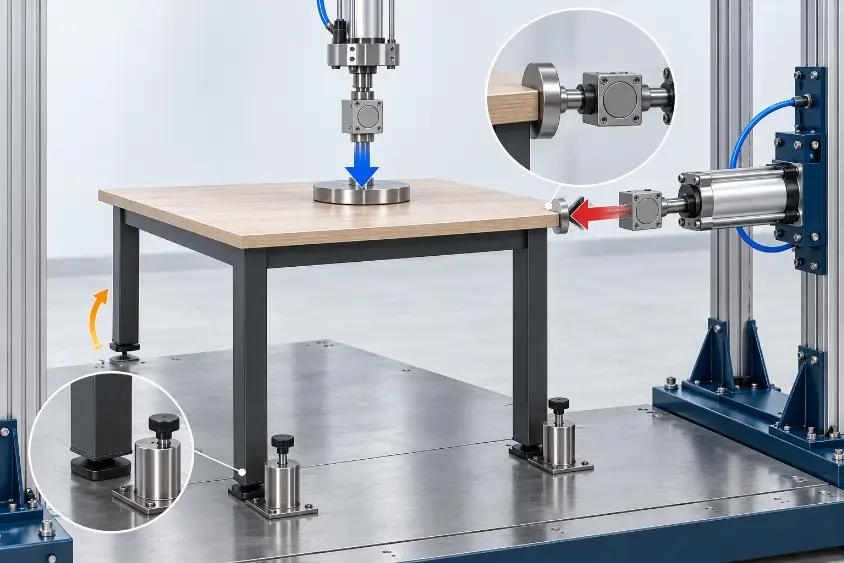
For structural loading, the setup may include stops or restraints prescribed by the method. Their purpose and position matter: changing the support can change the load path and the specimen response. The apparatus should reproduce the required action without adding unintended support to the area being evaluated.
- Record the table configuration, loading direction and contact point.
- Check that pads, supports and restraints match the selected procedure.
- Identify any force or displacement measurements required and their reference positions.
- Inspect the specified structural features and function after the loading sequence.
3. What a Stability Test Evaluates
Stability testing concerns the relationship between the applied action and the table’s support geometry. Loading near an edge or applying a horizontal force at a specified height can create an overturning tendency. The procedure defines the table configuration, load, contact position and the response to evaluate.
Pedestal bases, cantilever tops, extension leaves, folding legs and height adjustments can affect the relevant setup. Photograph the base and identify the specified adjustment or extension position. A result for one configuration should not automatically be assigned to every configuration of an adjustable table.
Where the procedure uses floor stops, they must perform the intended restraint without adding support that prevents the tipping response being assessed. Follow the controlled method for their geometry and position. A clamp that holds the table upright can make an apparent “stable” result meaningless for a free-standing stability evaluation.
4. Choose the Standard from the Table’s Intended Use
EN 1730:2012 describes methods for table and desk stability, strength and durability. Its official scope does not supply end-use requirements; the applicable product standard or buyer specification provides those. ISO 19682:2023 also provides structural table and desk test methods. Identify the edition and selected action rather than treating either standard number as one universal load programme.
For domestic tables, review the applicable EN 12521 requirements. For non-domestic tables, review EN 15372 where relevant. For commercial office, institutional and educational desk/table products, ANSI/BIFMA X5.5 is another requirement to review. Select by product scope and the buyer’s specification; country of sale alone does not define the entire test programme.
A height-adjustable desk can need more than strength and tipping evaluation. Adjustment mechanisms, electrical functions, storage features or other product characteristics may add separate work. Make those requirements explicit before comparing equipment quotations.
5. DR-J701 or DR-J702: How to Make the Equipment Decision
Start with the Table and Desk Testing Equipment category and prepare a list of the actual actions to be performed. The model name is a starting point; the approved fixtures, loading range, specimen clearance and measuring functions establish the delivered capability.
Review DR-J701 for structural loads
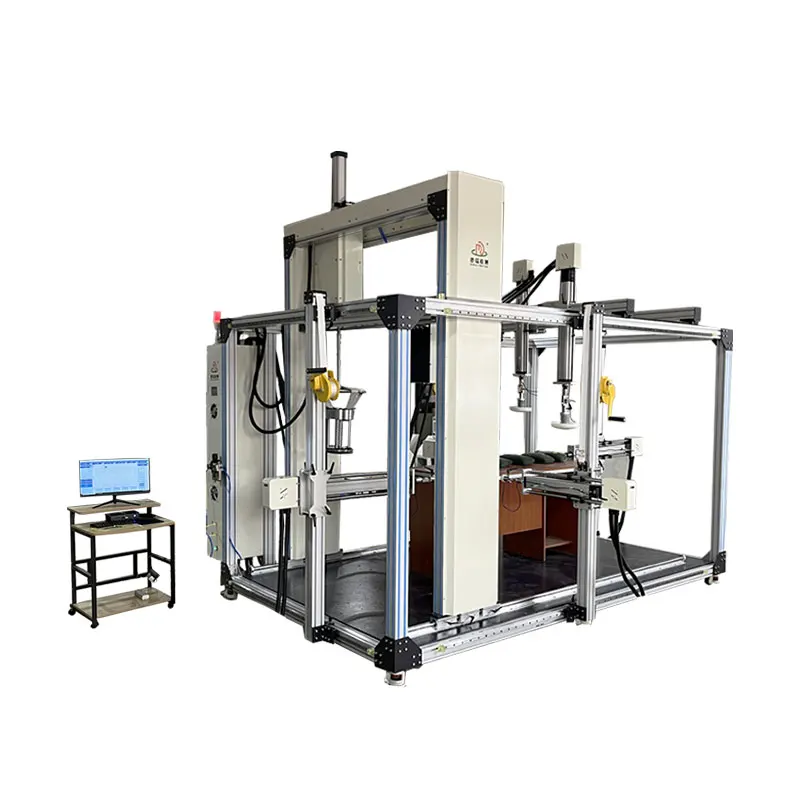
The DR-J701 Table Static Load Tester is the equipment direction for controlled structural loading. Provide the selected static-load actions and table geometry. Request any additional durability or stability capability as a specific configuration item.
Review DR-J702 for tipping stability
The DR-J702 Table Stability Tester is positioned around controlled table and desk stability setups. Provide base geometry, loading positions, table configurations and the exact stability procedure for fixture review.
If both actions are needed, compare a combined system against separate stations. A combined frame may reduce duplicate hardware when fixtures and access genuinely cover the selected tests. Separate stations may suit parallel testing or reduce repeated setup changes. The right purchase depends on verified coverage, changeover time, specimen handling and workload—not on an assumed rule that every laboratory needs two machines.
Do not copy rated machine capacity into a test programme as the required load. Capacity describes what the offered equipment can accommodate; the procedure specifies what to apply. Likewise, a high programmable cycle limit does not establish static-load or stability-method suitability.
6. Three Illustrative Purchasing Scenarios
A dining table with a long top
The laboratory may need structural loading of the top and connections, plus stability in the specified edge-loading setup. Check both test actions and the reach of the proposed fixtures.
A height-adjustable office desk
State all required height configurations and attached equipment or accessories covered by the test plan. Review structural loading, stability and any separate mechanism or electrical requirements.
An extension or pedestal table
Provide the normal and extended layouts and base geometry. Confirm access to the relevant contact points and how the prescribed restraints can be installed.
These are planning examples, not customer case studies or prescribed standard sequences. The applicable procedure determines which configurations and actions are required for a particular product.
7. Build a Comparable Equipment RFQ
- Table type, intended use, dimensions, mass and photographs or drawings.
- Standard edition, exact test actions and any buyer acceptance criteria.
- Base, feet, casters, extension leaves, adjustment positions and accessories.
- Required load directions, locations, range, timing and measurements.
- Tests performed in-house versus outsourced, and expected sample volume.
- Required records, operator access, site utilities and installation location.
Ask each supplier to respond against the same requirement sheet. Separate included fixtures and instruments from optional functions, and request an example setup or acceptance demonstration for your largest or most difficult specimen. This makes a quotation more useful than a list of standard names.
8. Questions Buyers Commonly Ask
Does passing a static load test prove stability?
No. Structural loading and tipping evaluation use different criteria and may require different specimen configurations and restraints.
Can one machine perform both?
Yes, where the installed loading system, fixtures, clearance, controls and measurements have been confirmed for each selected action. Ask for written coverage and an agreed demonstration.
Is tabletop deflection the same as overturning?
No. Deflection concerns movement or deformation of the structure; overturning concerns the table losing stability under a defined loading condition.
How much load should we specify?
Take the required load from the controlled standard and buyer test plan. Give that requirement to the supplier, who can propose suitable equipment and measuring ranges.
Related Laboratory Planning Guides
Define the product tests
What Testing Is Required for Furniture? helps connect product type with the evidence needed.
Plan measuring instruments
Furniture Equipment Calibration Checklist supports instrument checks and records.
Plan the laboratory
How to Set Up a Furniture Testing Laboratory connects the equipment scope with space and utilities.
Standard Scope References
BSI: EN 1730:2012 · ISO: ISO 19682:2023 · BIFMA: X5.5-2021 scope. Use the applicable controlled edition and approved procedure for detailed values and acceptance decisions.



