Derui chamber
Cornell-style mattress testing is often discussed alongside ASTM F1566, but the method name, sample type and measurement stage need to be stated precisely. This practical workflow helps a laboratory prepare, document and review a mattress durability project. It is not a reproduction of the ASTM test method or a substitute for a controlled laboratory SOP.
1. Define the Specimen and the Required Outcome
ASTM F1566 covers innersprings, boxsprings, finished mattresses or mattress sets and relevant core or foundation constructions. Its published scope describes comparative test data rather than a universal pass/fail criterion. Record whether the item is a complete mattress, a core, a foundation or a set, and whether the selected procedure requires an upholstered sample.
State the result sought: durability response, impact response, firmness retention or surface deformation. A laboratory may combine procedures, but it should not collapse them into one unspecified “Cornell test.” If EN 1957 is also requested, plan its rollator and measurement actions separately rather than treating the methods as interchangeable.
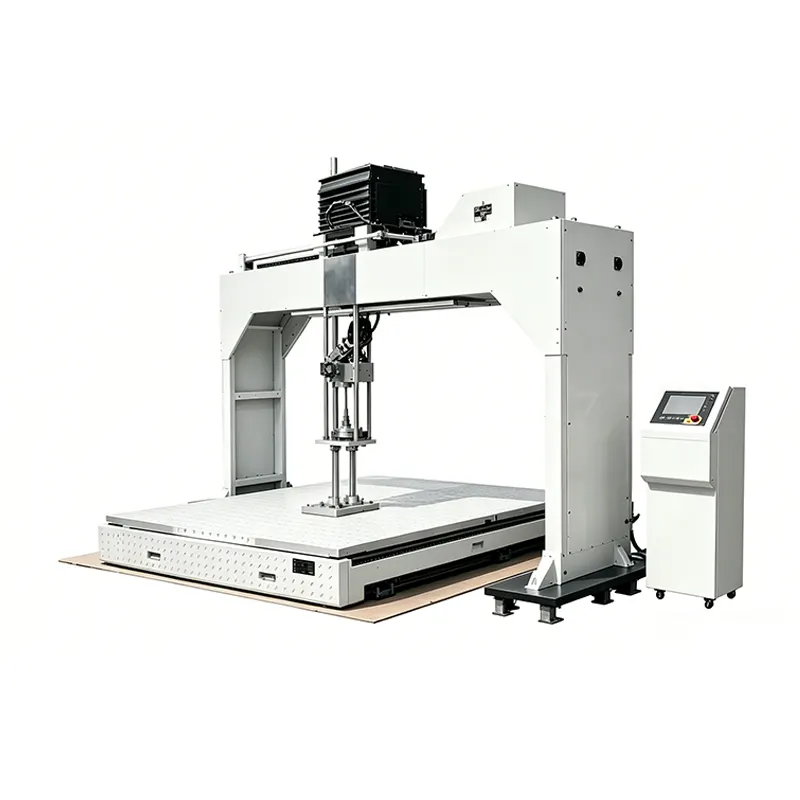
2. Prepare a Controlled Test Record
- Identify the manufacturer, model, construction, specimen dimensions and test orientation.
- Record the controlled standard edition, exact procedure, customer deviations and acceptance criteria, if any.
- Document the mattress support or foundation and how the specimen is positioned and restrained.
- Record the loading or impact assembly specified by the selected procedure; verify its actual geometry and calibration status.
- Define baseline and post-test measurements, measuring locations, recovery conditions and inspection checkpoints.
- Set the machine programme only after the approved SOP and specimen setup are reviewed.
For any departure from the selected procedure, log what changed and why. ASTM’s published guidance explicitly calls for variations from the procedure to be noted in the test form and results. This is more useful than reporting a cycle count without the specimen and setup context.
3. Run, Observe and Measure
Before the run
Photograph the installed specimen and loading location, verify the programmed action, perform pre-test measurements and confirm safety controls.
During the run
Monitor the relevant counter or loading record, interruptions, specimen movement, audible or visible changes and any operator intervention.
After the run
Follow the specified recovery and measurement sequence, then record observable damage, firmness or surface changes using the same defined measurement points.
A percentage height-loss calculation may be useful when the applicable procedure or customer specification calls for it, but no formula is a substitute for controlled measuring locations and timing. Do not compare numbers from different support conditions or recovery intervals as though they were directly equivalent.
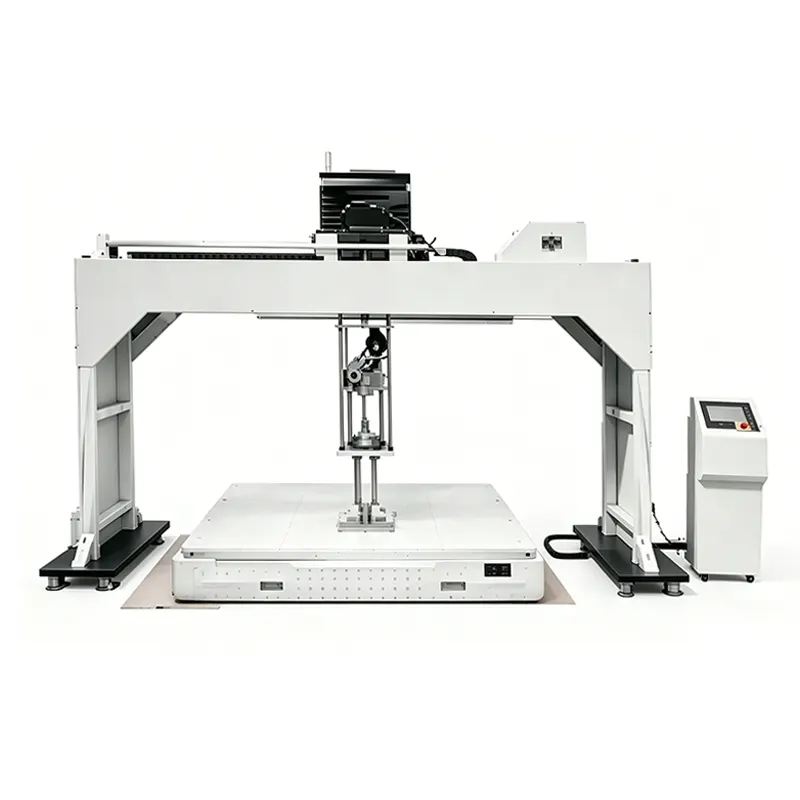
4. Check the Proposed Equipment Against the Method
The DR-J504 Cornell mattress durability tester is the current product page to review for this project. The previous article linked to a DR-J101 URL that now returns 404, so do not reuse that outdated recommendation. Ask for approved details of the loading assembly, specimen envelope, controls, measurement functions and reporting outputs.
A tester advertised for Cornell work is not proof that every F1566 procedure is installed. The durability action, impact action and firmness-retention measurements must each be mapped to their own fixtures, settings and instruments where required.
Frequently Asked Questions
Is ASTM F1566 Section 9 the durability test?
No. ASTM’s official scope identifies durability in Section 7 and firmness retention/surface deformation in Section 9 for F1566-14(2021).
Does F1566 give one universal pass/fail result?
No. ASTM describes comparative analysis without a universal pass/fail criterion. A customer specification may add acceptance limits.
Can a Cornell machine replace EN 1957 rollator testing?
Do not assume so. The procedures and loading arrangements differ; prepare a separate method-to-equipment review.
Related Equipment and Guides
Mattress machines
Mattress Testing Equipment by action and specimen size.
EN 1957 method
EN 1957 Mattress Testing Guide for a separate rollator-based programme.
Equipment calibration
Calibration Checklist for instrument and record planning.
Scope sources: ASTM F1566-14(2021) official scope. This practical guide does not reproduce a paid standard or replace the controlled edition, approved test plan or machine specification.