Derui chamber
An office chair testing programme needs more than a list of machines or a generic load table. The laboratory must identify the chair configuration, select the applicable ANSI/BIFMA X5.1 actions, prepare each fixture and measurement, then retain enough setup evidence to interpret the observations.
BIFMA lists the current general-purpose office-chair designation as ANSI/BIFMA X5.1-2017(R2022). “R2022” means reaffirmed; it is not a new 2022 load table. This guide provides a planning and recording workflow, not the protected standard text or an accredited test procedure.
1. Check That X5.1 Is the Right Scope
BIFMA describes X5.1 as covering general office and institutional seating, including side or guest chairs, stacking chairs, tablet-arm chairs and stools. Public/lounge seating and large-occupant office chairs have separate BIFMA standards. Confirm the product’s intended use and the customer-required edition before choosing test items. The X5.1 scope guide explains this decision in more detail.
2. Make One Row per Selected Test Action
Specimen and applicability
Document chair model, adjustments, components and tested configuration. Mark tests not applicable with a reason.
Procedure and equipment
Record standard edition, selected action, fixture, loading direction, contact point and machine ID.
Measurements and evidence
Record measuring instrument ID, calibration status, programme settings, inspection stage, deviation and result or observation.
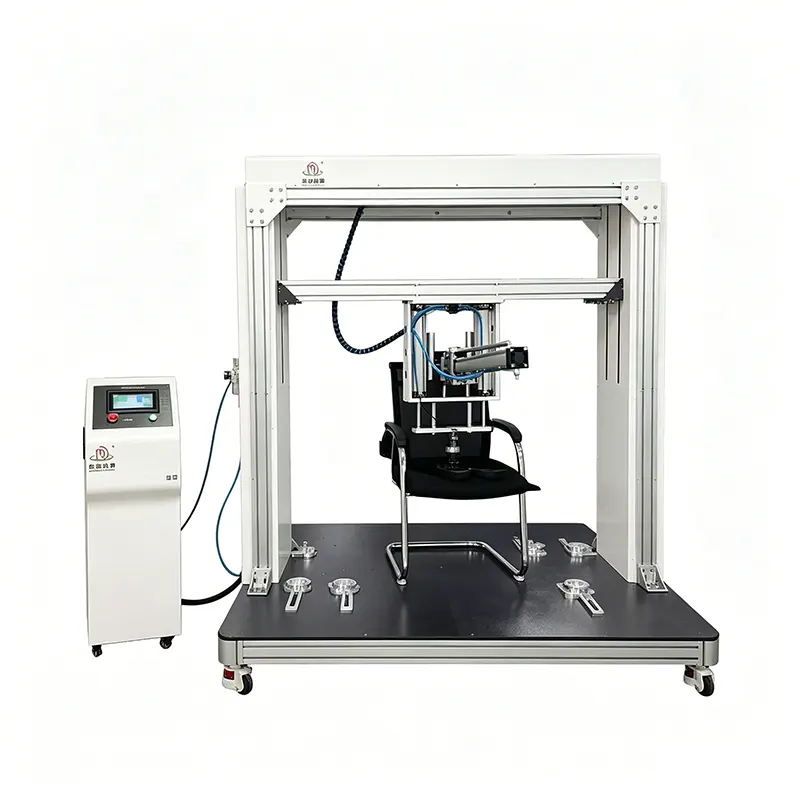
A single chair may need different setups for seat/back loading, swivel, base, drop or stability evaluation. Do not infer that two axes on one frame cover every required action. Review the office chair laboratory equipment selection guide when translating the test list into equipment packages.
3. Check the Setup Before Running a Programme
- Confirm the specimen identity, orientation and relevant adjustment positions.
- Check the fixture, support, restraints and contact-point location against the selected method.
- Verify that programmed load or movement, timing and cycle settings match the approved procedure.
- Record instrument identification and required pre-use or calibration checks.
- Photograph the installed setup and confirm guards, stops and operator access.
- Identify who may pause, restart or change settings and how that event will be documented.
For repeated loading, a completed cycle counter is only one data point. Inspect the relevant components and function at the stages specified in the procedure. For drop or impact tasks, confirm the actual impactor, lift/release arrangement and target location separately. The DR-J607 drop-impact product page illustrates a distinct equipment direction; it should not be treated as a replacement for seat/back cycling.
4. Preserve a Result That Can Be Reviewed
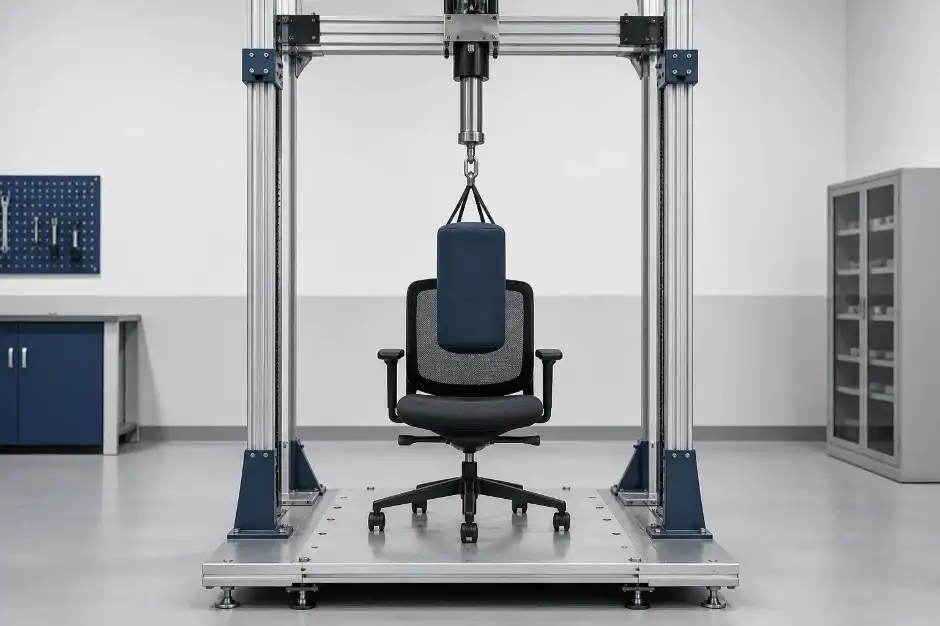
Keep the setup photographs, programme or log, interruptions, measurement data, observations, operator identity, specimen condition and any deviation together. Separate a measured change from a visual crack, loss of function or other observation. A failure investigation can propose hypotheses, but a web article cannot diagnose every chair joint from one symptom.
ISO/IEC 17025 addresses competence and consistent operation of testing and calibration laboratories. It does not prescribe a universal chair-tester sensor tolerance or automatically accredit a lab when new machinery is bought. Use the equipment calibration checklist to plan the instrument review; determine accredited scope with the laboratory and accreditation body.
Frequently Asked Questions
Does the X5.1 label on a tester prove chair compliance?
No. The specified specimen, selected procedure, installed fixtures, measurements and evaluated results are needed. A machine description alone is not a product conformity statement.
Can the same frame run multiple actions?
Sometimes, with suitable hardware and programmed controls. Request an explicit action-to-fixture matrix and verify it at acceptance.
Should I include an exact force table in a web SOP?
Only with a controlled, licensed and verified source and a reason to reproduce it. The lab should work from its controlled edition rather than an uncontrolled web summary.
Related Equipment and Guides
Equipment category
Chair Testing Equipment grouped by test action.
Durability observations
Chair Durability Test Guide for what to inspect and report.
General scope
BIFMA X5.1 Explained for product applicability.
Scope sources: BIFMA official standard descriptions · ISO/IEC 17025:2017 scope. This practical guide does not reproduce a paid standard or replace the controlled edition, approved test plan or machine specification.