Derui chamber
A chair durability result is meaningful only when the test action, specimen setup and observations are clear. Office chairs can change at the seat, back, swivel, base, arm or connection, and each action needs an appropriate method and fixture. This guide explains what to inspect and report when planning ANSI/BIFMA X5.1 work; it is not a table of official loads or a certification claim.
BIFMA lists the general-purpose office-chair designation as ANSI/BIFMA X5.1-2017(R2022). A reaffirmation is not a new “X5.1-2022” edition with automatically changed occupant mass, forces or cycles. Check the licensed edition and purchaser requirement before setting a machine.
1. Match the Chair to the Correct Seating Scope
General-purpose office and institutional chairs are within BIFMA’s X5.1 description. Public/lounge seating and large-occupant office chairs have separate BIFMA scopes. A chair with an unusual use pattern, geometry or adjustment may need additional review. If scope is uncertain, begin with the X5.1 scope guide rather than assuming every chair sold to an office follows the same programme.
2. Distinguish the Durability Actions
Seat and back cycling
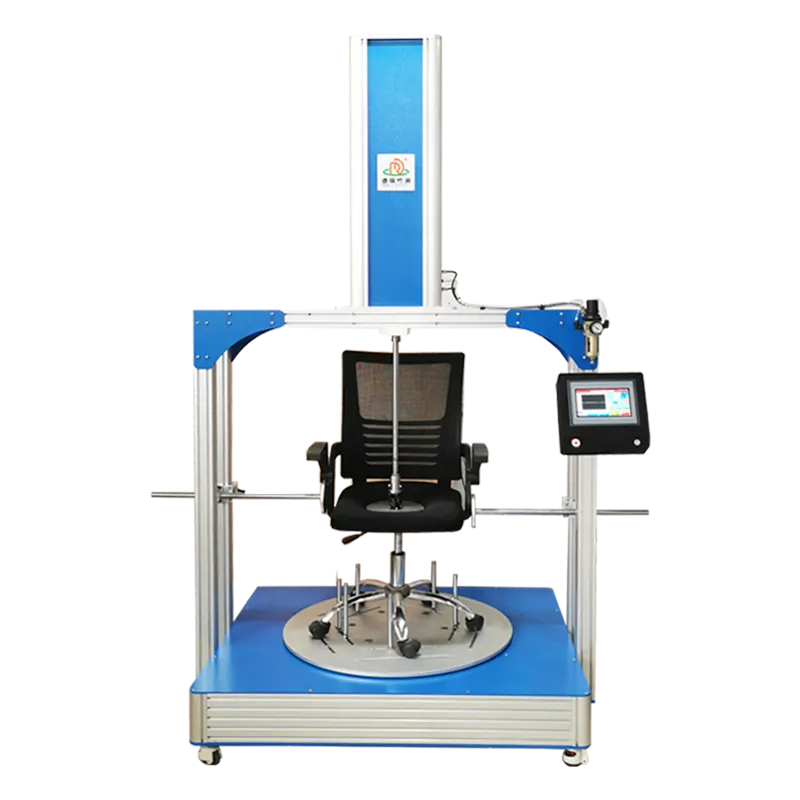
Repeated loads act on the assembled chair at selected locations. Inspect structural joints, supports, back connections and functional change as specified by the procedure.
Swivel and movement
Repeated rotation examines a different mechanism than vertical or back loading. Document the chair configuration, movement, resistance or failure observations.
Base and other components
Base, arm, caster or adjustment actions may require separate fixtures or dedicated testers. Do not infer their results from a successful seat/back run.
Impact and stability are also important chair evaluations, but they ask different questions. A drop assesses an impact event; stability concerns tipping resistance. They should not be described as equivalent fatigue cycles. Use the X5.1 test-plan workflow to map every selected action to setup and records.
3. What to Inspect Before, During and After
- Before: photograph the chair, record model, adjustments, component condition and any baseline functional checks.
- During: retain the programme, interruptions and stage observations; note noise, looseness, specimen migration or visible change without assuming its cause.
- After: inspect joints, fasteners, seat and back supports, base and mechanisms relevant to the selected action.
- Where required, repeat the same defined functional or dimensional measurements after the specified recovery period.
- Separate a detected condition from the acceptance decision, which depends on the controlled test and customer criteria.
A crack near a connection can suggest a load-path problem, but its root cause needs engineering investigation. Do not infer a universal reinforcement or material change from one online photograph or cycle count. Good records make failure analysis more useful than unsupported lifetime predictions.
4. Select Equipment for the Observation Required
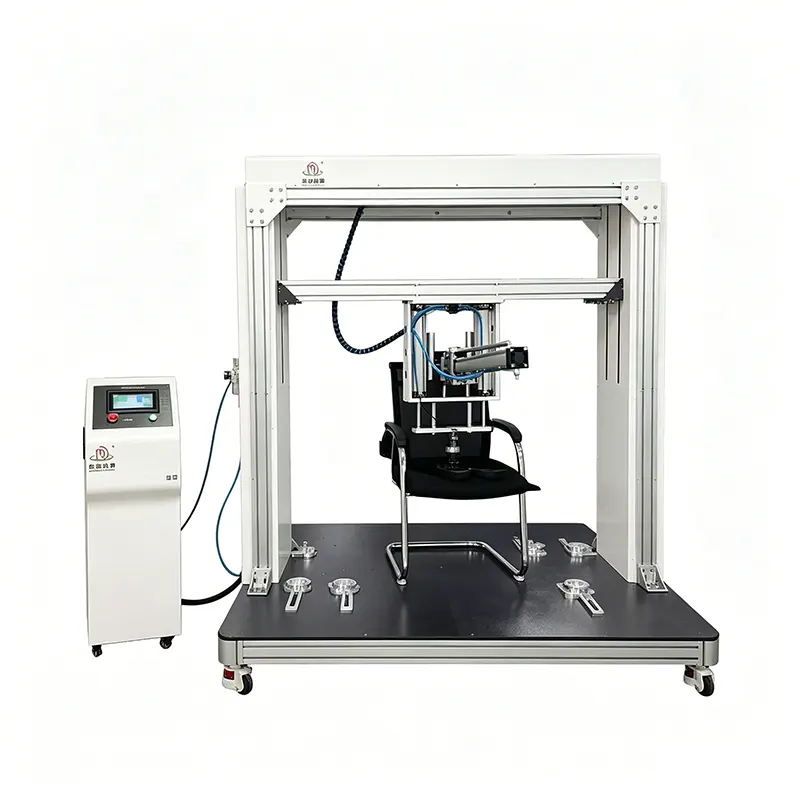
Review DR-J601 swivel equipment for rotation tasks and DR-J609 seat/back equipment for repeated loading. Machine pages describe equipment directions; the selected test method supplies the procedure. Confirm specimen fit, contacts, control, measuring range, safety and reporting with the supplier before ordering.
A general “BIFMA-ready” label does not prove the offered machine covers the full standard. The office chair lab equipment guide provides a purchase-planning view, while this page focuses on durability observations and result interpretation.
Frequently Asked Questions
Does completing a cycle count prove the chair will last a certain number of years?
No. Laboratory loading is defined by a method; it cannot be universally converted into real-use years. Report the procedure and observations instead.
Are swivel and seat/back tests interchangeable?
No. They exercise different mechanisms and require different fixtures and observations.
Does passing one durability action mean the chair passes all of X5.1?
No. The applicable test programme and acceptance criteria must be evaluated as a whole.
Related Equipment and Guides
All chair testers
Chair Testing Equipment by action.
Protocol planning
X5.1 Test Plan and Records for setup control.
Method scope
BIFMA X5.1 Explained for product applicability.
Scope sources: BIFMA official standard descriptions. This practical guide does not reproduce a paid standard or replace the controlled edition, approved test plan or machine specification.