Derui chamber
 Message
CHAIR TESTING EQUIPMENT · DR-J601
Evaluate Repeated Swivel Movement Under a Defined Load
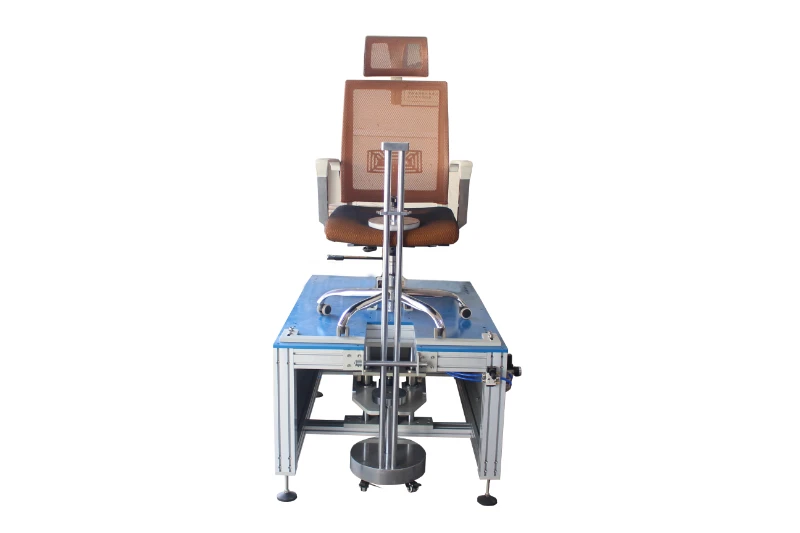
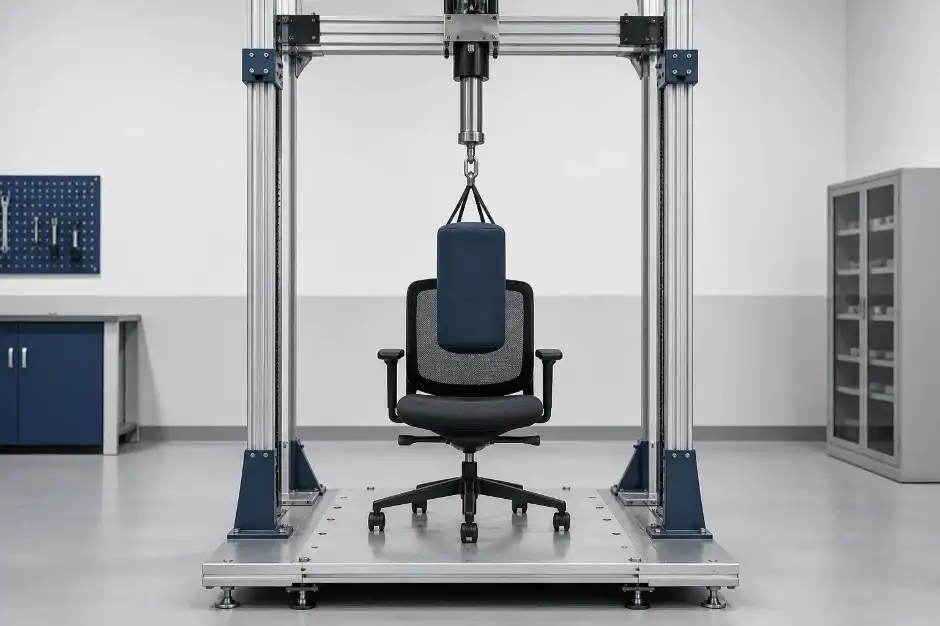
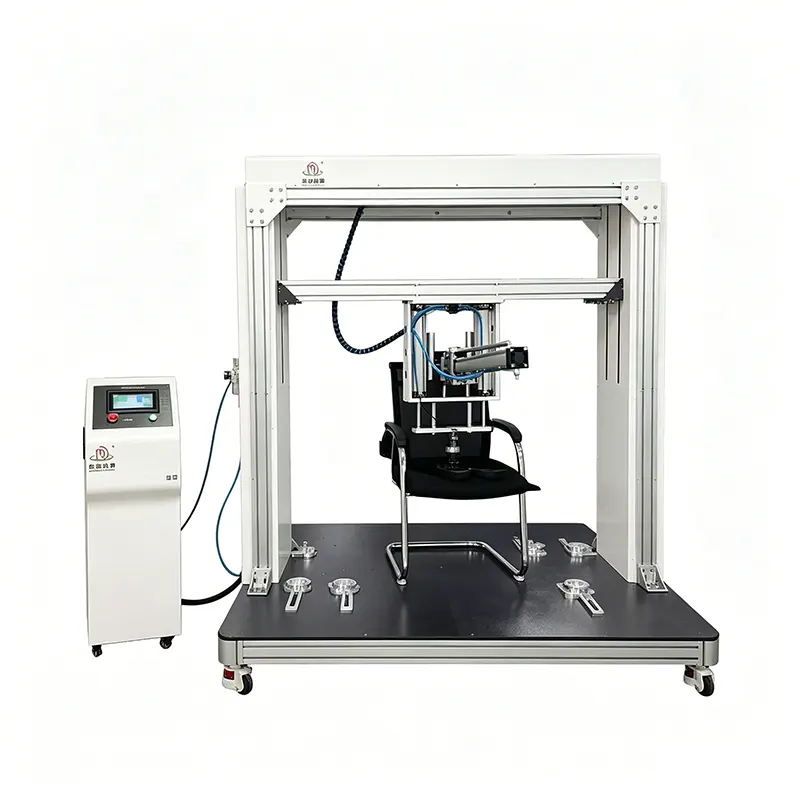
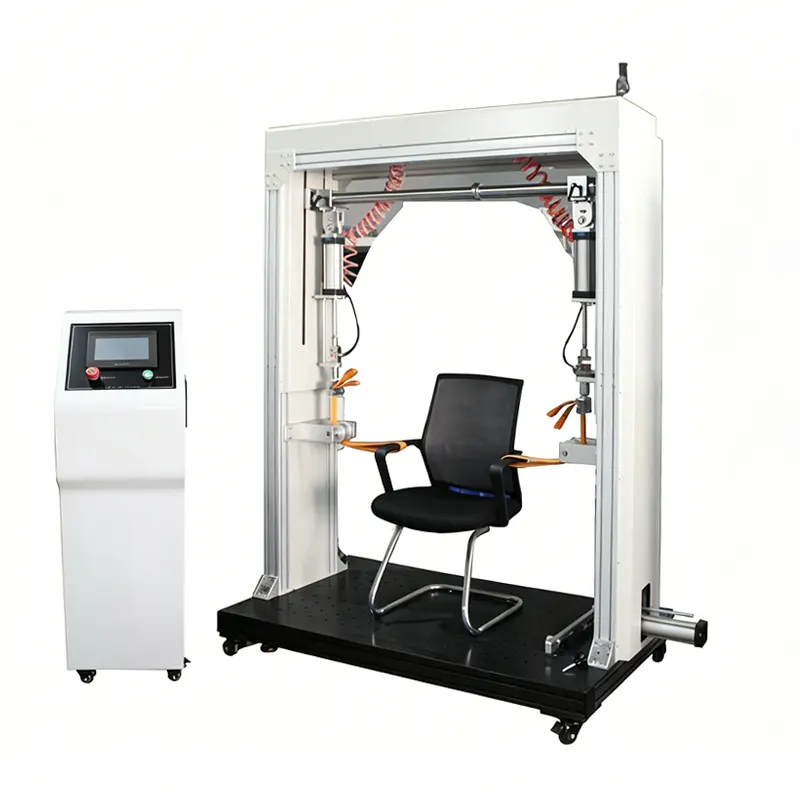
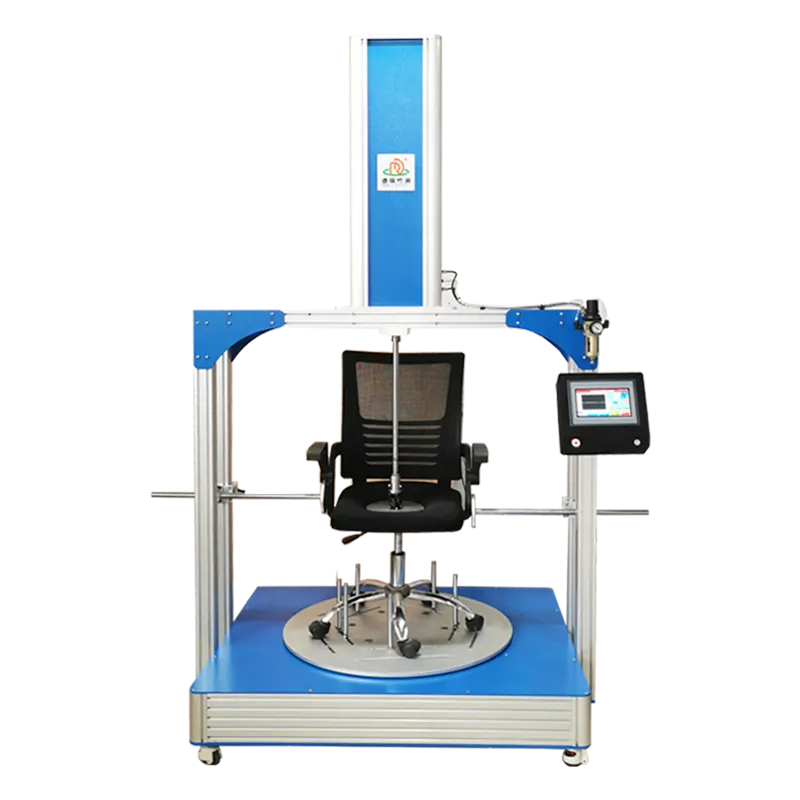
The DR-J601 Chair Swivel Durability Tester is a testing system for evaluating repeated swivel movement in chairs with a swivel seat. It helps furniture manufacturers and laboratories investigate how the assembled swivel mechanism performs under a controlled loading and movement programme.
A suitable setup must accommodate the chair, apply the required load and create the relative rotation specified by the selected method. Send the chair dimensions, adjustment range and test requirement so Derui can review the fixtures, loading arrangement and control functions for your quotation.
Match the Tester to the Question You Need to Answer
Swivel Mechanism Durability
Evaluate the chair’s response to repeated rotation under an agreed load. Record function, visible changes and completed cycles using the selected procedure.
Design Comparisons
Compare chair assemblies using consistent specimen adjustments, loading and movement settings. Document each design change rather than assuming a result identifies the failing component.
Customer Test Requirements
Specify the required standard edition and swivel method. Check chair fit, restraint and load placement before selecting the equipment configuration.
Quality Investigations
Use recorded test observations to investigate stiffness, play, noise or loss of function. Inspect the chair and test setup before assigning a root cause.
ANSI/BIFMA X5.1 Swivel Testing: Correct Scope and Edition
BIFMA’s published designation is ANSI/BIFMA X5.1-2017(R2022), covering general-purpose office chairs. The reaffirmation is not a separate “X5.1-2022” revision. The 2017 standard’s swivel cyclic test is identified as Section 8.
Intertek’s published summary of the 2017 update lists a 270 lb load for the swivel test, approximately 122 kg. This is a method reference, not a confirmed DR-J601 load rating. The loading assembly, load location, chair adjustments, motion, sequence and assessment must match the applicable procedure and the approved machine configuration.
The BIFMA X5.1 chair testing and equipment guide explains how swivel evaluation fits into the wider chair test programme. One swivel tester does not perform every chair test or establish complete product compliance.
Keep the machine’s rated capacity separate from the test’s required load. Confirm both before placing an order. Use the applicable standard for the complete setup, sequence and acceptance criteria; this page is not a substitute for that document.
Swivel, Caster and Tilt Tests Are Not Interchangeable
| Test purpose | What the setup evaluates | Selection implication |
|---|---|---|
| Swivel durability | Repeated relative rotation of the chair’s swivel assembly under the specified loading conditions. | Review DR-J601 against the required chair fit, restraint, loading and movement. |
| Caster / chair-base durability | Rolling or other prescribed movement that exercises the caster and base arrangement. | A swivel platform alone does not establish caster-test capability. |
| Tilt mechanism durability | Repeated movement of the chair’s tilt mechanism using its prescribed loading arrangement. | Confirm the dedicated movement and fixture requirements separately. |
| Seat and back durability | Repeated loading at the specified seat or backrest locations. | This requires the appropriate loading system, not simply rotation of the chair. |
Domestic-seating and other international standards have their own scopes and methods. Do not treat EN 12520 or ISO 7173 as automatic proof that this configuration fulfils the office-chair swivel procedure. Provide any additional standard and test item for a separate configuration review.
DR-J601 Configuration and Quotation Checklist
The final technical datasheet should describe the actual machine, fixtures and functions supplied. The following items define the quotation scope; they do not imply that every accessory or software function is standard.
| Item | Information to agree before ordering |
|---|---|
| Model and application | DR-J601 Chair Swivel Durability Tester; repeated swivel movement evaluation. |
| Chair envelope | Overall dimensions, specimen mass, base diameter, caster arrangement and minimum/maximum seat height. |
| Specimen restraint | Which part rotates, which part is restrained and how the fixtures avoid obstructing the intended movement. |
| Loading arrangement | Required load, loading location, loading pad and applied-load verification; confirm machine capacity and the supplied loading system. |
| Rotation and speed | Required movement range, direction, rate and cycle definition; confirm whether continuous rotation or restricted-angle movement is needed and supported. |
| Cycle control and stops | Programme capacity, completed-count display, interruption handling and completion conditions; specify any requested sensor-based stops separately. |
| Records and reporting | Required displayed quantities, saved data and export format. Ask for an example of any offered reporting function. |
| Installation and supply | Approved dimensions and mass, operator access, electrical supply and any air requirement for the proposed loading system. |
| Included scope | Fixtures, loading accessories, verification documentation, operating instructions, commissioning and training as itemised in the quotation. |
Request the approved technical datasheet and fixture arrangement before purchase. Do not use a standard load, a competitor’s specification or an older web table as proof of this model’s rated capacity.
Prepare a Repeatable Swivel Evaluation
- Identify the specimen: record the chair model, production batch, dimensions, adjustment features and the condition before testing.
- Match the setup: check fixture clearance, loading location and restraint against the approved procedure. Avoid unintentionally locking the part that should rotate.
- Verify the required quantities: check the applied load, movement, rate and count definition used by the test.
- Document the sequence: record chair adjustments, completed cycles, inspections and any interruptions or deviations.
- Assess the chair: apply the method’s acceptance criteria and preserve observations before disassembly or repair.
The furniture testing equipment calibration checklist helps organise verification records for the quantities actually used. Neither a touchscreen nor a CSV export makes a test report ISO/IEC 17025-compliant by itself.
Investigate Changes Without Assuming the Cause
| Observation | Checks before assigning a cause |
|---|---|
| Increased resistance or seizure | Review fixture interference, load placement and mechanism condition. Inspect the assembly rather than concluding that one bearing or lubricant is responsible. |
| Unexpected play or wobble | Check the restraint and load alignment; document the location and extent of the movement before examining joints and components. |
| Noise, wear or visible damage | Record when and where the change occurred. Distinguish normal test contact from an unintended obstruction or loose fixture. |
| Unexpected machine stop | Review the stop indication and recorded count. A stopped drive does not, by itself, identify a crack, retaining-clip failure or seized bearing. |
Use inspection and test records to support corrective action. A fixed failure percentage, a prescribed material change or a service-life claim should not be inferred from a single swivel test.
Build the Swivel Test into a Chair Laboratory Plan
List the other evaluations needed by your customer: seat/back loading, impact, stability, arms, tilt and caster/base testing where applicable. Use the furniture laboratory configuration guide to plan the equipment, utilities, working space and records around that scope.
For a DR-J601 enquiry, send chair photographs or drawings, the seat-height range, base dimensions, target method, required load and motion, reporting needs and installation destination. These inputs are more useful than requesting a generic “BIFMA-certified machine”.
Frequently Asked Questions
Which BIFMA test is relevant to chair swivelling?
The 2017 edition of ANSI/BIFMA X5.1 identifies the swivel cyclic test in Section 8. Confirm the applicable edition and complete procedure with the responsible laboratory.
Does DR-J601 also test casters or chair bases?
Do not assume additional methods from the swivel function. Caster/base testing has its own movement and fixture requirements. Include the additional test scope in your enquiry for a separate review.
Can it test a chair with restricted swivel movement?
Provide the available movement range and stop arrangement. The required procedure and the proposed drive/fixture configuration must be checked before confirming suitability.
Does it automatically identify a specific component failure?
Only confirmed sensors and stop functions should be stated in the supplied specification. An alarm or stopped drive is not a diagnosis of a cracked base, detached clip or failed bearing.
Is chair compliance established by one swivel test?
No. The responsible laboratory must determine the complete applicable test scope and assessment. A swivel result does not replace other required chair tests or guarantee a particular service life.
How is the price determined?
The quotation depends on chair fit, fixtures, loading arrangement, controls, documentation and service scope. Confirm the included accessories, currency, delivery terms and warranty in the written quotation.
Related Chair Testing Equipment
- DR-J609 Chair Seat & Back Durability Tester — review the separate repeated-loading setup for seat and back evaluation.
- DR-J607 Chair Drop Impact Tester — discuss the impact device, chair support and release requirements.
- DR-J608 Chair Stability Tester — review stability fixtures and specimen conditions against the selected method.
Technical References
Consult BIFMA’s official standard descriptions for the current designation and seating scope. Manufacturing Solutions Center’s test list identifies the swivel test as Section 8. Intertek’s 2017 update summary records the swivel-load change. Use the complete applicable standard for the controlled test procedure.