Derui chamber
 Message
Forward, Rearward and Applicable Sideways Chair Stability Testing
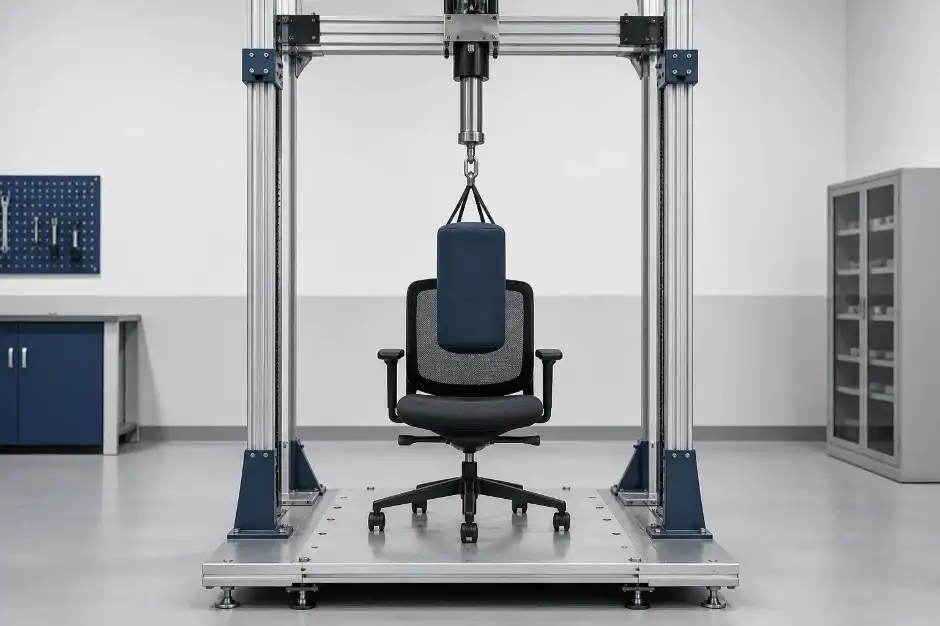
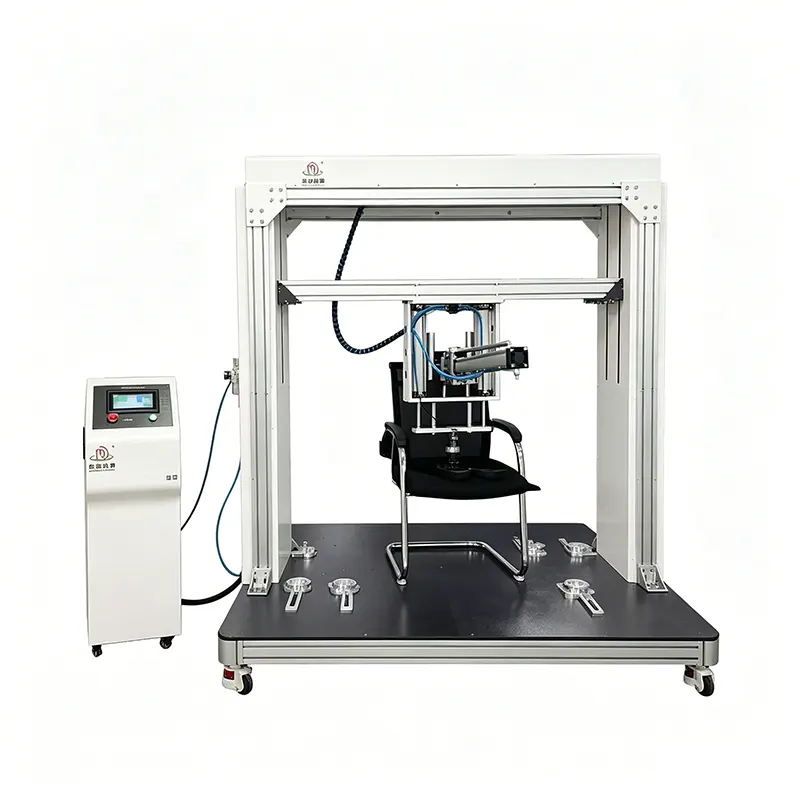
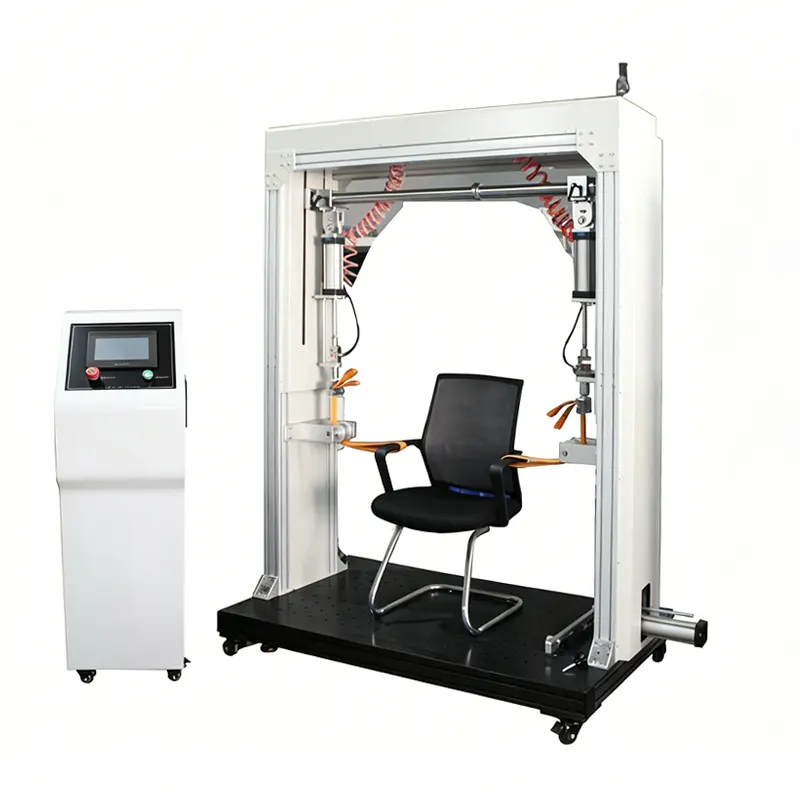
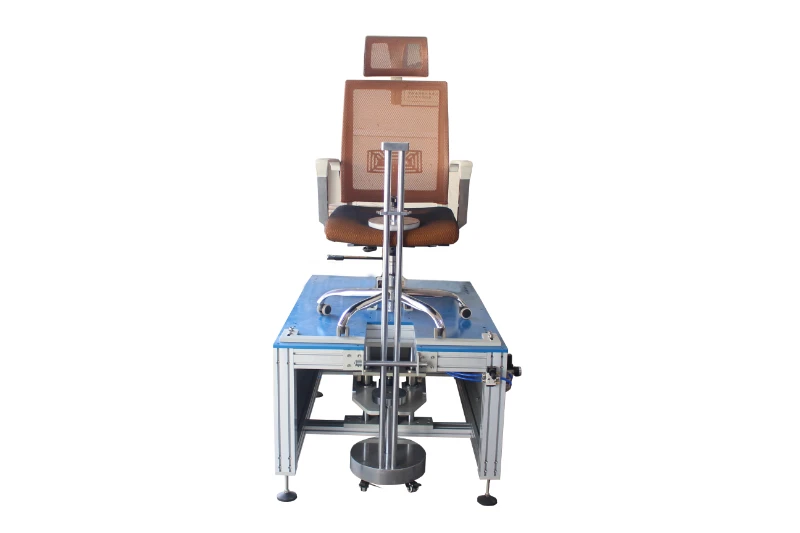
The DR-J608 Chair Stability Tester provides a controlled platform for evaluating whether a chair, stool or other seating product resists tipping under the loading conditions defined by the selected test method. It can be configured for ANSI/BIFMA X5.1 and EN 1022 laboratory programs after the applicable chair type, test direction and standard edition are confirmed.
Multiple Stability Directions
Configure the test for forward, rearward and applicable sideways tipping procedures required for the seating product.
Controlled Load Application
Apply the specified vertical seat load and horizontal force at defined positions without unintended sample movement.
Flexible Chair Setup
Designed for stability evaluation of applicable swivel chairs, armchairs, stools, rocking chairs and other seating constructions.
1. What Chair Stability Testing Measures
Chair stability testing determines whether a seating product remains supported when a user shifts weight toward an edge, leans rearward or applies force away from the chair’s center of support. The result depends on the relationship between the chair geometry, base footprint, caster orientation, seat height, loading position and applied force.
The DR-J608 supports repeatable laboratory setup by combining a rigid test platform, permitted restraint blocks, seat loading fixtures and controlled horizontal force application. The operator observes whether the chair reaches the tipping condition defined by the selected method.
2. Stability Test Directions
Forward Stability
Evaluates tipping risk when the load is transferred toward the front edge of the seat. The chair is positioned and restrained only as allowed by the test method.
Rearward Stability
Evaluates resistance to rearward tipping under the prescribed chair configuration, seat loading and rearward force or disk arrangement.
Sideways Stability
Used where the selected standard and chair type require a lateral tipping setup, including the specified arm, seat or base orientation.
3. Typical Test Workflow
- Identify the chair: document the chair type, adjustment range, base construction, casters and arm configuration.
- Select the method: confirm the standard designation, edition, chair classification and required stability directions.
- Prepare the platform: install the permitted restraint blocks or locating fixtures and orient the base as prescribed.
- Set the loading point: position the seat loading pad, disk or force applicator at the required location and height.
- Apply the load: apply the specified vertical and/or horizontal loading sequence without shock unless the method states otherwise.
- Assess the result: record whether the chair tips, lifts from the support surface or meets the method’s stability criterion.
4. Key Equipment Functions
- Rigid stability platform: provides a repeatable reference surface for chair positioning and tipping observation.
- Adjustable loading fixtures: align the vertical seat load and horizontal force with different chair geometries.
- Interchangeable restraints: support the permitted front, rear or side setup without over-constraining the specimen.
- Controlled load application: reduces variation caused by manual pushing or improvised weight placement.
- Wide specimen access: accommodates applicable swivel chairs, armchairs, stools and rocking chairs after envelope confirmation.
- Safety controls: allow controlled lifting, lowering and release of configured loads.
5. Configuration to Confirm Before Quotation
| Configuration Item | Information Required from Buyer |
|---|---|
| Target standards | ANSI/BIFMA X5.1, EN 1022 or another method, including publication year/edition |
| Required directions | Forward, rearward, sideways or a defined combination |
| Chair families | Swivel chair, armchair, stool, rocking chair or other seating design |
| Sample envelope | Seat-height range, overall width/depth and base/caster footprint |
| Loading method | Required weights, force range, loading pad/disk and application points |
| Operation preference | Manual weight handling, assisted lifting or automated force application |
| Records | Visual pass/fail record or additional force/display/report requirements |
| Site utilities | Electrical supply, compressed air and available laboratory floor space |
6. Applicable Standards and Chair Types
| Standard / Application | What Must Be Confirmed |
|---|---|
| ANSI/BIFMA X5.1 General-purpose office chairs |
Standard edition, chair type, required stability direction, base/caster orientation and load fixtures |
| EN 1022 Seating stability determination |
Standard edition, seating construction and the applicable forward, rearward or sideways procedure |
| Other seating methods | Full standard designation and test clauses for engineering review before confirming compatibility |
7. Why a Dedicated Stability Tester Is Better Than an Improvised Setup
Loose weights, handheld force gauges and temporary stops may introduce variation in the load position, force direction and restraint condition. A dedicated platform improves repeatability and makes it easier to document the setup for internal quality control or third-party laboratory procedures.
It also reduces the risk that the fixture itself prevents tipping, which can create a false pass. The restraint must prevent only the movement permitted by the standard while leaving the chair free to reach the defined tipping condition.
8. Frequently Asked Questions
What does a chair stability tester evaluate?
It evaluates whether a chair resists tipping under specified vertical loads, horizontal forces, chair positions and restraint conditions.
Can the DR-J608 test office chairs and stools?
The product is intended for applicable swivel chairs, armchairs, stools, rocking chairs and related seating. The exact fixture and platform envelope must be checked against the sample.
Does one setup cover both BIFMA X5.1 and EN 1022?
Not automatically. The standards can require different loads, application points, restraints and procedures. Provide the exact editions so Derui can confirm the necessary fixtures.
What information is required for quotation?
Send the chair types, sample dimensions, base and caster design, target standards and editions, required test directions, operation preference and site utilities.
9. Related Chair Testing Equipment
- DR-J607 Chair Drop Impact Tester
- DR-J609 Chair Seat & Back Durability Tester
- DR-J605 Chair Base Fatigue Tester
- DR-J603 Chair Vertical Pressure Tester
- Chair Testing Equipment
- BIFMA X5.1 Chair Testing Guide
Configure the DR-J608 for Your Chair Stability Program
Send the chair type, target standard and edition, required stability directions, sample dimensions, base/caster design and laboratory utilities. Derui’s engineering team will review the appropriate platform, restraints and loading fixtures.