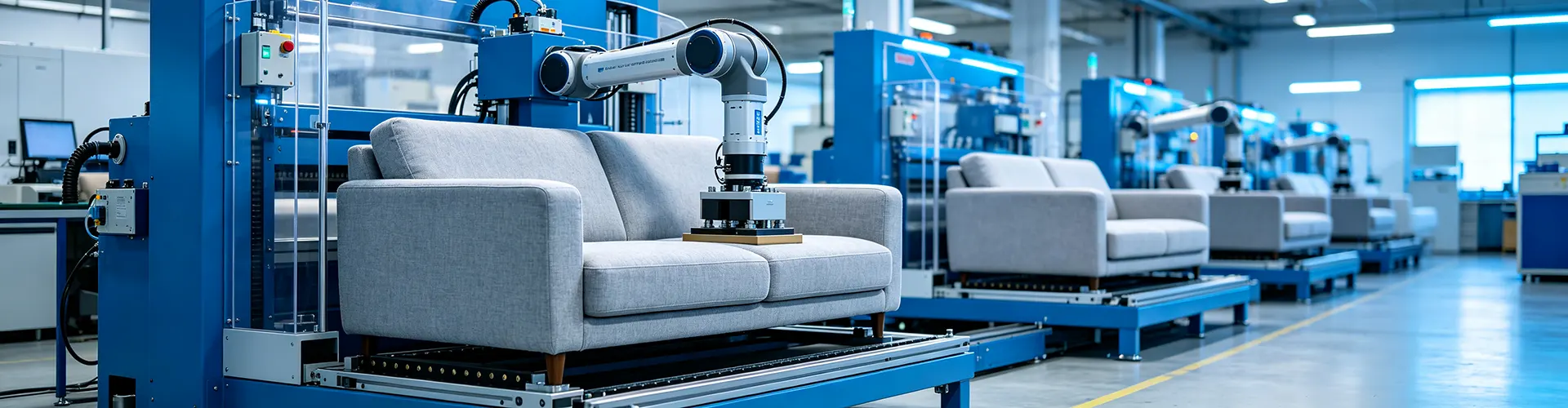
Sofa Testing Equipment for Durability & Drop Impact Tests
Select dedicated systems for sofa cyclic durability or handling drop impact. Match the machine, fixtures and specimen setup to your required test procedure.
Derui supplies sofa testing equipment for manufacturers and laboratories evaluating repeated seating loads or controlled handling drops. Select the DR-J501 fatigue or DR-J502 drop-test direction according to the required procedure and specimen setup.
Sofa Components Tested
Seat surfaces and cushion assemblies
Backrests and back frames
Armrests and side structures
Sofa frames, joints, and connectors
Single-seat and multi-seat lounge units
Common Sofa Tests
Seat and back durability testing
Repeated cyclic load testing
Seat and back static load testing
Arm durability and side-thrust testing
Frame and joint strength evaluation
One-side and whole-sofa handling drop tests
Typical Standards
EN 12520 — Domestic seating safety, strength, and durability
EN 1728 — Seating strength and durability test methods
ANSI/BIFMA X5.4 — Public and lounge seating
ISO 7173 — Seating strength and durability test methods
Application Areas
Sofa and upholstered furniture manufacturers
Lounge and public seating manufacturers
Furniture quality control laboratories
Third-party testing and certification laboratories
Product development and incoming inspection teams
Choose Between Sofa Fatigue and Handling Drop Tests
Select sofa testing equipment according to the event you need to reproduce. Repeated seating loads and a handling drop exercise a sofa differently, so the test objective should determine the machine, fixture and specimen setup. Derui’s DR-J501 fatigue tester and DR-J502 drop test machine provide separate equipment directions for these tasks.
DR-J501
Sofa Fatigue Tester
Do you need to evaluate response to repeated seating loads?
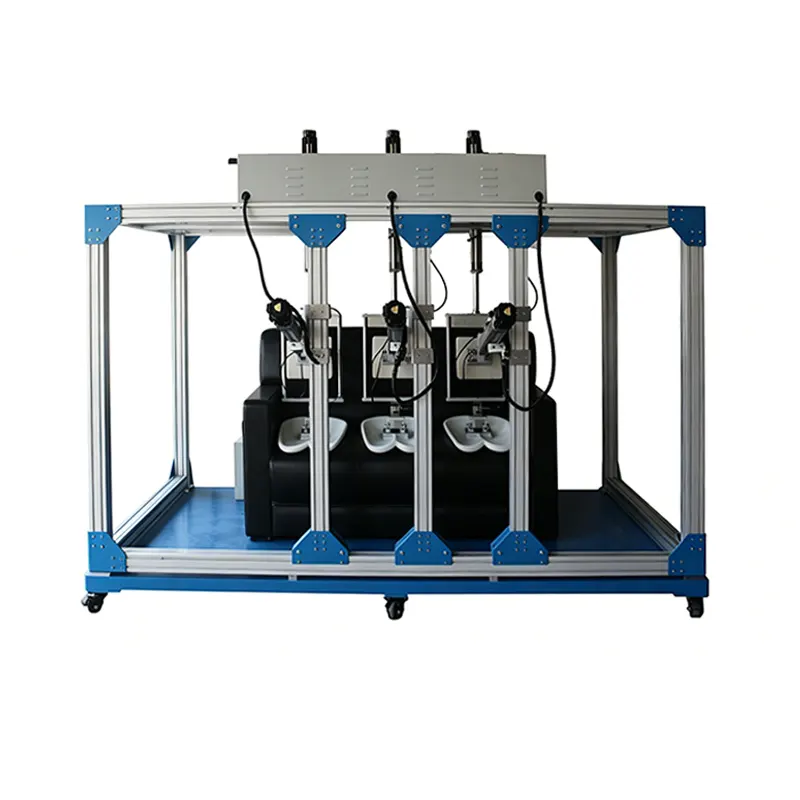
Select a cyclic-loading configuration for the seat and back tests required by your procedure. Define the seating positions, loading directions, supports and programme before comparing equipment quotations.
Confirm the supplied stations, loading pads, fixtures and measurement functions. Do not infer arm testing, simultaneous loading or every required seating test from the model name.
Do you need to evaluate damage from lifting and handling drops?
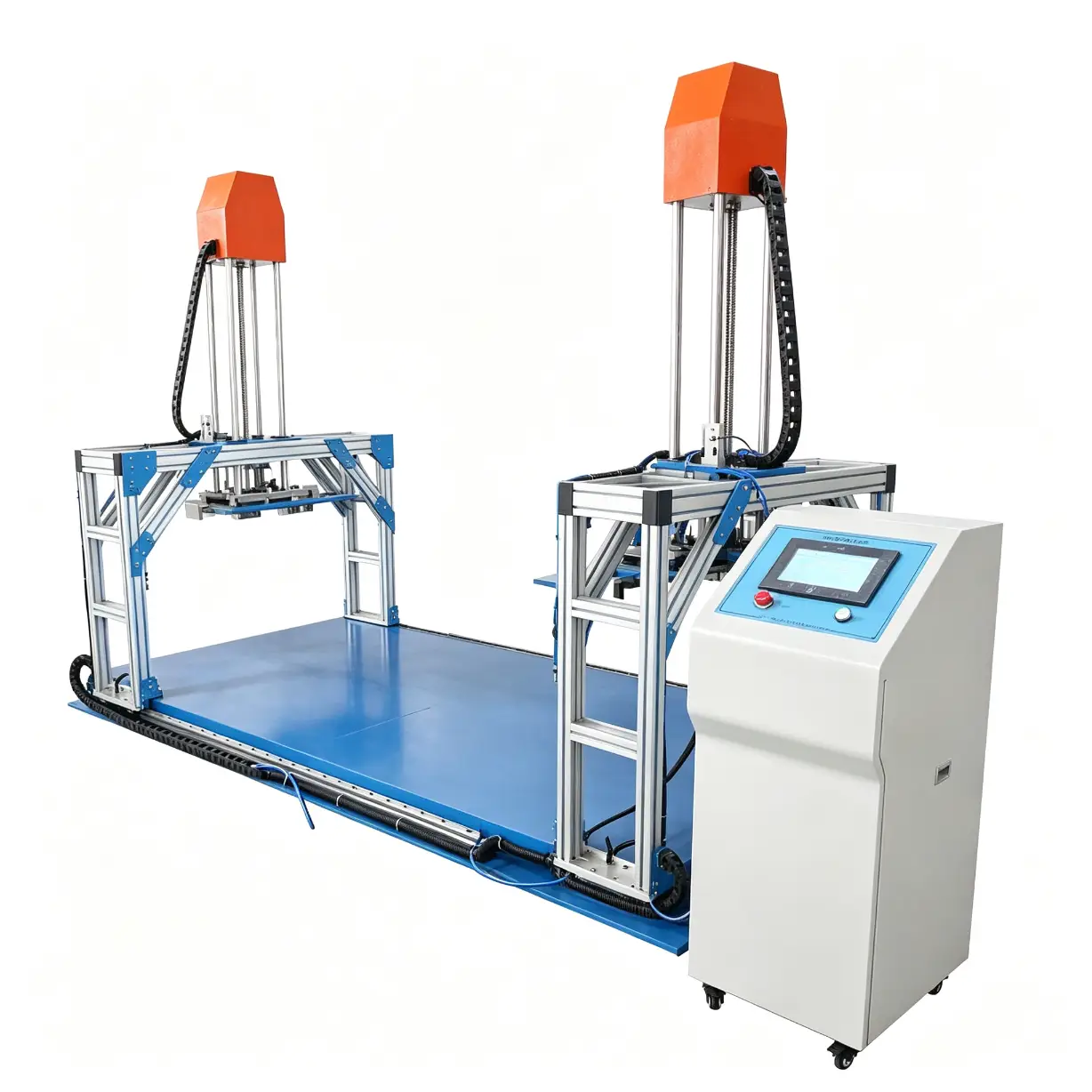
Select a lift-and-release system for the agreed sofa drop procedure. The DR-J502 provides one-side and whole-sofa drop directions; confirm specimen fit, lifting points, drop height and inspection requirements for your project.
A handling drop is not a substitute for cyclic seating durability. A complete transport-package evaluation may also require other equipment and a separate procedure.
Separate the Product Requirement from the Test Method
Identify the sofa’s intended use and the customer’s required assessment. EN 12520 addresses domestic seating requirements, while EN 1728 provides structural strength and durability test methods. A public or lounge seating project may specify a different requirements framework. Do not transfer one test programme to another product scope without checking applicability.
For drop work, provide the exact requested procedure and specimen condition. A standard name alone does not define whether the sofa should be assembled or packaged, which end is lifted, or what damage is recorded. Use the furniture testing requirements guide to organise the scope before requesting equipment.
These equipment directions do not establish complete product compliance or certification. Structural seating tests, cushion-material tests and transport-package tests answer different questions. A completed fatigue or drop sequence should not be presented as a direct prediction of years in service.
Define a Configuration for Your Sofa
Specimen and Setup
Define the sofa length, depth, height, mass and number of seating positions. Identify legs, joints, modular connections and the support or lifting arrangement used during the test.
Procedure and Acceptance
Provide the required standard edition or customer method, load or drop sequence and inspection criteria. Record whether the specimen is assembled, a component or packaged.
Equipment and Records
Agree the fixtures, available loading or lifting functions, measurements and records included. Ask for the approved configuration rather than assuming every accessory or reporting function is standard.
If the concern is cushion firmness, recovery or repeated compression of the foam itself, compare the separate foam testing equipment. For the measurements used in your project, the equipment calibration checklist helps organise verification and record requirements.

 Derui chamber