Derui chamber
A sofa fatigue test evaluates how an assembled sofa responds to a specified repeated-loading procedure. For manufacturers and laboratories, the useful questions are which parts of the sofa are being assessed, which requirement applies, and which loading and inspection arrangements are needed.
Do not start with one generic force or cycle count for all sofas. Domestic seating, public lounge seating, modular designs and recliners can require different test scopes. This guide explains how to define that scope and select equipment without confusing cyclic structural loading, impact and foam material evaluation.
1. Define the Intended Use Before Selecting a Standard
Domestic Seating
For a domestic sofa project, review the applicable EN 12520 requirements and contract edition. EN 12520:2024 is the published edition used as a reference here.
Public and Lounge Seating
ANSI/BIFMA X5.4-2020(R2025) addresses public and lounge seating, including relevant multi-position seating. It is not a blanket rule for every sofa sold in North America.
Other Product Features
Reclining mechanisms, sofa-bed functions, electrical features or specialised uses may add requirements beyond the selected structural fatigue procedure.
EN 1728 provides structural seating strength and durability test methods, while the relevant requirements come from the end-use standard or agreed specification. Its scope does not treat structural testing as upholstery-material durability testing. The domestic and non-domestic seating standards comparison helps distinguish those roles.
EN 12520 and BIFMA X5.4 are not simply two interchangeable cycle counts. Identify the edition, product scope, selected tests and acceptance criteria. A standard name is not automatic product certification or a complete statement of market-access obligations.
2. Separate Structural Cycles, Impact and Material Fatigue
Repeated Structural Loading
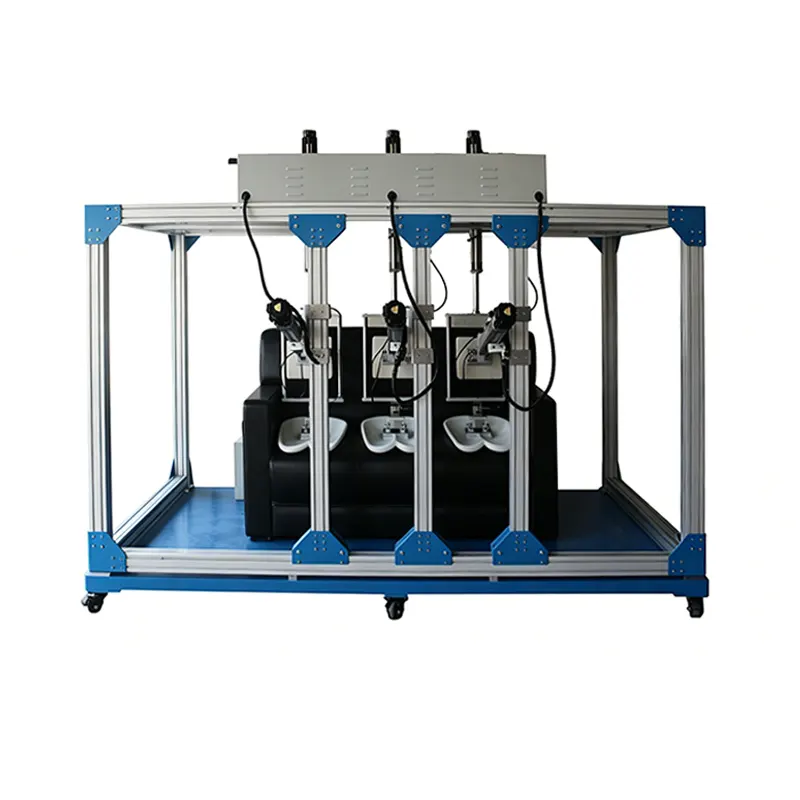
Apply the required repeated seat or back loads to the assembled specimen. The chosen method defines contact locations, directions, supports and sequence.
Impact or Handling Drops
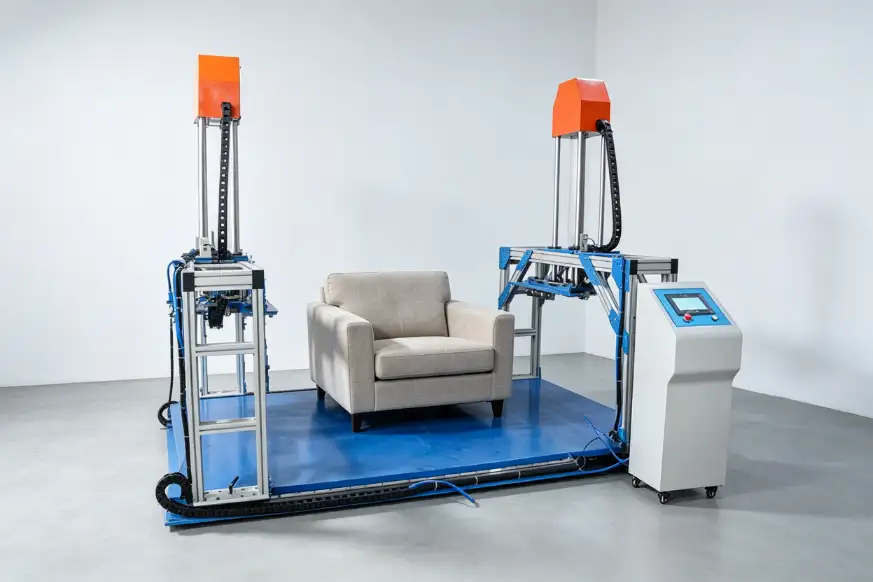
A drop involves a specified lifting, release and impact arrangement. It is a different action from a controlled cyclic load and requires its own equipment review.
Foam Material Evaluation
Hardness, compression set and dynamic fatigue of a foam specimen examine material behaviour. They do not replace structural evaluation of the complete sofa.
A sofa’s response depends on its frame, connections, suspension, supports and cushioning arrangement. A material change may affect behaviour, but a failure observation alone does not establish the cause. Record the setup and investigate the relevant components instead of prescribing one density, joint reinforcement or spring change for every design.
3. Prepare the Specimen and Loading Arrangement
- Record sofa dimensions, mass, seat count and the tested assembly configuration.
- Identify feet, modular connections, extensions and relevant reclining or other adjustments.
- Follow the selected procedure’s specimen preparation and conditioning requirements.
- Locate the required seat, back or other contact points using the prescribed arrangement.
- Set loading pads, supports and restraints without inadvertently changing the response being assessed.
Specify how a multi-seat sofa is evaluated rather than assuming every seating position must be loaded simultaneously. Sequential, independent and coordinated loading are different arrangements; the required sequence determines the controller and loading-head configuration.
4. Select Equipment by the Action Required
The DR-J501 Sofa Fatigue Tester is the equipment direction for reviewing repeated seat and back structural loading. Provide the sofa geometry and selected test items so specimen fit, loading positions and fixtures can be assessed. Confirm head count, load range, programme capability and any measuring instruments in the offered configuration.
For a controlled handling-drop requirement, review the DR-J502 Sofa Drop Test Machine separately. Its one-side and whole-sofa lift-and-release directions address a different question from repeated seating loads. Confirm specimen mass, dimensions, lifting points, height and inspection requirements against the agreed drop procedure.
A multi-purpose quotation should identify each included action and its fixtures. A loading frame, a standard menu or several cylinders is not by itself proof that the supplied system completes every static, cyclic, impact, stability or mechanism test.
5. Record the Loading and Inspect the Specimen
- Document the specimen, method edition, loading arrangement and initial observations.
- Record programme settings and relevant measurements for the selected action.
- Log interruptions, adjustments or deviations so the result can be interpreted correctly.
- Inspect the prescribed frame, joints, supports and functional features at the required stages.
- Evaluate the outcome against the agreed criteria and retain the setup evidence.
Automatic cycle completion is not proof of a passing product. A controller alarm can flag a condition, but inspection and interpretation remain necessary. Include photographs of loading points and any observed changes, and distinguish measured deformation from visual or functional findings.
6. Interpret Results Without Converting Cycles into Years
There is no universal conversion from a laboratory cycle count to years of sitting. Use patterns, product geometry, environment and the selected test action vary. A completed fatigue sequence supports assessment under those defined conditions; it does not establish a guaranteed service life.
Do not claim that a larger cycle count automatically makes one standard stricter in every respect. Compare the complete relevant test scope and criteria. Likewise, use the selected procedure’s loads and counts rather than carrying one generic parameter table across standards or sofa types.
If cushion behaviour is part of the investigation, plan the appropriate material tests separately. A thickness or firmness change needs its own measurement basis and should not be inferred from a structural loading counter.
7. Prepare a Clear Equipment Enquiry
- Intended sofa use and the required standard edition or customer specification.
- Specimen dimensions, mass, seating positions and adjustable or modular features.
- Selected structural, impact, stability, material or mechanism evaluations.
- Required loading points, directions, sequence, observations and records.
- Test volume, available space, utilities and installation country.
Ask the supplier to separate base equipment, test fixtures, measurement instruments, options and exclusions. Obtain approved machine ratings and accessory details before treating a quotation as coverage of the test plan. This also makes competing quotations easier to compare.
Frequently Asked Questions
How many cycles should a sofa withstand?
Use the selected standard edition, procedure and requirement level or the agreed customer specification. There is no one cycle count that applies to all sofas and all fatigue actions.
Can one machine cover both EN and BIFMA work?
Potentially for selected actions, but coverage must be reviewed method by method. Required fixtures, load control and inspection arrangements can differ; a shared machine frame does not establish equivalence.
Does a handling-drop test replace sofa fatigue testing?
No. Handling drops evaluate a different action from repeated structural loading during seating. Include each evaluation only where the required programme calls for it.
Must foam tests be completed before every sofa structural test?
Not as a universal rule stated by this guide. Material testing can support quality control and investigation, but the selected structural procedure and purchasing specification determine the mandatory programme.
Related Equipment and Material Guides
Sofa Equipment
Sofa Testing Equipment — compare repeated loading and controlled handling-drop directions.
Foam Test Selection
Compression Set and Dynamic Fatigue Guide — distinguish sustained compression from repeated material loading.
Hardness Measurement
DR-J801 Foam IFD Hardness Tester — review a separate material-hardness measurement task.
Scope sources: BSI: EN 12520, BSI: EN 1728, and BIFMA: X5.4 reaffirmation. This guide does not replace the controlled test standards or an approved equipment specification.