
 Derui chamber
When two furniture testing machines look similar, their quotations can still describe very different purchases. One may include the required loading fixtures, measuring instruments and installation work; another may quote only the base frame. Comparing the headline prices can leave a laboratory paying later for functions it expected to receive.
1. What Does “Furniture Testing Equipment Cost” Include?
A single tester, a multi-action frame and a complete laboratory are different purchasing scopes. Start by stating which one you need. An internet price without the offered configuration cannot establish the budget for your actual programme.
Machine purchase
The frame, actuator or motion system, controller and the accessories explicitly included in the base package.
Ready-to-test project
The machine plus required fixtures, measuring functions, utility preparation, delivery, installation and agreed acceptance checks.
Ongoing operation
Consumables, maintenance, calibration or verification, software support where applicable, operator time and any outsourced tests.
Keep the equipment budget separate from fees for testing your furniture at a laboratory. A testing-service quote buys a defined evaluation of samples; a machine quote buys equipment with a defined capability and delivery scope. If you need an internal QC system, state the in-house test actions before asking suppliers for a price.
2. Scope the Budget by Test Action
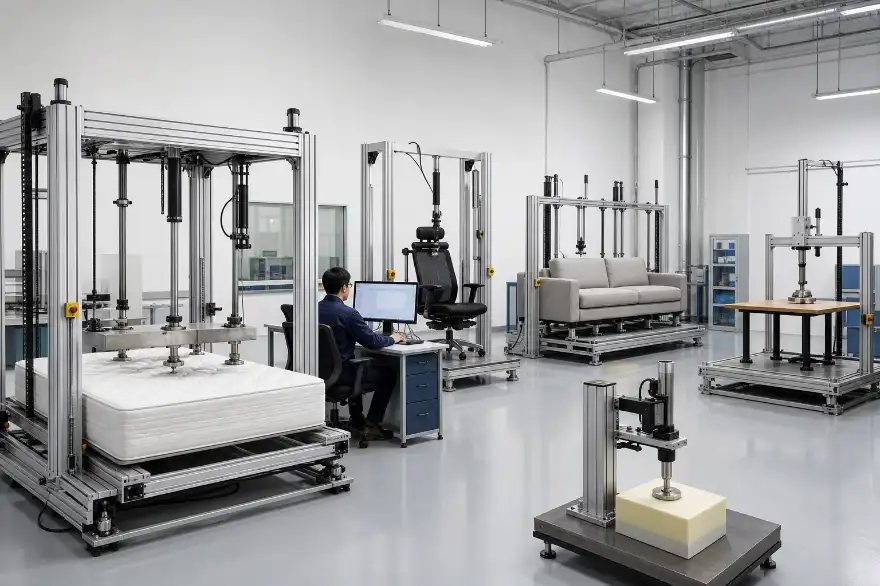
Use the furniture testing equipment catalogue to identify relevant product groups, then turn the selected methods into an equipment list. Mattress, sofa, chair, table and foam work can require different loading mechanisms and specimen arrangements. Counting models or frames is less useful than identifying which actions and measurements each station must deliver.
- List the product types, largest specimens and required standard editions.
- Write down the selected structural, cyclic, impact, stability or material measurements.
- Identify which tests remain outsourced and which must be performed in-house.
- Estimate workload and whether different actions need to run in parallel.
- Mark optional future work separately from the initial purchase scope.
3. Six Items That Change the Quotation
Loading and motion
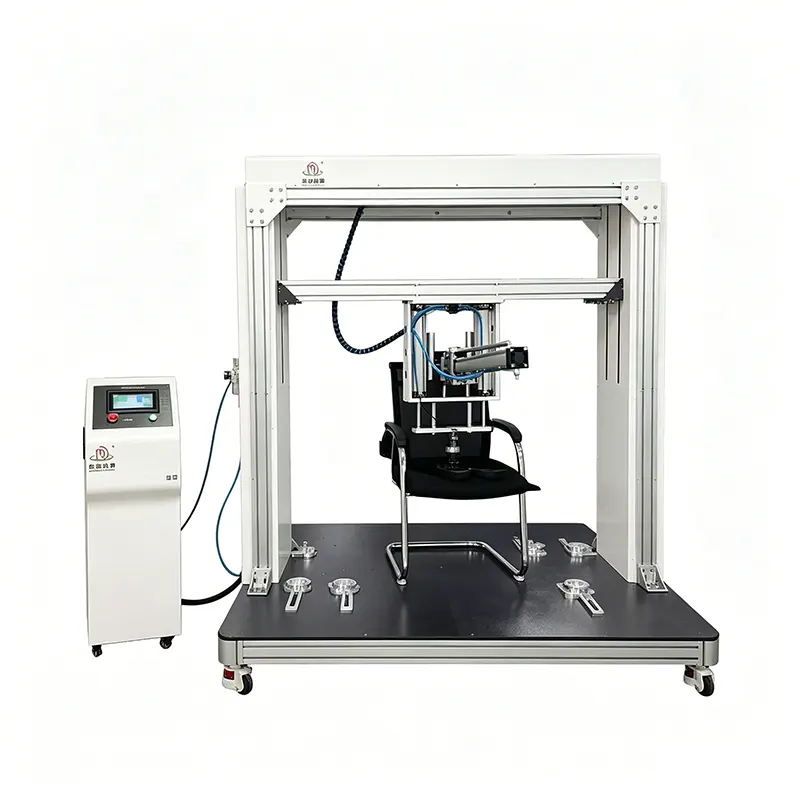
Force range, travel, loading directions, number of heads and independent or coordinated operation change the required system. Confirm the actual sequence to be run.
Specimen envelope
Table reach, mattress handling, chair adjustment and sofa seating positions affect clearance, frame arrangement and access. External dimensions do not establish usable specimen capacity.
Fixtures and accessories
Contact pads, supports, floor stops, impactors, weights and positioning accessories must be listed for the selected procedures. A common frame does not guarantee every fixture is included.
Measuring functions
Specify required force, displacement, timing or other measurements. Distinguish programmed setpoints from measured values, and ask which instruments are supplied.
Controls and records
Cycle control, interruption handling, curves, exports and report fields can be different functions. Obtain a sample record from the proposed system when the output matters.
Delivery and support
Packing, shipment, site handling, assembly, training and service arrangements change project scope. Ask for the named delivery location and responsibilities.
For example, the DR-J801 foam IFD tester addresses an indentation-hardness task. A request for hardness, repeated compression fatigue and compression set requires a broader equipment review; the price of one tester should not be treated as the price of all three evaluations.
Similarly, when reviewing the DR-J701 table static load tester, specify the structural loading actions and request additional functions explicitly. Equipment capacity is not a substitute for a procedure-to-fixture coverage check.
4. Compare Two Quotes on the Same Basis
Ask each supplier to mark every requirement as included, optional, excluded or awaiting confirmation. Keep the quoted configuration and price beside those responses. This reveals missing scope before it becomes a purchase change.
Illustrative Quote A
Includes a loading frame and controller. The required displacement measurement, export function and one fixture are priced separately. Installation support is not specified.
Illustrative Quote B
Includes the same agreed actions, the required fixture and measurement functions, a documented export example and defined commissioning support.
These are illustrative package descriptions, not real supplier quotations. Quote A may be the better choice if the laboratory already owns suitable instruments and handles installation. Quote B may fit a project needing those items. Compare the completed scope and responsibilities before deciding which headline price is lower.
- Check model, configuration revision and included actions.
- Check the accessory and measurement list against the requirement sheet.
- Identify excluded work and obtain a price or plan for each necessary item.
- Compare currency, quote validity, payment stages and delivery responsibilities.
- Record technical questions still unresolved before placing an order.
5. Single-Purpose Stations or a Combined Frame?
A combined frame can be useful when its loading axes and fixtures cover several selected actions. Dedicated stations can be useful when test volume or frequent changeovers make shared equipment less convenient. Neither arrangement is automatically the least expensive over the life of the laboratory.
Compare verified test coverage, fixture changeover, operator access and scheduling. A large frame with many cylinders may still need a different mechanism for a selected impact or movement test. A smaller dedicated tester may fit a narrow programme well but leave other actions outsourced.
If the budget is staged, document the first-phase actions and future additions. Ask which later fixtures or functions can actually be supplied for the proposed configuration, what installation they need and what they would change. An unsupported promise of “future upgradeability” should not be treated as included capability.
6. Include Commissioning and Measurement Evidence
Agree how the supplier will demonstrate the ordered functions before shipment and after installation. Representative specimen fit, loading actions, controller behaviour and required outputs are useful acceptance checks. Put these deliverables into the purchase scope rather than assuming they are covered by the word “automatic.”
Clarify the calibration documents and checks for the instruments supplied. A calibration certificate needs to relate to the instrument and relevant measuring range; a machine name on a generic document is not enough. Ask who handles installation checks, subsequent calibration and fixture inspection.
Buying equipment does not grant laboratory accreditation. If ISO/IEC 17025 accreditation is part of the project, budget and plan the laboratory’s competence, controlled methods, records and assessment work separately from the machinery purchase.
7. What to Send for a Useful Price Proposal
- Products: category, drawings or photos, maximum dimensions and mass.
- Tests: standard edition, exact actions and buyer requirements.
- Measurements: quantities, useful ranges, record fields and required outputs.
- Workload: expected samples, schedules and operator availability.
- Site: location, room access, electrical supply, compressed air and handling arrangements.
- Purchase scope: required delivery, installation, training and acceptance support.
If the method is undecided, explain the decision the results must support and attach the buyer specification. Ask the engineering team to identify missing inputs before finalizing the configuration. A useful quotation states both the proposed equipment and the remaining decisions.
8. Frequently Asked Purchasing Questions
Can I get a reliable price without sample information?
A supplier may provide a preliminary configuration or estimate, but specimen size, test actions and required measurements are needed for a meaningful final comparison.
Does “supports a standard” mean every test is included?
No. Ask which procedures, fixtures and measuring functions are in the quoted package, and identify any exclusions.
Should I buy the highest-capacity machine?
Choose a usable range and specimen envelope suited to the intended tests. Larger capacity alone does not establish better measurement or method coverage.
How do I compare operating costs?
Use the offered utility demand, expected duty, maintenance scope and local costs. Generic energy-saving percentages or payback promises do not describe your laboratory.
Related Laboratory Planning Guides
Facility and handover
Turnkey Furniture Lab Checklist for utility and acceptance planning.
Measuring instruments
Equipment Calibration Checklist for relevant checks and records.
Define the test scope
How to Set Up a Furniture Testing Laboratory for product scope and phased equipment selection.
Laboratory scope reference: ISO/IEC 17025:2017. Equipment prices, delivery and service terms should come from the written quotation for the agreed configuration.



