
 Derui chamber
A turnkey furniture testing laboratory is not a fixed bundle of machines. It is a coordinated project covering the products to be tested, selected methods, specimen movement, utilities, installation and acceptance records. A practical commissioning plan reduces the risk of buying equipment that fits a catalogue but not the room or the test programme.
This guide focuses on facility and supplier handover decisions. For a broader discussion of which product categories and tests to include, first read How to Set Up a Furniture Testing Laboratory. Neither page is a substitute for building engineering, site safety approval or laboratory accreditation advice.
1. Freeze the Test Scope Before Drawing the Room
- List products and maximum specimen dimensions: mattress, chair, sofa, table or foam material.
- Record the required standard editions, actions and tests performed in-house versus externally.
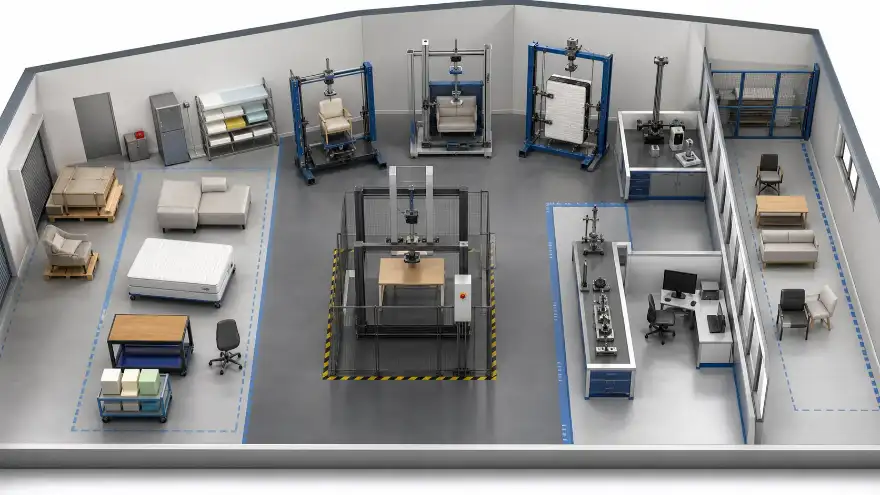
- Estimate specimen flow, daily test volume, storage and operator access around every station.
- Identify the measurements and reports the laboratory must produce.
- Request the vendor’s equipment list with included fixtures and exclusions, not only machine model numbers.
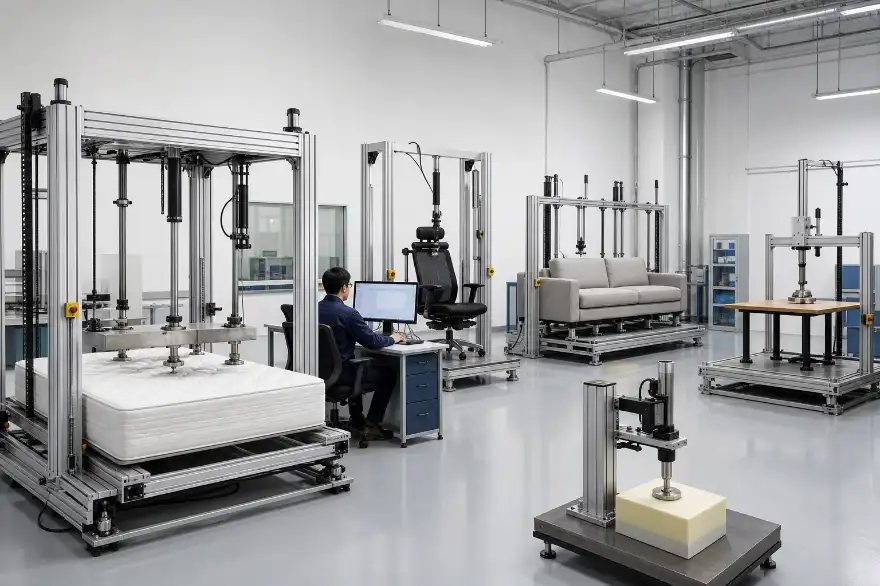
For example, a chair lab may need repeated seat/back loading, swivel, impact and stability as separate actions. A mattress project may need rollator or Cornell equipment plus distinct measuring tasks. The planned procedure—not a generic “full lab” claim—determines coverage.
2. Turn Supplier Drawings into a Facility Schedule
Space and movement
Check machine footprint, operating envelope, specimen loading path, service access, door width and safe routes for large products.
Electrical and air
Collect rated supply, protection and compressed-air quality or flow for each offered machine. Confirm real simultaneous demand rather than applying one pressure or pipe formula to the whole lab.
Floor and environment
Give machine mass, anchor or vibration requirements and expected impact actions to the qualified facility engineer. Room temperature, noise and ventilation requirements depend on the actual equipment and method.
Do not calculate floor bearing capacity, pipe diameter or compressor size from generic article equations. The approved equipment drawings, usage pattern, local codes and building structure are necessary inputs. Assign design and sign-off to the responsible site engineer.
3. Define Factory and Site Acceptance Separately
Factory acceptance can check the offered configuration before shipment: fixture list, controls, safety stops, programme examples and sample records. Site acceptance confirms that the installed system fits the actual specimen, utilities and selected procedure. Agree these checkpoints in the purchase documents before production.
- Compare delivered model, options and fixtures with the approved technical quotation.
- Inspect transport condition, installation, anchoring and access clearances.
- Verify utilities and protective devices against machine manuals and local requirements.
- Demonstrate representative specimen setup and the agreed loading or measurement actions.
- Review calibration documents, manuals, software access, training and spare-parts list.
- Record open items, responsible owner and closure evidence before handover.
4. Treat Measurement and Accreditation Correctly
Equipment calibration and laboratory accreditation are related but different. ISO/IEC 17025 addresses the competence, impartiality and consistent operation of a testing or calibration laboratory. Buying machines or a turnkey package does not grant accreditation. If accreditation is a project goal, define the exact test scope, controlled methods, personnel competence, traceability, records and independent assessment path.
Use the furniture equipment calibration checklist to plan instrument identifiers, due dates and evidence. Do not copy one generic uncertainty budget across force, displacement, time and environmental measurements.
5. Build a Handover Pack the Laboratory Can Use
Method coverage matrix
Selected test, applicable product, equipment, fixture, instrument and responsible laboratory procedure.
Equipment record
Approved drawings, specifications, manuals, serial numbers, software version and service contacts.
Acceptance evidence
Factory/site results, calibration records, training attendance, deviations and open-item closure.
The category pages for chair testing equipment, mattress testing equipment and other product groups are starting points, not turnkey bills of material. Confirm the offered models and accessories before allocating room and utilities.
Frequently Asked Questions
Does “turnkey” mean the lab is ready for every furniture standard?
No. Turnkey describes a delivery scope. Standard coverage must be mapped action by action to the installed equipment, fixtures and laboratory procedures.
Can I size the compressor from a web article?
No. Use the supplier’s per-machine air demand and an engineer’s simultaneous-demand calculation for the actual site.
Does a commissioning checklist make a laboratory ISO/IEC 17025 accredited?
No. Accreditation is an external assessment of a defined laboratory scope and management/technical system.
Related Equipment and Guides
Lab fundamentals
How to Set Up a Furniture Testing Laboratory for scope and sequencing.
Test scope
Furniture Testing Requirements for product-by-product planning.
Calibration plan
Furniture Tester Calibration Checklist for measurement records.
Scope sources: ISO/IEC 17025:2017 official scope. This practical guide does not reproduce a paid standard or replace the controlled edition, approved test plan or machine specification.



