Derui chamber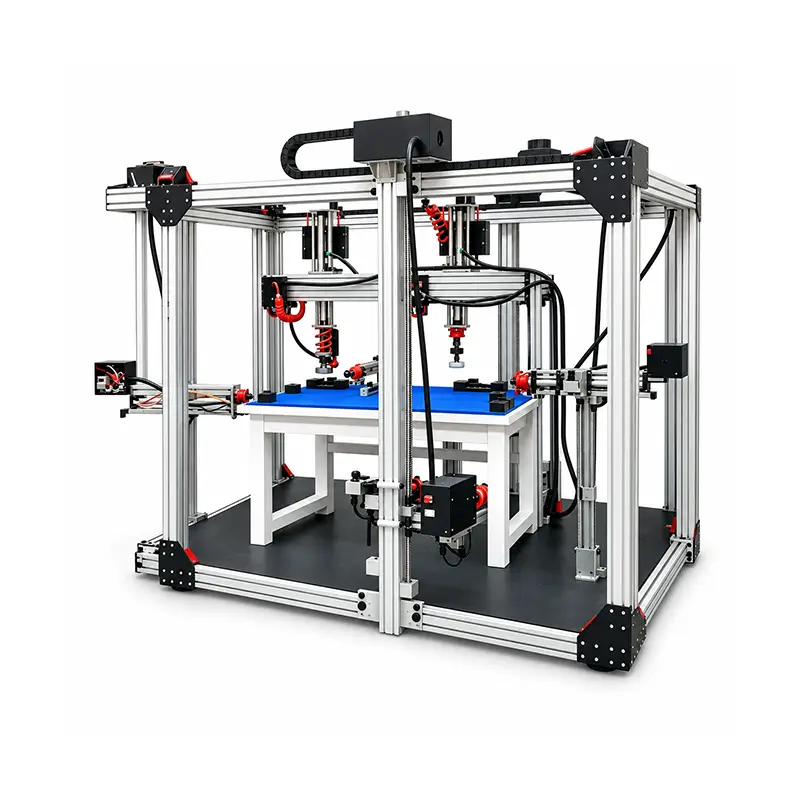

 Message
Controlled Stability Testing for Tables and Desks
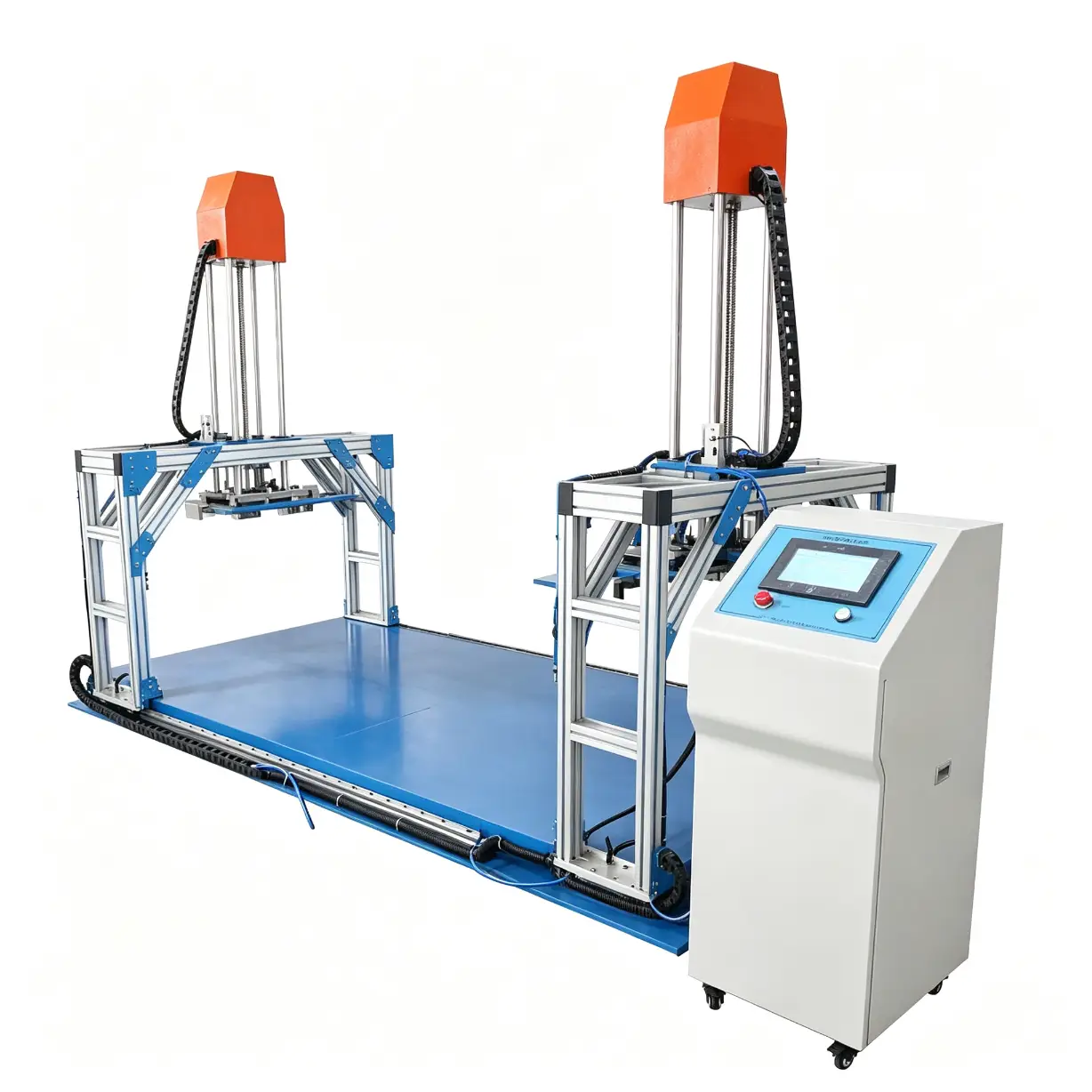
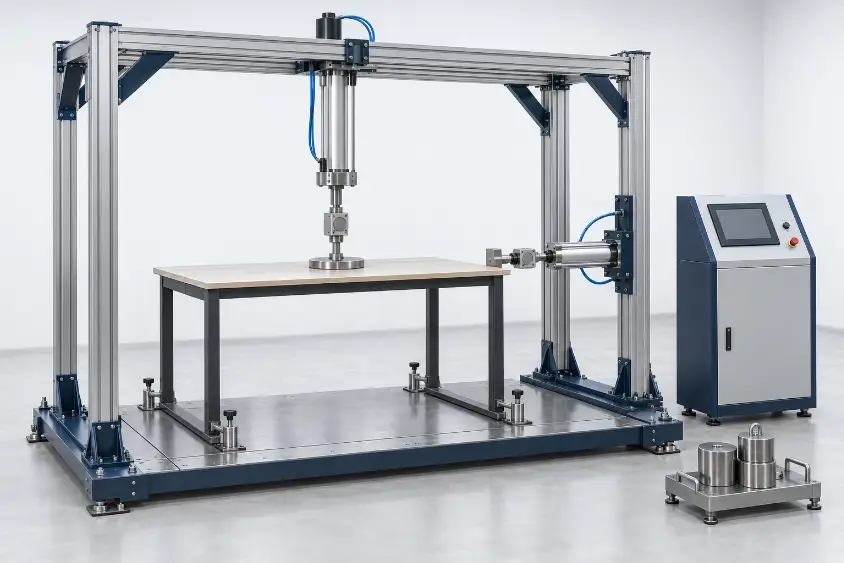
The DR-J702 Table Stability Tester applies programmed vertical loading, horizontal force and method-specific restraints to evaluate whether a table or desk resists tipping under a defined test procedure. Its adjustable loading frame, PLC touchscreen and configurable fixtures support applicable stability methods for international, European, North American and Chinese markets.
Method-Specific Configuration
Adjust loading positions, stops, pads, auxiliary masses and force sequences around the approved ISO, EN, BIFMA or GB/T stability procedure.
Controlled Force Application
Pneumatic proportional loading and force measurement improve repeatability compared with improvised manual push-and-weight setups.
Large Table Capacity
The frame accommodates table and desk specimens up to 2000 × 1500 × 1100 mm, subject to fixture clearance and loading-point review.
1. What the DR-J702 Evaluates
A table may withstand a high static load and still become unsafe when a user leans on an edge, pulls an extension surface or applies force at an elevated point. These conditions create an overturning moment rather than a simple structural load. Stability testing determines whether the specimen remains supported or begins to tip under the loading sequence defined by the selected method.
The DR-J702 is designed for controlled stability evaluation of dining tables, office desks, height-adjustable desks, occasional tables and other table products when their geometry and loading points fit the approved configuration. The operator can set the force and holding sequence, position restraints and loading components, and record the specimen response against the project acceptance criteria.
This machine focuses on tipping stability. It is not presented as a substitute for every strength, durability, impact or adjustment-mechanism test required by a complete product standard.
2. How the Stability Test Is Configured
Vertical-Load Stability
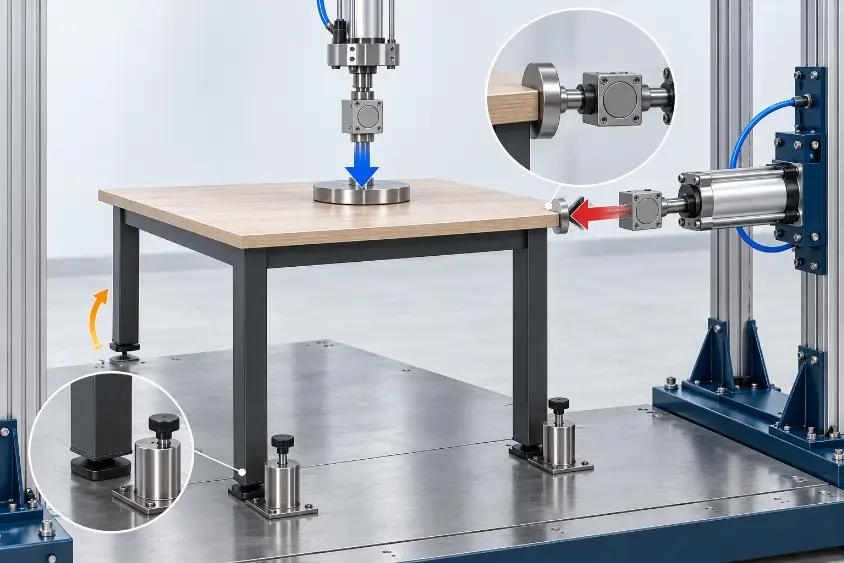
Apply the specified vertical force or auxiliary mass at the prescribed tabletop position while approved low stops restrain sliding without preventing the intended tipping response.
Combined Vertical and Horizontal Loading
Maintain the required vertical condition and apply a controlled horizontal force at the defined height, direction and loading point to assess overturning resistance.
Extensions and Special Geometries
Extension leaves, pedestal bases, cantilever designs and height-adjustable products may require different orientations, loading points or auxiliary fixtures.
Result Documentation
Record the configuration, specimen condition, applied load, holding time, tipping response and any deviation from the approved procedure.
3. International and Regional Test-Method Support
| Standard | Market / Scope | DR-J702 Positioning |
|---|---|---|
| ISO 19682:2023 | International test methods for stability, strength and durability of tables and desks | Configured for applicable stability procedures after table type, loading points, fixtures and sequence are confirmed. |
| EN 1730:2012 | European test methods for stability, strength and durability of tables and desks | Supports applicable stability setups; product requirements and performance levels are specified by the relevant end-use standard. |
| ANSI/BIFMA X5.5-2021 | Commercial, institutional and educational desk/table products in North America | Applicable stability work requires the BIFMA-specific specimen classification, loading material, restraints and procedure to be included in the approved configuration. |
| ANSI/BIFMA X6.5-2022 | Home-office and occasional-use desk, table and storage products | Method-specific accessories and sequence are reviewed according to the table type and applicable test. |
| GB/T 10357.7-2025 | Current Chinese test standard for table stability | Supports vertical-load and combined vertical/horizontal stability evaluation using the approved loading and restraint arrangement. |
4. Typical Test Workflow
1. Define the Market
Identify the destination market, table type, intended use and exact standard edition rather than selecting a procedure from the machine name alone.
2. Inspect the Specimen
Record dimensions, mass, adjustments, extension elements, base geometry and pre-existing defects before testing.
3. Install Restraints
Position the prescribed low stops so they prevent sliding without artificially preventing the tipping movement that the method is intended to evaluate.
4. Set Loading Points
Align the vertical and horizontal loading components with the distances, heights, directions and contact pads defined by the approved method.
5. Program and Apply
Enter the target force, holding time and sequence on the touchscreen, clear the test zone and run the controlled loading step.
6. Observe and Report
Document whether tipping occurred, which support point lifted, the applied conditions and any abnormal movement or structural change.
5. Technical Specifications
| Parameter | DR-J702 Configuration |
|---|---|
| Control system | PLC control with LCD touchscreen |
| Display | Touchscreen display for force, time and programmed settings |
| Loading method | Pneumatic proportional loading with force measurement and auxiliary masses |
| Maximum configured sensor range | 0–5000 N; sensor quantity and lower-capacity ranges to be selected for the approved method |
| Horizontal test-force range | 50–1000 N |
| Vertical test-force range | 80–1500 N |
| Typical auxiliary vertical mass range | 20–40 kg, selected according to the approved method |
| Typical horizontal stability force range | 30–200 N, selected according to the approved method |
| Applied-force tolerance | Within ±5% of the target where required by the approved procedure |
| Force indication accuracy | ±0.5% FS, subject to final sensor and calibration confirmation |
| Loading-point setting tolerance | ±2 mm; ±1 mm for dimensions below 200 mm, subject to fixture and measurement-method confirmation |
| Holding time | (5 ± 2) s or method-specific setting |
| Programmable loading rate | 1–30 operations/min, where applicable |
| Programmable counter | 0–999,999 operations |
| Maximum specimen size | 2000 × 1500 × 1100 mm (L × W × H) |
| Maximum stated specimen / fixture load | 100 kg; confirm whether this rating includes fixtures and auxiliary masses before publication |
| Nominal frame envelope | 2500 × 2500 × 2000 mm |
| Loading pad | Ø100 mm, 30–50 mm high, rounded edge R12 mm |
| Adjustable stops | Metal stops, height ≤12 mm |
| Method-specific accessories | Steel tube and auxiliary mass set; final dimensions and quantity per approved test method |
| Electrical supply | AC 220 V, 50/60 Hz, single phase |
| Rated power | ≤250 W |
| Recommended air pressure | 0.6–0.8 MPa |
| Maximum system pressure | 1.0 MPa |
| Reference air consumption | Approximately 0.3 m³/min; confirm under the final operating sequence |
| Overall machine dimensions | 2500 × 2500 × 2000 mm (L × W × H) |
| Approximate machine mass | 1.6 t |
Before commissioning, define force-channel calibration, daily checks, intermediate verification and fixture inspection for the selected methods. The furniture testing equipment calibration checklist provides a practical framework for separating verification, calibration and maintenance records.
6. DR-J701 or DR-J702: Which System Do You Need?
| Selection Question | DR-J701 Table Static Load Tester | DR-J702 Table Stability Tester |
|---|---|---|
| Primary purpose | Structural static-load and strength evaluation | Tipping and overturning stability evaluation |
| Typical loading | Controlled horizontal and vertical structural loads at multiple points | Vertical load or auxiliary mass combined with method-specific horizontal force and restraints |
| Main result | Damage, deformation, loosening or loss of structural function | Whether the specimen remains stable or begins to tip under the specified condition |
| Best fit | Laboratories prioritizing table strength and static-load methods | Laboratories needing dedicated table/desk stability setups for several export markets |
If your test plan is primarily about table structure rather than tipping, review the DR-J701 Table Static Load Tester. A complete laboratory may require both systems or a separately engineered universal configuration.
7. What to Provide Before Quotation
| Required Information | Why It Matters |
|---|---|
| Target country or market | Identifies the correct ISO, EN, BIFMA, GB/T or customer-specific method family. |
| Standard, edition and clause | Determines the exact load, loading point, restraint and sequence. |
| Table type and intended use | Separates dining, office, height-adjustable, occasional and extension-table setups. |
| Maximum dimensions and mass | Confirms frame clearance, fixture reach and platform/load capacity. |
| Base and support geometry | Determines the stop positions and likely tipping direction. |
| Extension or adjustment features | Identifies additional positions and method-specific configurations. |
| Required force and auxiliary masses | Confirms sensor range, pneumatic loading capacity and weight set. |
| Data and report requirements | Defines whether force history, test settings, result fields or exports are required. |
| Site power, air and floor conditions | Confirms utilities, installation layout and anchoring requirements. |
8. Frequently Asked Questions
What is a table stability tester used for?
It applies the vertical load, horizontal force, restraints and loading positions defined by a test method to determine whether a table or desk resists tipping under that condition.
Does the DR-J702 support EN 1730 and ISO 19682?
It can be configured for applicable stability procedures in EN 1730:2012 and ISO 19682:2023. The exact table type, clause, fixtures, loads and sequence must be confirmed before the configuration is approved.
Can it test products for the North American market?
Applicable stability procedures in ANSI/BIFMA X5.5-2021 or ANSI/BIFMA X6.5-2022 can be reviewed. BIFMA-specific product classification, loading material, restraints and acceptance requirements must be included in the project specification.
Is ISO 7172 still the current table stability standard?
No. ISO lists ISO 7172:1988 as withdrawn. The current international table test-method document is ISO 19682:2023, which covers stability, strength and durability methods.
Is the DR-J702 the same as a universal furniture testing machine?
No. A universal rig usually combines multiple actuators and accessories for tables, chairs, beds or storage furniture and may cover strength, durability and impact. The DR-J702 is positioned as a focused table/desk stability system.
Can one fixture be used for every standard?
Not necessarily. Loading pads, stops, auxiliary masses, force directions and loading positions vary by method and table design. The approved fixture list should be created from the actual clauses required by the laboratory.
What information is needed for a technical proposal?
Provide the destination market, product type, specimen dimensions and mass, base geometry, standard edition and clause, force/mass requirements, required data output and site utilities.
9. Related Table Testing Equipment and Resources
- Table and Desk Testing Equipment
- DR-J701 Table Static Load Tester
- How to Set Up a Furniture Testing Laboratory
Configure the DR-J702 for Your Target Market
Send the table type, dimensions, mass, base geometry, destination market, standard edition and required stability clauses. Derui’s engineering team will map the loading points, fixtures, force ranges and control sequence before quotation.