Derui chamber
Building an office chair testing laboratory starts with the tests your chairs need—not a fixed shopping list of five machines. Chair features, the required standard edition and the tests performed in-house determine the equipment, fixtures and measurement system to specify.
This guide explains five equipment-planning directions for an ANSI/BIFMA X5.1 laboratory, how they differ, and the information needed for a technical quotation. They are a starting framework, not complete standard coverage or a recipe for laboratory accreditation.
1. Define the Chair Range and Required Evidence
List the chairs you intend to evaluate: task or executive chairs, side chairs, stools, stacking chairs or other relevant configurations. Record adjustable features, armrests, casters, bases and mechanisms. A feature that is absent or constructed differently can change the applicable test and fixture arrangement.
ANSI/BIFMA X5.1-2017(R2022) is the general-purpose office chair standard designation used here. R2022 indicates reaffirmation; it is not a separate “X5.1-2022” load table. Confirm the edition required by the customer or testing programme and use the controlled standard to determine the selected procedures.
Public and lounge seating, large-occupant chairs and other specialised uses can have different scopes. Do not select an office-chair test programme solely from the country of sale. The BIFMA X5.1 scope and equipment guide explains the standard’s role and the distinction between test evidence and conformity claims.
2. Review Five Equipment-Planning Directions
Seat and Back Loading
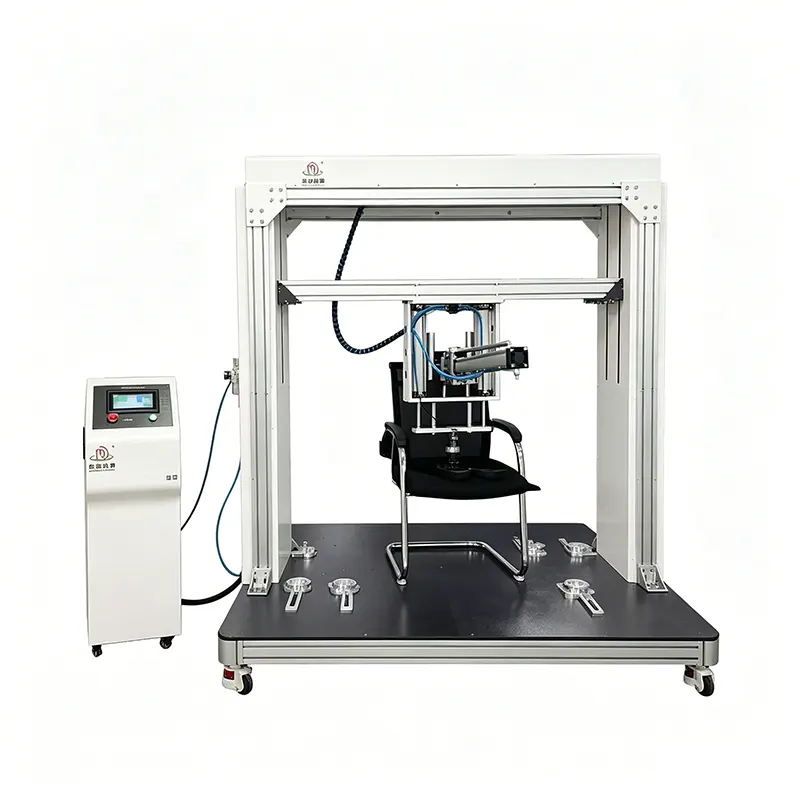
Plan the seat and back structural-loading actions, contact positions, directions and sequences. Review the DR-J609 seat and back durability equipment for the selected cyclic-loading tasks. Confirm static-loading or coordinated operation separately where required.
Swivel and Mechanism Cycling
Rotation cycling and tilt-mechanism cycling are different actions. The DR-J601 swivel tester is the rotation equipment direction; a swivel model name does not prove that tilt or adjustment cycling is also supplied.
Drop and Impact
Impact evaluation requires its own lifting, release, impactor and specimen arrangement. Review the DR-J607 chair drop impact tester separately from seat/back repeated loading. Do not treat a cyclic force programme as an equivalent free-drop procedure.
Vertical and Component Loads
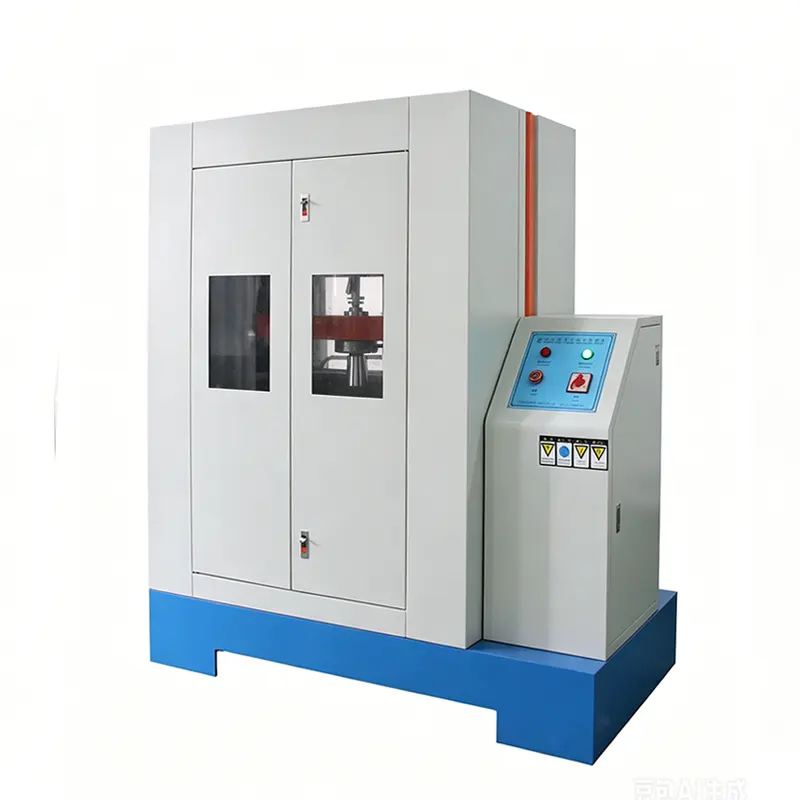
Identify the component, load direction and fixture required. The DR-J603 vertical loading equipment provides a direction for review; arm, base and other component procedures need their own capability confirmation.
Stability and Remaining Actions
Stability evaluates resistance to tipping and is not inferred from a strength result. Review the DR-J608 stability equipment and list any remaining caster/base, arm, tilt or other actions in the full test plan.
These groups do not mean exactly five machines are sufficient. One frame may cover several agreed actions with suitable accessories; other actions may require a dedicated mechanism. Verify the actual test-to-equipment mapping instead of assuming the number of frames or loading heads establishes coverage.
3. Prepare a Test-to-Equipment Coverage Matrix
Before comparing suppliers, create one row for every selected test action. Keep the procedure requirements and the offered machine specifications in separate columns so standard loads are not mistaken for rated equipment capacities.
- Test name, controlled standard edition and applicability to the chair configuration.
- Loading or movement action, specimen preparation, supports and restraints.
- Required load, travel, speed, timing or cycle sequence, taken from the selected procedure.
- Instruments and records needed to evaluate the result.
- Proposed equipment and fixtures, with included and optional items clearly identified.
- How the setup and measuring capability will be checked before acceptance.
Mark tests performed by an external laboratory separately from tests performed in-house. A partial internal QC programme can be useful without claiming it completes every test in the standard. If base-component fatigue is selected, review the specific fixture and action with the supplier rather than assuming a vertical-load machine covers it automatically.
4. Select Measuring Range, Fixtures and Controls Together
Measuring Capability
Specify the expected loads and required measurement basis. Capacity, accuracy and resolution are different properties; verify the usable range for the selected task.
Specimen Fit
Provide chair dimensions and adjustments. Confirm contact-point access, fixture geometry, travel and supports for the range of chairs you intend to test.
Control and Records
Agree independent or coordinated operation, cycle counting, interruptions, stop behaviour and outputs. Request a sample record when traceability matters.
Do not assume a touchscreen, a data-export port or a displacement sensor automatically identifies a broken joint or produces an accredited laboratory report. The inspection procedure and acceptance criteria remain part of the test programme.
5. Plan the Laboratory and Acceptance Checks
Use approved machine drawings and utility requirements to plan floor space, access, loading and unloading, guarding and maintenance. Confirm electrical and compressed-air requirements for each quoted machine; one generic air pressure or footprint is not a specification for the whole laboratory.
Identify checks for force, displacement, timing and other relevant measurements. Calibration scope, traceability, uncertainty and intermediate checks should match the instruments and intended use. Do not impose an unsupported universal annual interval or claim that purchasing machinery grants ISO/IEC 17025 accreditation. Use the equipment calibration checklist to organise this review.
- Review the offered test coverage and accessory list before purchase.
- Confirm installation requirements and safe operating arrangements.
- Check fixture fit and loading-point access on representative chair geometries.
- Verify relevant measuring functions and agreed control behaviour.
- Retain the supplied manuals, configuration records and applicable calibration documentation.
Questions When Planning an Office Chair Laboratory
Are five machines enough for a complete BIFMA X5.1 programme?
Not necessarily. The applicable test list, fixtures and installed capabilities determine coverage. Use the five planning directions as a starting point, then account for every selected action.
Should I buy every tester before beginning internal QC?
Define the highest-priority in-house tests and identify any tests outsourced initially. Choose equipment from that plan rather than treating the entire catalogue as a compulsory first purchase.
Does a BIFMA reference mean the machine or laboratory is certified?
No. A method reference identifies the intended evaluation. Product conformity evidence and laboratory competence or accreditation are separate matters.
What should be included in the quotation?
The supplied equipment, loading actions, measuring ranges, specimen limits, fixtures, controller functions, documentation and commercial terms. Mark exclusions and options so comparisons use the same scope.
Related Equipment and Planning Guides
Chair Equipment
Chair Testing Equipment — compare equipment by loading, movement, impact or stability task.
International Methods
ISO 7173 Seating Testing — review structural-method scope and fixture planning where applicable.
Product Test Scope
Furniture Testing Requirements — separate material tests, product tests and the evidence needed for your project.
Source: BIFMA’s official standard descriptions. This article is an equipment-planning guide, not a substitute for the controlled standard or approved machine specifications.